

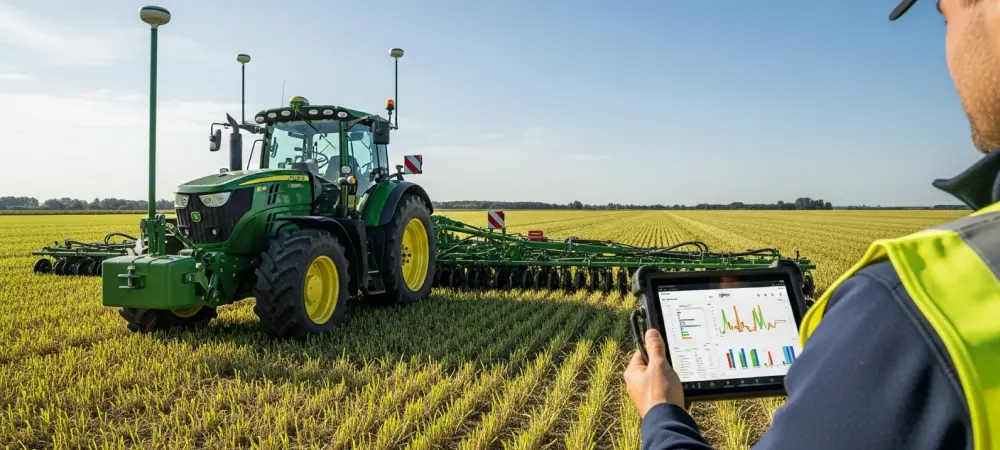
Modern agricultural enterprises operating in the current 2026 landscape face an unprecedented convergence of razor-thin margins, rigorous global sustainability mandates, and the inherent volatility of biological production cycles. While digital transformation has promised to alleviate these pressures, the reality is that standard enterprise resource planning systems often lack the granular specificity required to manage a living, breathing inventory that grows in the dirt rather than sitting on a warehouse shelf. Dynamics 365 Finance and Operations (D365 F&O) stands out as a robust foundation, yet its true value for the farming sector is only realized through deliberate, strategic customization that aligns software logic with the physical realities of the field. This process requires more than just technical proficiency; it demands a deep understanding of how seasonal cash flows, unpredictable weather patterns, and complex traceability requirements intersect with financial ledger entries and supply chain logistics. By tailoring this enterprise-grade platform, producers can transform disparate data points into a cohesive operational intelligence engine that drives efficiency from seed to sale.
1. Evaluate Your Agricultural Business Needs for System Tailoring
Before a single line of code is written or a functional module is toggled, a comprehensive audit of the farm’s physical and administrative workflows must be conducted to ensure the digital architecture mirrors operational reality. This evaluation phase starts with a deep dive into field planning and crop cycle management, where every variable—from soil preparation schedules to specific seed varieties and fertilizer application rates—is documented as a critical data point. The objective is to identify exactly how information moves from the tractor cabin to the back office, ensuring that input tracking is not merely a record-keeping exercise but a real-time reflection of resource consumption. By mapping out these intricate processes, the organization can pinpoint where standard ERP features fall short, such as in the management of complex chemical application logs or the specific nuances of irrigation scheduling. This foundational work prevents the common pitfall of implementing a system that looks good on paper but fails to account for the messy, non-linear nature of biological production.
Achieving this level of clarity requires structured workshops that bring together diverse stakeholders, ranging from boots-on-the-ground field managers to high-level compliance officers and financial controllers. These sessions must focus on documenting current-state pain points, such as manual data entry bottlenecks or the lack of real-time visibility into seasonal cash flows that can fluctuate wildly based on harvest timing. Participants should be encouraged to define the specific metrics that drive their decision-making, whether those are yield-per-acre calculations, pesticide residue reports for international exports, or labor cost allocations across multiple farm sites. When these requirements are centralized within the D365 F&O framework, the resulting transparency provides a “single source of truth” that empowers the leadership to make data-driven decisions regarding equipment investment or land expansion. Furthermore, a well-documented requirements map serves as a defensive shield against scope creep, ensuring that every subsequent customization remains focused on delivering tangible value to the agricultural operation.
2. Decide on a Setup Versus Custom Programming Approach
The architectural philosophy governing a D365 F&O implementation for farming must prioritize long-term stability and ease of maintenance, which necessitates a clear distinction between configuration and customization. Configuration represents the first line of defense, utilizing the platform’s native flexibility to adjust user interface layouts, security roles, and approval workflows without altering the underlying source code. In a farming context, this might involve setting up specific procurement cycles for seasonal inputs or creating unique financial dimensions for different land tracts. Because configuration utilizes built-in tools, it remains inherently compatible with Microsoft’s frequent service updates, ensuring that the farm’s digital infrastructure does not become a legacy burden. This approach is highly effective for standardizing administrative tasks and ensuring that different user groups—such as harvesters and accountants—only see the data and functions relevant to their specific roles, thereby reducing complexity and the potential for human error.
However, the unique demands of agricultural logic often exceed the capabilities of out-of-the-box configuration, leading to the necessity of custom programming or the integration of low-code solutions. When a farm requires highly specialized business logic, such as automated yield calculations based on variable soil moisture levels or complex contract management for multi-year commodity pricing, code customization using X++ becomes essential. This allows developers to inject bespoke logic directly into the ERP environment, though it must be done sparingly to avoid inflating the total cost of ownership. Alternatively, the Power Platform offers a compelling middle ground, enabling the creation of mobile applications for field data capture or automated harvest alerts that connect seamlessly to D365 F&O. The most successful agricultural implementations are those that adopt a “configuration-first” mentality, reserving custom code only for those rare, high-value scenarios where the competitive advantage of a specialized feature outweighs the technical overhead of maintaining a custom-built solution.
3. Create the Information Framework and Connectivity Layout
The structural integrity of a farm’s digital ecosystem depends entirely on the design of its data model, which defines how physical assets like machinery and biological entities like crops are represented within the system. A well-constructed framework ensures that a “batch” of harvested produce is logically linked to the specific field where it was grown, the date it was treated with specific fertilizers, and the equipment used for its transport. This level of granularity is not just beneficial for internal efficiency; it is increasingly becoming a prerequisite for participation in high-value global markets that demand end-to-end traceability for food safety and sustainability reporting. By establishing clear relationships between these data entities, the system can automatically generate complex reports that would otherwise take days of manual labor to compile. This information framework acts as the bedrock for all future analytics, allowing for the application of advanced tools like yield prediction models and machine-learning-based pest risk assessments.
Connectivity is the second pillar of this architecture, as a modern farm relies on a vast array of external data sources and specialized hardware that must communicate with the core ERP system. The connectivity layout determines how D365 F&O interacts with Internet of Things (IoT) sensors in the soil, weather station feeds, and automated machinery telematics. Real-time integrations using OData are ideal for time-sensitive tasks like checking inventory levels during a busy planting season, while custom services can handle the bi-directional flow of data between the ERP and proprietary farm management software. For high-volume data tasks, such as importing historical harvest records or processing thousands of daily sensor readings, batch APIs provide a stable and efficient mechanism for data synchronization. This integrated approach eliminates data silos, ensuring that the finance department has an accurate view of asset depreciation based on actual equipment usage and that the logistics team can plan deliveries based on real-time harvest progress.
4. Build Specialized Functions Using Industry Standards
Developing custom features for an agricultural ERP requires a disciplined adherence to modern software engineering standards to ensure the resulting tools are both performant and sustainable. In the D365 F&O environment, this means utilizing Microsoft Visual Studio and the X++ language to create extensions and event handlers rather than the outdated practice of overlayering. By using extensions, developers can augment the system’s standard behavior without modifying the original source code, which is critical for ensuring that the farm’s custom features do not break when Microsoft pushes out global updates. This is particularly important for specialized farming functions, such as custom pesticide application validations or complex labor-share calculations between different farm owners, where accuracy is non-negotiable. Standardizing naming conventions and maintaining exhaustive documentation for every custom object ensures that future developers can easily understand and maintain the system as the farming operation evolves and grows.
Beyond the core code, the development process must be managed through robust lifecycle tools like Azure DevOps, which provides version control and automated deployment pipelines to minimize human error. This systematic approach allows for the rigorous testing of custom farming modules in isolated environments before they are ever introduced to the live production site. For example, a custom-built automated alert system for grain silo temperature monitoring can be thoroughly vetted for reliability, ensuring it performs correctly under various simulated conditions. Furthermore, for tasks that do not require deep architectural changes, such as mobile-based approval chains for emergency equipment repairs, leveraging Power Automate can significantly reduce development time while maintaining high reliability. This blend of professional-grade coding standards and agile development tools ensures that the farm’s digital capabilities remain as resilient as the physical operation they are designed to support.
5. Transfer and Verify Your Farming Records Accurately
The migration of legacy data from old spreadsheets or disparate local systems into the D365 F&O environment is often the most technically challenging and high-stakes phase of an agricultural implementation. Agricultural data is notoriously messy, often spanning decades of historical yield records, varying units of measurement, and inconsistent naming conventions for fields or equipment. To manage this complexity, the Data Management Framework (DMF) must be employed to create a structured, repeatable, and auditable migration process that maintains data integrity at every step. This involves a rigorous staging process where data is first loaded into a temporary environment to be examined for errors before it is ever committed to the permanent ledger. The transition from legacy formats to the standardized ERP entities must be handled with extreme precision to ensure that historical context—such as the multi-year rotation history of a specific plot—is preserved and remains useful for future analytics.
Data cleansing and reconciliation are the critical safeguards that prevent “garbage in, garbage out” scenarios, which can have devastating financial consequences for a farming business. During this stage, duplicates must be purged, inconsistent date formats corrected, and mandatory fields populated to meet the system’s strict validation rules. Once the data is cleansed, a comprehensive reconciliation must be performed to verify that the record counts and financial totals in the new system perfectly match the source files. This verification is not just a technical requirement but a business necessity, as accurate opening balances for inventory and accounts receivable are essential for a smooth operational transition. Testing the data in real-world scenarios, such as running a mock harvest cycle using the migrated records, allows the team to confirm that all relationships between entities—like seeds, fields, and contracts—behave as expected. Only after these rigorous checks are complete is the final cutover performed, marking the definitive shift from the old ways of working to the new integrated platform.
6. Conduct Testing, Educate Staff, and Launch the Modified Platform
A flawlessly designed system is of little use if the people who operate the farm find it confusing or if it fails to perform under the intense pressure of a harvest season. Business Acceptance Testing (BAT) serves as the ultimate validation, where actual farm staff—ranging from warehouse workers to senior agronomists—execute their daily tasks in a controlled test environment to ensure the customizations meet their practical needs. This phase often reveals subtle workflow gaps that technical teams might overlook, such as the need for a simplified mobile interface for workers wearing gloves or the requirement for offline data capture in remote fields with poor connectivity. Simultaneously, integration and performance testing must be conducted to benchmark the system’s responsiveness during peak volume periods. This ensures that when the entire farm starts logging harvest batches at once, the system remains stable and does not become a bottleneck that delays the movement of perishable goods to market.
The human element of the transition is addressed through role-based training programs that recognize the diverse technological backgrounds and responsibilities of the farm’s workforce. A tractor operator needs a very different set of skills to manage field logs than a controller needs to reconcile complex grain contracts, and the training materials must reflect these specific realities through hands-on demos and simple, targeted user guides. This educational effort is a core component of change management, helping to build confidence and reduce the friction that often accompanies the introduction of new technology. The launch itself is best executed through a phased rollout, perhaps starting with a single farm site or a specific crop category to identify and resolve any localized issues before expanding company-wide. This measured approach provides a safety net, ensuring that the primary business operations remain protected while the organization adapts to its new, high-performance digital environment.
7. Manage, Track, and Refine Your System Enhancements
The formal “go-live” event is not the end of the journey but rather the beginning of an ongoing cycle of operational refinement and system optimization. In the fast-moving world of 2026 agriculture, the ability to adapt to new regulatory changes, shifting market demands, or evolving climate conditions is a key competitive advantage. To maintain this agility, the farm must proactively manage “technical debt,” which is the gradual accumulation of outdated or inefficient code and configurations that can eventually slow down the system. Regular health reviews are essential to identify and decommission any customizations that are no longer serving their original purpose or have been replaced by new native features in Microsoft’s product roadmap. By keeping the system lean and updated, the organization ensures that it can always take advantage of the latest innovations in AI, robotics, and supply chain visibility without facing the hurdle of complex, brittle code.
Continuous improvement is sustained through a feedback loop that actively solicits input from end-users across the farming operation, allowing the IT team to identify and smooth out remaining friction points in the user experience. This might involve refining an automated report that field managers find difficult to interpret or adjusting the logic of an inventory alert system that triggers too frequently. Furthermore, as the farm grows and incorporates more advanced technologies—such as autonomous drones for crop scouting or automated sorting lines in the packing house—the ERP system must be updated to integrate these new data streams. Maintaining a living set of documentation and a structured roadmap for future enhancements ensures that the investment in D365 F&O continues to yield dividends year after year. This commitment to ongoing excellence transforms the ERP from a static record-keeping tool into a dynamic asset that evolves in lockstep with the farm’s strategic ambitions.
Practical Outcomes and Future Trajectories
The successful customization of D365 F&O for farming operations was achieved through a disciplined focus on aligning enterprise technology with the unique physical demands of the agricultural sector. By following the seven-step framework, organizations effectively bridged the gap between raw field data and strategic financial management, creating a resilient infrastructure that supported both daily operations and long-term growth. The process moved beyond simple software installation, instead building a bespoke ecosystem where every customized workflow served a specific, validated business purpose. This approach ensured that the farm’s digital tools provided a clear view of resource utilization, labor efficiency, and product traceability, which became indispensable for maintaining a competitive edge in an increasingly complex global marketplace.
Looking back at the implementation cycle, the most significant gains were realized by those who prioritized the human element of technology adoption alongside the technical architecture. The transition was marked by a shift in how stakeholders viewed their data, moving from a passive recording of the past to an active tool for predicting future yields and optimizing input costs. The rigorous testing and training protocols minimized the disruption typically associated with large-scale ERP projects, allowing the staff to embrace the new system as a partner in their productivity rather than a hurdle. This cultural shift, supported by a robust and well-maintained platform, laid the groundwork for a future where agricultural businesses can seamlessly integrate new innovations in biotechnology and automation without needing to rebuild their core operational foundation.