

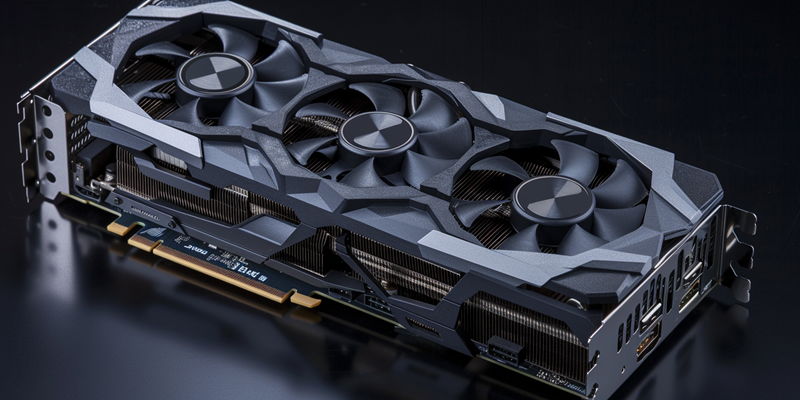
In a remarkable achievement, the modders at Teclab have unveiled a customized graphics card they’ve dubbed the “RTX 4090 Super,” which dramatically outperforms the already powerful standard RTX 4090. By integrating the AD102 GPU—the same chip used in the RTX 4090—into the circuit board from a Galax RTX 3090 Ti HOF OC, a high-end model known for its superior overclocking potential, the team has pushed the performance boundaries significantly. They also utilized GDDR6X VRAM from an RTX 4080 Super, which they tweaked to achieve an impressive 26Gbps data rate. This resulting creation not only highlights the possibilities of current graphic technologies but also sets the tone for future advancements in the industry.
Performance Leap and Overclocking Achievements
The makeshift RTX 4090 Super managed to achieve a remarkable 13% performance boost in the Unigine Superposition benchmark at an 8K resolution compared to the stock RTX 4090. This indicates a significant improvement in processing power and overall efficiency. What makes this feat even more astonishing is that when the GPU was further overclocked to 3GHz, the performance boost increased to an impressive 16%. Such substantial gains demonstrate the incredible potential that can be unlocked through optimized hardware configurations and faster video RAM.
The Teclab experiment sheds light on what could have been if Nvidia had chosen to release a Super variant within the higher echelons of its Lovelace series, rather than stopping with the RTX 4080 Super. This speculative conversation opens up intriguing possibilities for future advancements, particularly with the highly anticipated RTX 5090 expected to arrive in late 2024. The integration of cutting-edge GDDR7 memory, potentially reaching speeds of 28Gbps, could push performance benchmarks even higher, delivering more than just incremental improvements in frame rates and rendering capabilities.
Industry Implications and Future Projections
In an astounding achievement, the modding team at Teclab has introduced a customized graphics card named the “RTX 4090 Super,” which significantly outstrips the already formidable RTX 4090. They achieved this by incorporating the AD102 GPU—identical to the chip within the RTX 4090—into the circuit board from a Galax RTX 3090 Ti HOF OC. The Galax model is renowned for its excellent overclocking capabilities, allowing the Teclab team to push performance limits dramatically. Additionally, they integrated GDDR6X VRAM from an RTX 4080 Super, expertly tweaking it to reach an impressive 26Gbps data rate. This innovation not only demonstrates the potential of existing graphics technologies but also paves the way for future industry advancements. The Teclab team’s ingenuity has produced a card that illustrates how far the limits can be extended, serving as a beacon for what is possible in the realm of high-performance computing. This project opens new horizons and challenges other developers and modders to explore further possibilities in graphic processing capabilities.