

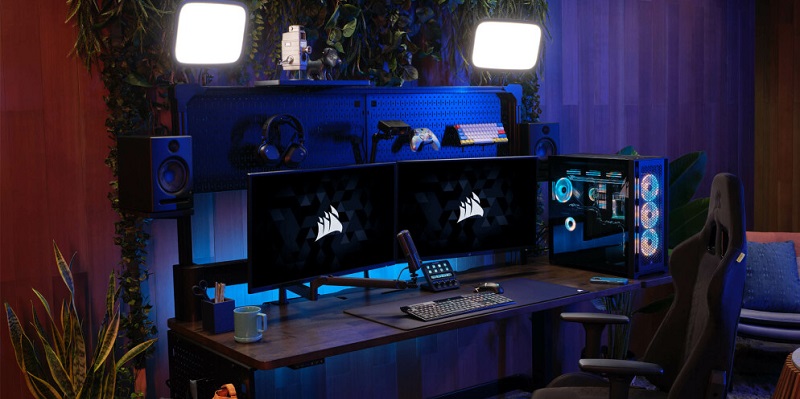
PC component manufacturer Corsair has ventured into the world of gaming desks with its latest offering, the Platform:6. This innovative and modular design is tailored for individuals who spend long hours in front of their computers, whether sitting or standing. With a focus on gamers’ needs and influenced by the company’s acquisition of Elgato, this gaming desk promises an exceptional experience for professional gamers and avid streamers alike.
Gamer and Streamer Focus
Recognizing the growing popularity of live streaming, Corsair has integrated features in the Platform:6 that cater to the needs of professional streamers. Leveraging the expertise gained from acquiring Elgato, the desk provides optimal support for streamers, ensuring a seamless gaming and broadcasting experience.
Ample Surface Area and Expandability
At the heart of the Platform:6 lies a wide and accommodating surface area, providing users with ample workspace for all their gaming essentials. With six feet of surface area, there is plenty of room for a mouse mat, keyboard and mouse setup, and even space to keep your PC off to the side. If additional space is required, the desk can be easily expanded through the use of small platforms on either side.
To enhance productivity and multitasking capabilities, the Platform:6 gaming desk comes with two monitor arms, allowing users to set up a dual monitor configuration. This feature is especially valuable for gamers who require multiple displays for a truly immersive gaming experience or for streaming purposes.
Pegboard for Accessory Management
Effortless organization of gaming accessories is made possible with the inclusion of a pegboard. Positioned behind the monitor, it serves as a versatile storage solution for various accessories, including adapters for Elgato’s Multi-Mount and Flex Arm products. This convenient addition ensures that all necessary gaming accessories are within easy reach, streamlining the gaming and streaming process.
Efficient Cable Management with Corsair RapidRoute
One of the essential features of the Platform:6 is its intelligent cable management system called Corsair RapidRoute. A metal rack hangs below the desk surface, providing a dedicated space to route and manage all cables effectively. The ingenious design of RapidRoute ensures that power bricks and other cables are neatly organized, reducing clutter and creating a clean and professional gaming environment.
Dual Motors for Dynamic Standing Desk Functionality
The Platform:6 doubles as a standing desk, promoting ergonomic comfort and overall health for individuals who spend extended periods at their computer. Activated with the touch of a button, the dual motors effortlessly adjust the desk’s height according to the user’s preference. An LCD and memory presets further enhance ease of use, allowing for quick adjustments and seamless transitions between sitting and standing positions.
Launch Date and Pricing
Corsair has announced that the Platform:6 gaming desk is set to launch later this year. While specific pricing details have not yet been disclosed, the company plans to reveal this information closer to the release date. Gaming enthusiasts and streamers eagerly anticipate the desk’s arrival, eager to experience the innovative features and benefits it promises to provide.
Corsair’s entry into the gaming desk market with the Platform:6 offers a solution tailored to the needs of gamers and streamers alike. This modular and feature-rich desk provides ample surface area, expandability options, integrated monitor arms, and efficient cable management, ensuring a clean and optimized gaming environment. With the added benefits of standing desk functionality and the influence of Elgato’s expertise, the Platform:6 is poised to deliver an exceptional gaming and streaming experience. Keep an eye out for its release later this year for pricing and availability information.