

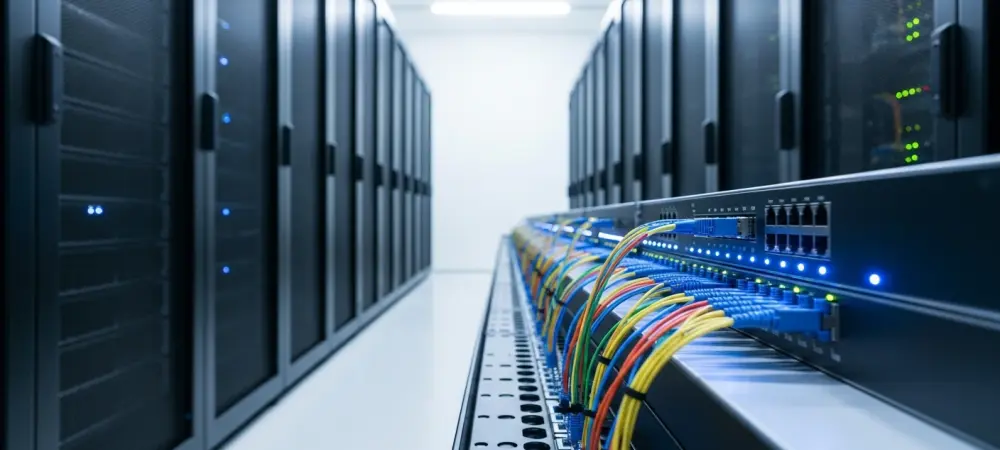
The ethereal world of artificial intelligence, often perceived as a weightless domain of algorithms and data, is paradoxically anchored by an immense and rapidly growing physical foundation of glass, silicon, and steel. This tangible reality is creating an unprecedented demand for the foundational hardware that makes the digital revolution possible, turning the abstract race for AI dominance into a very real boom for legacy manufacturing industries. At the heart of this convergence is Corning, a materials science innovator now pivotal in building the physical backbone for the next generation of technology.
The Unseen Engine of AI
The modern lexicon is filled with terms like “cloud computing” and “wireless,” which suggest a world untethered from physical constraints. However, the reality is that every AI query, every generated image, and every large language model’s response travels through a vast network of fiber-optic cables housed in sprawling data centers. The surge in AI development has transformed this reliance into an urgent challenge, as the computational power required has outpaced existing infrastructure.
This creates a fundamental tension in the technology sector. The competition is no longer just about who can write the most sophisticated code but also about who can secure the supply chains for the physical components needed to run it. This has ignited a modern gold rush for manufacturing partners capable of producing specialized, high-performance hardware at an unprecedented scale, placing companies like Corning at the center of the AI revolution.
The Data Center Arms Race
The computational demands of generative AI are the primary catalyst for a colossal industry-wide investment in physical infrastructure. Training and operating large language models require immense processing power, which translates directly into a need for more, and more powerful, data centers. These facilities are the factories of the 21st century, and tech giants are building them at a breakneck pace.
This construction frenzy is not exclusive to Meta. Competitors like Google, Amazon, and Microsoft are also pouring billions into expanding their global data center footprints, recognizing that physical capacity is a key strategic advantage in the AI era. Illustrating the sheer magnitude of this trend, Meta has allocated between $115 billion and $135 billion for new data center projects in 2026 alone, with major developments underway in states like Ohio and Louisiana.
The Meta-Corning Symbiosis
A landmark $6 billion agreement solidifies the critical partnership between Meta and Corning, tasking the manufacturer with supplying the high-performance fiber-optic cables essential for Meta’s AI ambitions through 2030. This deal draws a direct line from the abstract goals of AI development to the tangible output of Corning’s manufacturing floor, turning digital demand into concrete industrial expansion.
In response to this contractual demand, Corning is undertaking a significant expansion of its facility in Hickory, North Carolina, and has announced plans for additional sites within the state. This strategic growth is a direct economic consequence of the AI boom, translating Big Tech’s infrastructure needs into job creation and investment in the American manufacturing sector.
A Resilient Leader in the AI Gold Rush
Corning is no stranger to the volatile cycles of the technology industry. As a seasoned survivor of the dot-com bust, the company is leveraging decades of experience in materials science and optical physics to meet the current surge in demand. This deep-seated expertise allows it to not only supply components but also to innovate solutions tailored specifically for the challenges of AI.
The market has responded with strong confidence in Corning’s strategy. The company reported a 13% increase in sales, while investor enthusiasm drove its stock value up by an impressive 103% in 2025. This financial validation is further supported by continued innovation; in March 2025, Corning introduced new hardware capable of handling 36 times more fiber connections within a single data center rack, a critical solution for the high-density computing environments that AI requires.
Building the Global Backbone
The insatiable demand for connectivity extends far beyond the walls of individual data centers. To function as an integrated network, these new facilities must be linked by robust terrestrial and subsea cable systems. This requires a massive build-out of the global communications backbone, further fueling the need for the specialized components that Corning produces. Standard fiber-optic cables are insufficient for the speed and bandwidth necessary to train and operate advanced AI models. High-performance, specialized fiber is essential for minimizing latency and maximizing data throughput between processing units. The Corning-Meta partnership serves as a blueprint for the future, modeling the kind of deep collaboration between tech leaders and industrial manufacturers that will be necessary to construct the physical infrastructure of an AI-powered world.
The digital transformation, driven by artificial intelligence, was firmly rooted in a physical one. Strategic partnerships, like the one forged between Meta and Corning, became the model for how the technology sector secured its foundational supply chains. The massive investments in data centers and the underlying fiber-optic networks were not just a trend but a fundamental reshaping of the global industrial landscape, proving that the future of the cloud was built on solid ground.