

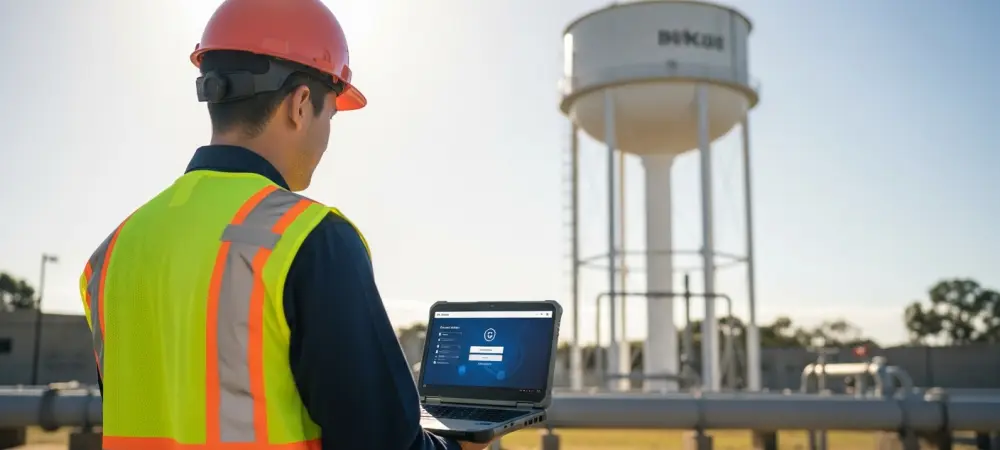
The quiet vulnerability of small-town infrastructure was thrust into the national spotlight when a series of calculated digital intrusions paralyzed the water management systems of two Minnesota municipalities, revealing a frightening gap in the security of essential public services. In the cities of Braham and Plymouth, what began as unexplained glitches in automated reporting soon evolved into a full-scale operational crisis as hackers bypassed conventional security layers to seize control of critical water distribution hardware. This incident highlighted a disturbing trend where malicious actors no longer seek merely to steal sensitive personal data but instead aim to manipulate the physical world by disabling the valves and pumps that sustain human life. While the immediate threat to water quality was successfully mitigated, the breach served as a wake-up call for utility providers across the Midwest, demonstrating that even the most localized utilities are now front lines in a broader conflict involving the safety of modern digital infrastructure.
The Sequence of System Failures
Assessing the Immediate Disruption in Braham
In the small community of Braham, the first indication of a sophisticated cyberattack appeared as a complete blackout of the digital interface used by operators to monitor groundwater wells and treatment facilities. Maintenance staff initially treated the loss of connectivity as a routine mechanical failure or a localized server glitch, but the situation quickly grew more dire as it became apparent that the entire Supervisory Control and Data Acquisition system had been rendered unresponsive. With the automated logic of the plant effectively neutralized, the city was forced to disconnect its treatment systems from the digital network and pivot to manual operations to prevent a catastrophic loss of pressure. Local officials were compelled to rely entirely on the reserves stored within the municipal water tower to meet the community’s needs while technical teams worked feverishly to scrub the network of malicious code and restore the integrity of the command-and-control software.
Operating a modern water utility manually is a labor-intensive process that requires staff to physically visit remote sites to check levels and toggle switches that are normally managed by a centralized computer. In Braham, this shift to analog methods meant that engineers had to work around the clock, using hand-held gauges and manual bypasses to ensure that the water supply remained safe and consistent for residential use. This grueling manual intervention was the only thing preventing a complete shutdown of the city’s water service, highlighting how physical expertise remains the final line of defense against digital sabotage. The incident proved that while automation offers efficiency, it also creates a single point of failure that can be exploited by adversaries to cause immediate and widespread disruption. Technicians eventually isolated the corrupted segments of the network, but the experience underscored the necessity of maintaining a workforce capable of operating critical systems without the aid of digital tools.
Analyzing the Synchronization in Plymouth
Shortly after the systems in Braham were compromised, a strikingly similar pattern of disruption emerged in the city of Plymouth, where digital intruders targeted the lift stations and water towers that regulate regional flow. These lift stations are indispensable components of the local infrastructure, as they ensure that both potable water and wastewater are moved through the system with the necessary pressure to reach high-elevation residential areas. The synchronization of these attacks across multiple locations suggests a level of planning and reconnaissance that far exceeds the capabilities of casual hackers or disorganized groups of digital vandals. Forensic analysts noted that the attackers seemed to have a detailed map of the regional utility grid, allowing them to time their strikes for maximum operational impact across disparate geographical points. This calculated approach indicates a deliberate effort to test the resilience of the state’s utility network and to identify specific points of failure.
The precision of the Plymouth breach confirmed that the attackers were not merely probing for weaknesses but were executing a pre-planned strategy to disrupt specific municipal functions simultaneously. By targeting the lift stations, the hackers aimed at the heart of the city’s wastewater management, a move that carried significant risks for environmental contamination and basement flooding. The overlap in timing between the Braham and Plymouth incidents forced state officials to recognize that they were facing a coordinated campaign rather than a series of isolated events. This realization prompted an immediate shift in the regional security posture, as other nearby cities were advised to enter a state of high alert and disconnect non-essential remote access portals. The technical signatures left behind by the intruders suggested that they had spent weeks mapping the target networks, waiting for the optimal moment to trigger the blackout. Such coordination points to a sophisticated adversary with the resources to sustain a multi-front digital offensive.
Defensive Measures and Systemic Weaknesses
State Intervention and Threat Intelligence Response
The rapid escalation of these breaches prompted an immediate and robust intervention from Minnesota IT Services, which deployed a team of forensic experts to provide the high-level intelligence necessary to stabilize the municipal networks. This state-level agency worked alongside local technicians to conduct deep-packet inspections and identify the specific pathways used by the attackers to infiltrate the seemingly isolated utility systems. Beyond the immediate task of restoring service, the agency initiated a broader monitoring campaign across the entire region, searching for indicators of compromise in other cities that utilize similar digital architecture. This centralized coordination has become an essential lifeline for smaller towns that possess the will to defend their citizens but lack the specialized internal resources required to combat the sophisticated tactics of modern cyber adversaries. The collaboration between local utilities and state cybersecurity experts proved vital in containing the spread of the malicious software.
A critical vulnerability identified during the post-incident analysis is the heavy reliance of many smaller municipalities on legacy industrial control systems that were designed decades ago without modern security in mind. Because these systems were originally built to prioritize uptime and mechanical reliability over digital defense, they frequently lack even basic authentication measures that would prevent unauthorized users from issuing commands to physical hardware. Local administrations are now facing the daunting task of auditing their digital perimeters to identify these “soft” entry points and find ways to harden them against increasingly bold attackers. The realization that a digital vulnerability can translate into a physical outage has sparked a localized movement to prioritize the modernization of operational technology.
Strengthening Resilience Against Targeted Threats
The impact of the cyberattacks was significantly amplified by a severe regional heat wave, which saw temperatures and water demand soar to record levels simultaneously. This “force multiplier” effect demonstrated how malicious actors successfully exploited environmental stress to maximize the real-world consequences of their digital strikes. These incidents reflected a nationwide trend where water and wastewater utilities were increasingly identified as high-priority targets by federal security agencies. Unlike traditional data breaches aimed at stealing personal information, these attacks sought to manipulate physical machinery like pumps and valves, posing a direct threat to public safety. The defense of local infrastructure was recognized as a unified strategy that prioritized the modernization of digital architecture across all levels.
Stakeholders eventually determined that the security of essential infrastructure required a shift toward proactive, multi-layered defense strategies to prevent future recurrences of these coordinated strikes. The first actionable step involved implementing rigorous air-gapping techniques to physically separate operational controls from the public internet, thereby eliminating the most common entry point for remote attackers. Furthermore, municipalities prioritized the adoption of multi-factor authentication for all remote access points, ensuring that even compromised credentials could not lead to unauthorized control of physical hardware. Investment in redundant, manual fallback systems was also emphasized as a critical safety net for periods when digital systems might be compromised or taken offline for remediation. State and federal partnerships were strengthened to facilitate the sharing of real-time threat intelligence, allowing smaller utility providers to benefit from the defensive capabilities of larger national security frameworks. Ultimately, the transition toward a more resilient architecture ensured that the public remained protected.