

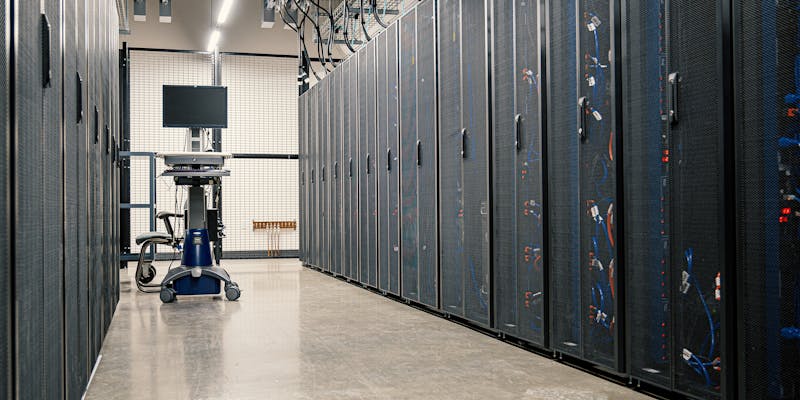
The digital revolution is ushering in a new stage for data centers, influenced by the rise of AI and a growing data appetite. Looking toward 2024, we see an evolution in data center design, underpinned by advanced cooling systems, alignment with community needs, and a push for renewable energy. This renaissance in architecture is not solely about expanding capacity but is also focused on developing data centers that are efficient, beneficial to local populations, and environmentally responsible. These improvements in design reflect a commitment to meeting technological expansions while fostering sustainability and community welfare. This exploration into the future highlights the significant transformations that data centers are undergoing to better integrate with both our technological aspirations and societal values.
Integrating Advanced Cooling Solutions for AI Demands
In the relentless pursuit of computational power, AI and HPC are challenging data centers with unprecedented levels of heat production, prompting a pivotal shift from traditional air cooling to advanced liquid cooling methodologies. Liquid-to-chip cooling systems are at the forefront of this revolution, promising superior heat dissipation capabilities and a significant boost in Power Usage Effectiveness (PUE). These high-efficiency solutions are not merely modifications but entail large-scale infrastructural overhauls. Data centers are now being reimagined to accommodate the complexities of liquid cooling, with Cooling Distribution Units (CDUs) and intuitively designed close-coupled cooling setups emerging as keystones in the spatial architectures of modern facilities. As such, operators are rethinking current layouts, aiming to extract the maximal cooling advantage with minimal spatial and energy expenditure.
The dialogue on cooling has expanded beyond just the imperative of managing heat to encompass flexibility and scalability. As AI workloads fluctuate and HPC clusters evolve, the cooling systems must navigate these dynamic environments with precision. Traditional air-cooled infrastructure is giving way to robust strategies incorporating liquid-cooled solutions tailored to the unique requirements of a data center’s thermal map. This fluid shift is not simply about retrofitting but is a conceptual reengineering to keep pace with the relentless demands of technology.
Employing Precision Control in Dynamic Load Environments
Data centers must dynamically manage fluctuating computational demands, and emerging intelligent control systems are crucial in this balancing act. These systems combine automation and precise airflow management to keep the computing environment optimal. With variable workloads, such control is vital to maintain performance without compromising efficiency.
Integrating AI into these mechanisms is seemingly inevitable. AI could brilliantly navigate the complexities of data center climate management, fine-tuning temperatures, and proactively altering cooling operations in sync with computational peaks. Employing AI would advance data centers toward self-regulation, allowing them to adapt predictively with little human input. This innovation is key for future autonomous data center operations.
Addressing NIMBYism through Community Outreach
As data centers proliferate, so too do community concerns, often crystallizing into the NIMBY (Not In My Back Yard) sentiment. Addressing this involves a strategy of openness and engagement, presenting data centers not as imposing industrial complexes but as invaluable educational assets. By introducing data center operations into local school programs and community events, centers can demystify their presence and underline the symbiotic relationship that exists between technology and community advancement.
Beyond educational outreach, the aesthetics of a data center contribute significantly to its acceptance. Dialogue with architects and urban designers is essential to ensure that the physical manifestation of these data hubs complements and enhances local landscapes. Balancing functional design with architectural grace is no small feat, yet it is a vital component of the strategy to align data center developments with the communities that host them. By investing in design that resonates with their surroundings, data centers can alleviate concerns and become welcome neighbors.
The Rise of Nuclear-Powered Data Centers
Data center operators increasingly explore Small Modular Reactors (SMRs) as a sustainable power source to enhance energy efficiency and reliability. These novel reactors could revolutionize how data centers are powered by allowing proximity placement to reduce transmission losses. With growing industry investment, SMRs epitomize a sustainable and reliable energy future, marking a stride toward eco-friendly planning for data centers that underpin our digital ecosystem.
This strategic move toward nuclear energy underscores a dedication to continuity and environmental stewardship, paving the way for alliances that foster clean energy integration. As we gear up for advancements post-2024, data centers aren’t just technological hubs but also beacons of responsible innovation, balancing computational demands with ecological and societal considerations. Adopting a conscientious approach to energy and design, the ambition is for data centers to coexist in sync with both technology and nature.