

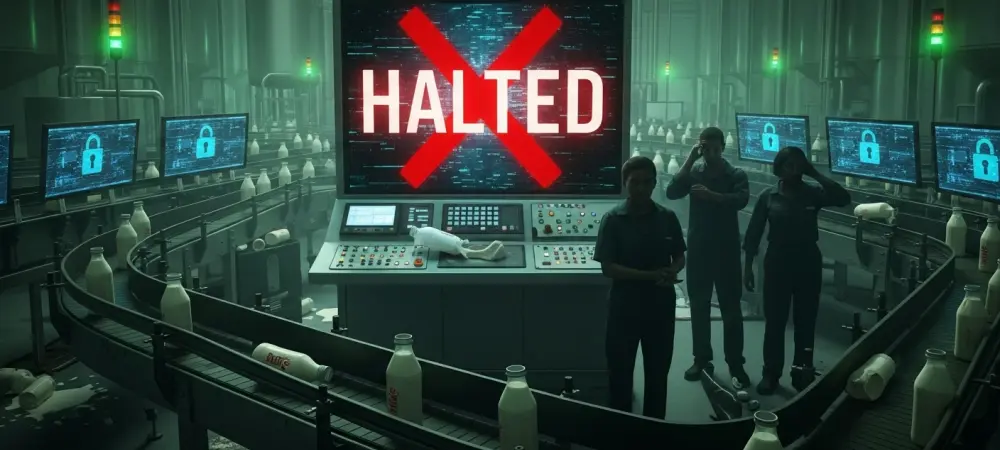
A Sudden Standstill: Understanding the Fairlife Production Halt
When the digital arteries of a billion-dollar dairy powerhouse are suddenly severed by a sophisticated ransomware strike, the ripple effect across the consumer goods market becomes immediate and undeniable. The recent suspension of domestic production at Fairlife, a premier dairy division of Coca-Cola, marks a significant disruption in the industrial landscape. Following a complex breach, the company moved U.S. manufacturing offline to contain the intrusion and assess infrastructure damage. This move, disclosed in a formal filing with the Securities and Exchange Commission, shows how digital interference leads to immediate physical consequences for large-scale supply chains.
This event serves as a critical case study for the food and beverage industry, which increasingly relies on interconnected systems to manage high-volume output. The cessation of manufacturing activities was necessary to prevent the spread of the malicious code, but it also stalled the distribution of essential products. By examining the interplay between technological vulnerabilities and industrial production, the market gains insight into why even the most successful brands are currently at risk. Stakeholders are now focused on recovery efforts and the broader implications for the global dairy supply.
From Growth to Gridlock: The Evolution of Fairlife and Modern Risks
Fairlife recently emerged as a powerhouse in the dairy industry, moving far beyond its origins as a niche health brand to surpass $1 billion in annual retail sales. To sustain this momentum, Coca-Cola committed over $650 million to expand and upgrade facilities in Michigan and New York. These investments were intended to modernize production and meet surging demand, making the sudden halt in operations particularly impactful. The transition toward highly automated and digitized production lines is a hallmark of modern manufacturing, yet it creates a complex landscape of risk.
Historical trends show that as industries move away from manual oversight toward interconnected systems, the attack surface for cybercriminals expands. For Fairlife, the collision of rapid financial growth and digital modernization created a scenario where a single breach could paralyze a billion-dollar operation. This background is vital because it demonstrates that technical upgrades must be matched by equally robust cybersecurity investments. Without this balance, industrial progress remains vulnerable to disruption by a single malicious actor.
Assessing the Damage and the Broader Threat Landscape
The Immediate Operational Impact and Regional Disparity
While the suspension of U.S. operations was immediate, the impact of the ransomware attack was not uniform across all territories. Fairlife’s Canadian operations remained entirely unaffected, continuing to function normally while American plants were shuttered. This regional disparity provides a unique look at how decentralized digital architectures can sometimes serve as a safeguard, preventing a localized breach from cascading into a global total shutdown. Despite the domestic halt, Coca-Cola emphasized that the quality and safety of existing products remained uncompromised.
The Rising Vulnerability of the Global Food and Agriculture Sector
The Fairlife incident is not an isolated event but rather part of a troubling trend targeting the food and agriculture sector. In 2026, the industry has already faced a staggering 205 recorded attacks, representing nearly 5% of all global cyber incidents. The critical nature of these businesses, where delays lead to spoilage or market shortages, gives cybercriminals significant leverage when demanding ransom payments. This shift toward targeting agriculture highlights a pivot in criminal strategy toward industrial control systems.
Deconstructing the “Opportunistic” Nature of Modern Cyber Threats
Expert analysis suggests that many of these breaches are opportunistic rather than highly targeted from the outset. Many cybercriminal groups use automated tools to scan the internet for known vulnerabilities in common software or hardware. Once access is gained, the hackers enter the system and only then realize the identity and value of the victim. This reality debunks the misconception that only technology companies need to worry about ransomware, as every modern company is essentially a technology company.
The Path Forward: Safeguarding the Future of Food Production
Looking ahead, the Fairlife incident is likely to trigger a wave of regulatory and technological shifts within the manufacturing sector. There is an increasing move toward “air-gapping” critical industrial control systems, ensuring that the computers running the production lines are physically or logically separated from the public internet. Furthermore, as the economic impact of these shutdowns becomes more apparent, insurance providers may mandate stricter cybersecurity standards for companies involved in the national food supply.
The role of artificial intelligence in both defense and offense will also shape the coming years. While hackers use AI to find vulnerabilities more quickly, companies are turning to AI-driven monitoring systems that detect anomalous behavior in real-time. The future of the industry depends on this constant technological arms race. Experts predict that the focus will shift from simple prevention to resilient recovery, where the goal is to ensure that if a breach does occur, production can be restored in hours rather than weeks.
Lessons Learned: Strategic Recommendations for Business Resilience
For businesses watching the Fairlife situation unfold, several actionable strategies emerge. First, network segmentation is essential; keeping administrative offices and factory floors on separate digital segments can prevent a phishing email from shutting down an entire production line. Second, companies must conduct regular tabletop exercises to simulate a ransomware response. Knowing exactly who to call can significantly reduce the chaos of the first 48 hours of a breach. Furthermore, the Fairlife case emphasizes the importance of regional redundancy. Having a diverse geographical footprint provided a buffer that kept the brand in the market even when one region was offline. For consumers and smaller businesses, this serves as a reminder to vet the security practices of partners and suppliers. In an interconnected economy, a business is only as secure as the weakest link in its supply chain.
Conclusion: Bridging the Gap Between Digital Security and Physical Stability
The ransomware attack on Fairlife was a watershed moment for the dairy industry and the broader manufacturing sector. It illustrated that the ability to produce physical goods was entirely dependent on the integrity of the digital environment. While Coca-Cola worked to restore full domestic production, the lessons learned from this disruption resonated across the industry, highlighting the urgent need for a security-first mindset in industrial expansion.
Ultimately, the significance of this event lay in its role as a wake-up call for global supply chains. As systems became more digitized, the stakes for cybersecurity moved beyond data privacy and into the realm of physical survival and economic continuity. Strengthening the backbone of modern manufacturing was no longer just an IT concern, but a fundamental requirement for the stability of the global market. Ensuring that industrial systems remained resilient became the great challenge of the era.