

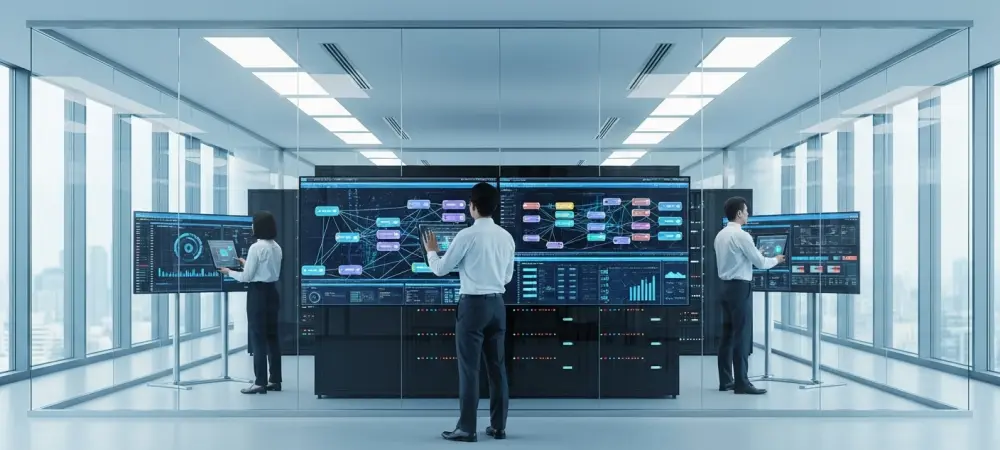
The transition from experimental generative AI pilots to fully integrated, autonomous business systems has reached a critical tipping point as global enterprises move toward agentic architectures that actively execute complex workflows. Cloudwerx, a prominent Australian technology consultancy, has solidified its position at the forefront of this evolution by officially joining the OpenAI Services Partner Network. This strategic alignment represents a significant milestone for the firm, positioning it as a primary driver for the deployment of sophisticated artificial intelligence across the Asia-Pacific region. By incorporating OpenAI’s frontier models into a high-tier partner ecosystem that already features industry leaders such as Salesforce and Snowflake, the consultancy is signaling a definitive shift in the market. The era of simple conversational chatbots is being superseded by governed, production-scale agentic systems that function as an orchestration layer for modern business operations. This partnership is specifically designed to meet the growing corporate demand for AI that does more than just generate text, focusing instead on autonomous agents capable of navigating multi-step processes within established organizational frameworks.
Driving Enterprise Transformation Through Production-Scale AI
Strategic Engineering: Disciplined Governance
Business leaders in 2026 are increasingly moving away from “hype pilots” and isolated proof-of-concept projects to demand implementations that offer immediate and measurable production value. The consensus among executive teams is that the conceptual value of artificial intelligence is no longer up for debate; the primary challenge has shifted toward the speed and security with which these models can be operationalized. Cloudwerx addresses this urgency through a production-first methodology, ensuring that every AI deployment is woven into the core systems of record from its inception. This approach rejects the idea of AI as a standalone novelty, treating it instead as a fundamental component of the enterprise architecture that requires the same level of rigor as any other mission-critical software. By focusing on the direct integration of intelligence into existing workflows, the consultancy helps organizations bypass the common pitfalls of experimental stagnation, allowing them to achieve a competitive advantage through the rapid scaling of reliable and secure digital labor. Central to this disciplined engineering strategy is the proprietary Tesseract system, a modular multi-agent architecture that serves as the foundation for complex autonomous workflows. Unlike traditional “black box” AI implementations that offer little visibility into the decision-making process, Tesseract emphasizes evaluation, telemetry, and strict governance from the very beginning of the development lifecycle. This framework allows for the creation of governed prompt patterns and tool integrations that can be reused across diverse client environments while maintaining rigorous guardrails. By treating AI agents as modular engineered systems rather than unpredictable chatbots, Cloudwerx ensures that these digital entities remain reliable, auditable, and fully compliant with corporate risk management standards. This methodology focuses on curating the precise context necessary for specific behaviors, which effectively addresses the primary concerns of enterprise buyers regarding operational risk. The result is a transparent system where every action taken by an autonomous agent can be monitored, measured, and improved over time.
Data Stack Integration: Market Expansion
Successful artificial intelligence implementation in the current landscape requires a deep and seamless integration with the existing enterprise data stack to ensure accuracy and relevance. By combining the advanced reasoning capabilities of OpenAI’s models with the robust data management of the Salesforce Customer 360 platform and the Snowflake AI Data Cloud, a powerful triad is formed. This “stack approach” allows businesses to connect high-level intelligence directly to their most valuable and sensitive data assets, ensuring that AI outputs are grounded in real-time enterprise information. Grounding the models in this manner significantly reduces the risk of hallucinations and ensures that the agentic workflows are fueled by the most current data available within the organization. This synergy between frontier AI models and governed data platforms creates a reliable environment where autonomous agents can execute tasks with a high degree of precision. Consequently, the utility of these systems increases as they become more deeply embedded in the actual data realities of the modern business enterprise.
The efficacy of this integrated model is clearly demonstrated through successful deployments with diverse global organizations, including My Plan Manager Group and Allegis Group. These implementations prove that agentic AI is not confined to a single industry but is highly applicable across various sectors, from healthcare administration and NDIS plan management to global human resources and workforce logistics. Following the acquisition of the data and AI firm Lightfold, the consultancy has significantly expanded its capacity to deliver these sophisticated solutions at a global scale. This growth trajectory highlights the firm’s critical role in helping clients navigate the rapidly changing technological landscape while keeping human oversight at the center of the process. The “exponential leap” in model capabilities observed over the past year has fundamentally altered how businesses plan for the future, making the transition to agentic systems a necessity for survival. As the consultancy continues to expand its reach, the focus remains on providing a structured and responsible path to innovation for companies across the entire Asia-Pacific region.
Future Considerations for Enterprise Intelligence
The inclusion of Cloudwerx in the OpenAI Services Partner program validated a rigorous, production-oriented methodology that prioritized security and scalability above all else. Organizations that successfully transitioned to agentic systems realized that the key to longevity lay in treating AI agents as modular engineered assets rather than temporary software patches. As the digital labor force continues to expand, businesses should focus on establishing comprehensive telemetry frameworks that allow for continuous monitoring of agent performance against specific business KPIs. It is recommended that leaders audit their current data governance structures to ensure they are robust enough to support autonomous orchestration without compromising data privacy or security. Furthermore, investing in modular architectures like Tesseract can provide the flexibility needed to swap or upgrade underlying models as the technology evolves. The ultimate objective remained the creation of a seamless collaboration between human expertise and machine intelligence, ensuring that innovation remained grounded in practical utility and ethical responsibility within the modern corporate enterprise.