

Modern engineering teams frequently discover that their existing security stacks are adept at identifying vulnerabilities but remain fundamentally incapable of stopping them from entering the environment in real time. This disconnect creates a dangerous window of exposure where a compromised dependency or a malicious package from a public registry like npm or PyPI can be integrated into a build before a security ticket is even generated. The latest expansion of the Cloudsmith platform addresses this specific operational gap by providing a proactive control plane designed to fortify the software supply chain against increasingly sophisticated threats. By focusing on the point of entry, the platform enables organizations to transition from a reactive posture of alert fatigue to a model of active enforcement. This structural shift is critical because industry data reveals that nearly half of all organizations have faced security incidents stemming from third-party dependencies, proving that visibility alone is no longer a sufficient defense mechanism for production systems.
Automated Governance: The Shift to Active Enforcement Policies
The integration of automated policy rules based on the Open Policy Agent framework marks a significant evolution in how organizations manage their artifact repositories. Instead of relying on manual approvals that slow down the development lifecycle, security teams can now define programmatic guardrails that evaluate every incoming package against specific safety criteria before it reaches a developer’s local environment. This system utilizes a sophisticated quarantine mechanism, often referred to as a cool-down period, which temporarily isolates newly published packages to allow for community vetting and automated scanning. This delay is essential in the current landscape because many malicious injections are discovered and pulled from public registries within the first few hours or days of their release. By enforcing these periods through the artifact layer, companies can effectively insulate their internal pipelines from zero-day registry attacks without requiring constant manual intervention from senior security architects or DevOps leads.
Furthermore, the complexity of modern software means that risks are rarely found on the surface level of a primary dependency. The Cloudsmith update focuses heavily on identifying transitive dependencies, which are the hidden libraries that your chosen packages rely upon, often spanning several layers deep into the software ecosystem. These nested components frequently harbor vulnerabilities that standard scanning tools might miss, yet they possess the same level of access to the application environment as the top-level package. To solve the friction typically associated with blocking these components, the platform now provides customized 403 error messages directly within the developer’s build tools. These messages go beyond a simple “access denied” notification, offering specific remediation instructions and links to approved alternatives. This feedback loop ensures that the security policy serves as an instructional guide rather than a productivity roadblock, allowing developers to resolve dependency issues autonomously while maintaining high velocity.
Risk Management: Intelligence Integration and Global Compliance
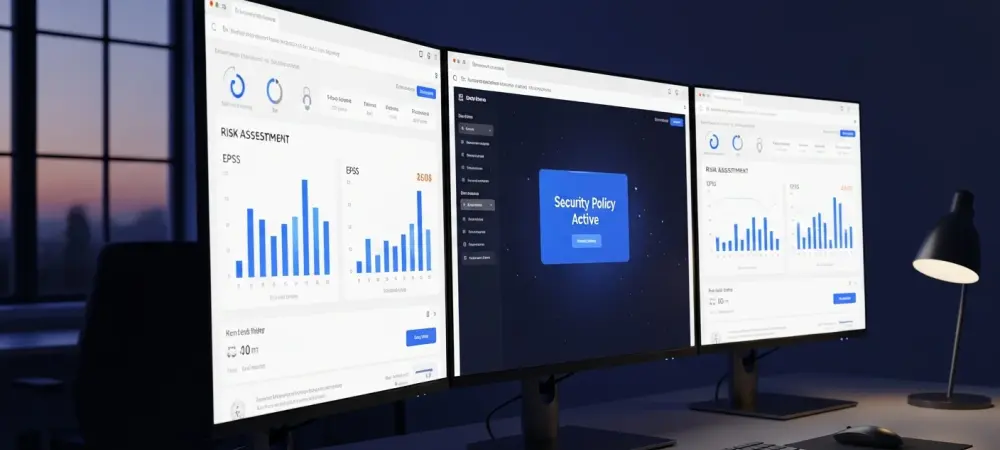
Effective supply chain security requires a high-fidelity data source to distinguish between minor theoretical risks and critical exploits that are actively being leveraged by threat actors. Cloudsmith achieves this by layering package intelligence from a diverse array of sources, including OSV.dev and the OpenSSF malicious package project, alongside the Exploit Prediction Scoring System. By prioritizing vulnerabilities based on their EPSS scores, engineering departments can direct their limited resources toward fixing the most dangerous flaws first, rather than drowning in a sea of low-impact Common Vulnerabilities and Exposures. This risk-based approach is becoming a legal necessity as new regulatory frameworks like the European Union’s Cyber Resilience Act and the Digital Operational Resilience Act take full effect. These mandates place significant legal responsibility on organizations to demonstrate robust governance over their entire software delivery pipeline, making the ability to prove a defensible and audited supply chain a core business requirement. The strategic pivot toward using Software Bills of Materials as active policy documents allows organizations to verify the integrity of every component at the moment of storage and distribution. This proactive inspection ensures that no unauthorized or non-compliant artifact can bypass the security perimeter, effectively creating a “clean room” environment for software construction. Early adopters of these features, such as the construction software firm ConstructConnect, have already reported substantial progress in eliminating high-risk vulnerabilities by utilizing these automated quarantine and blocking capabilities. In a landscape where AI-accelerated threats can generate and distribute malicious code at unprecedented speeds, these controls have transformed security from a secondary audit process into an integrated, automated component of the development lifecycle. This systematic approach provided the necessary infrastructure to handle the sheer volume of package updates while ensuring that only verified, safe components were allowed to move through the internal CI/CD pipelines.
Future Considerations: Strategic Steps for Supply Chain Resilience
Organizations that adopted these advanced security controls moved closer to achieving a zero-trust architecture for their software artifacts. Engineering leadership prioritized the implementation of granular policy rules that aligned with specific compliance needs, ensuring that automated blockers did not interfere with critical development timelines. Security teams utilized the intelligence layer to filter out noise, focusing their remediation efforts on vulnerabilities with high exploitability scores rather than chasing every minor CVE. This shift in strategy reduced the manual workload on developers by providing clear, actionable error messages that facilitated immediate resolution of dependency conflicts. By treating the artifact repository as a central enforcement point, companies successfully mitigated the risks associated with slopsquatting and transitive dependency attacks. These steps established a more resilient software pipeline that was capable of adapting to a rapidly evolving threat landscape without sacrificing the speed or efficiency of the deployment process.