

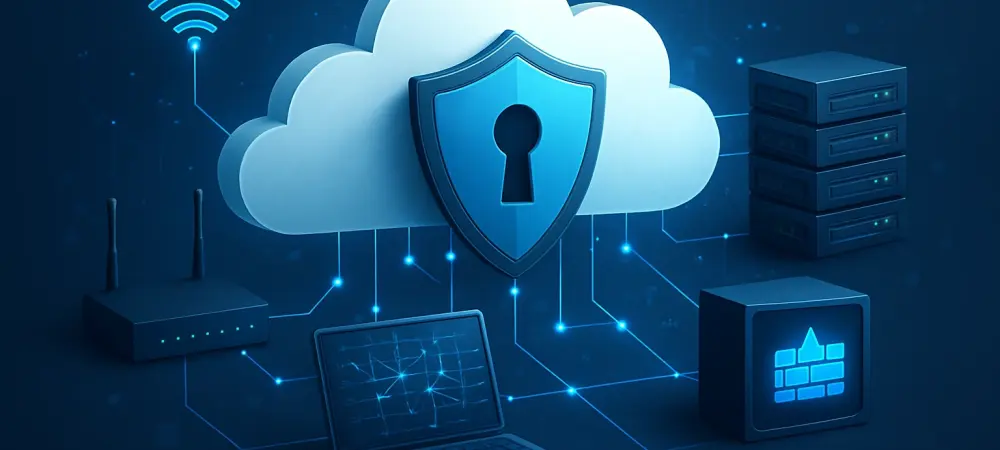
Imagine a multinational enterprise with operations spanning multiple continents, managing sensitive data across hybrid cloud environments, only to suffer a devastating breach due to a misconfigured firewall. Such scenarios are no longer mere hypotheticals but stark realities in today’s digital landscape, where cyber threats evolve at an alarming pace. With businesses increasingly reliant on cloud infrastructure for operational efficiency, the demand for robust security solutions has never been more critical. This review dives deep into the world of cloud network security, exploring the cutting-edge technologies, their standout features, and their real-world impact on enterprise protection. The goal is to illuminate how these solutions safeguard data and operations in an era of relentless cyberattacks.
Understanding the Foundations of Cloud Security
At its core, cloud network security encompasses a suite of technologies and practices designed to protect data, applications, and infrastructure hosted in cloud environments. These solutions address a myriad of threats, from unauthorized access to data leaks, especially in hybrid and multi-cloud setups where vulnerabilities often arise at integration points. The escalating sophistication of cyber threats, including AI-driven attacks, underscores the urgency for comprehensive defense mechanisms that go beyond traditional firewalls.
The significance of these solutions cannot be overstated as enterprises migrate more operations to the cloud for scalability and cost-efficiency. Unlike on-premises systems, cloud environments demand dynamic security that adapts to fluctuating workloads and distributed architectures. This necessitates a blend of encryption, access controls, and continuous monitoring to ensure that sensitive information remains secure across diverse platforms.
Moreover, the context of increasing remote workforces adds another layer of complexity, as employees access systems from unsecured networks. Security providers have responded by crafting tools that prioritize identity verification and real-time threat detection. This review aims to unpack how these foundational elements shape the effectiveness of modern security frameworks in tackling today’s challenges.
Key Features Driving Effectiveness
Scalability and Automation in Dynamic Environments
One of the hallmarks of top-tier cloud security solutions is their ability to scale effortlessly alongside enterprise growth. As businesses expand, so do their cloud footprints, often spanning multiple providers and regions. Scalable systems ensure that security coverage grows in tandem, protecting new workloads without requiring extensive manual reconfiguration. This adaptability is vital to maintaining operational continuity in fast-paced markets.
Equally important is the role of automation in these systems. By leveraging machine learning algorithms, security platforms can detect anomalies and respond to threats in real time, reducing the burden on human teams. However, striking a balance between automated responses and human oversight remains crucial to avoid false positives that could disrupt legitimate operations. Automation, when executed well, acts as a force multiplier for understaffed security departments.
The impact of these features becomes evident in dynamic cloud environments where threats emerge unpredictably. Solutions that combine scalability with intelligent automation empower enterprises to stay ahead of attackers while minimizing downtime. This synergy is a cornerstone of modern security, ensuring that protection evolves as rapidly as the threats themselves.
Seamless Integration with Leading Cloud Platforms
Another defining feature is the ability to integrate seamlessly with major cloud platforms like AWS, Microsoft Azure, and Google Cloud. Compatibility with these ecosystems ensures that security measures enhance rather than hinder productivity. Enterprises benefit from unified dashboards and consistent policy enforcement, which reduce friction for users navigating complex multi-cloud setups.
This integration also facilitates real-time visibility across diverse environments, allowing security teams to monitor traffic and pinpoint vulnerabilities swiftly. For instance, solutions that tap into native cloud APIs can offer deeper insights into workload behaviors, enhancing threat detection capabilities. Such interoperability is not just a convenience but a necessity for maintaining robust defense in fragmented infrastructures.
Real-world performance further validates the importance of this feature. Enterprises operating across multiple cloud providers often face compatibility challenges, but leading security tools mitigate these through standardized protocols and tailored configurations. This cohesive approach ultimately preserves user experience while fortifying defenses, a balance that is essential for widespread adoption.
Trends Shaping the Security Landscape
The trajectory of cloud security is being redefined by transformative trends such as AI-driven analytics and zero-trust architectures. AI enables predictive threat detection by analyzing vast datasets to identify patterns that signal potential breaches before they occur. This proactive stance marks a shift from reactive measures, offering enterprises a strategic edge against sophisticated attacks.
Additionally, the rise of zero-trust models, which assume no user or device is inherently trustworthy, has gained traction. This approach enforces strict identity verification and least-privilege access, a critical safeguard in an era of remote work where traditional perimeters are obsolete. Solutions embodying this philosophy are reshaping how enterprises secure connections, especially for distributed teams.
Unified visibility across networks and endpoints also stands out as a growing priority. With multi-cloud environments becoming the norm, security platforms that provide a single-pane view streamline risk management. These trends collectively reflect an industry consensus on the need for adaptive, integrated defenses that address both current and emerging challenges in cloud security.
Real-World Impact Across Industries
Cloud network security solutions have found practical application across diverse sectors, proving their versatility and effectiveness. In finance, where regulatory compliance is paramount, tools like Palo Alto Networks’ Prisma Cloud offer automated monitoring to ensure adherence to stringent standards. This capability allows institutions to focus on core operations while maintaining airtight security.
Healthcare, another highly regulated field, benefits from these solutions by safeguarding patient data against breaches. Providers in this space deploy security platforms to encrypt sensitive information and monitor access in real time, mitigating risks associated with unauthorized disclosures. Such implementations highlight the critical role of tailored security in protecting trust and operational integrity.
Multinational enterprises, often juggling complex cloud setups, rely on solutions like Zscaler’s Zero Trust Exchange to secure remote workforces. By replacing outdated VPNs with identity-based access, these tools ensure consistent policy enforcement across geographies. These use cases underscore how cloud security adapts to specific industry needs, delivering tangible benefits in high-stakes environments.
Challenges Hindering Optimal Performance
Despite their strengths, cloud security solutions face notable hurdles that can temper their effectiveness. Misconfigured settings, such as improperly set firewalls or exposed APIs, remain a persistent technical challenge, often serving as entry points for attackers. Addressing these requires ongoing vigilance and expertise, which can strain resource-limited teams.
Regulatory compliance poses another significant burden, especially for enterprises operating in multiple jurisdictions with varying standards. Keeping pace with evolving mandates demands continuous updates to security protocols, a process that can be both time-consuming and costly. Providers are working to alleviate this through automated compliance tools, but gaps still persist.
Cost considerations further complicate adoption, as subscription models and training expenses add up over time. Balancing robust protection with budget constraints is a delicate act for many organizations. While innovation continues to drive down some costs, enterprises must carefully evaluate long-term investments to ensure sustainable security without financial overreach.
Looking Ahead: The Future of Cloud Protection
The future of cloud network security appears poised for remarkable advancements, particularly in AI-driven threat detection. As algorithms become more sophisticated over the coming years, expect even sharper predictive capabilities that preempt attacks with unprecedented accuracy. This evolution promises to redefine how enterprises approach risk mitigation.
Compliance needs will also continue to evolve, pushing providers to build more flexible, automated solutions that adapt to new regulations seamlessly. From now through the next few years, anticipate a stronger emphasis on integrating security into the development lifecycle, ensuring vulnerabilities are addressed before deployment. This shift could fundamentally enhance cloud resilience.
The long-term impact of these solutions on enterprise security is likely to be transformative, fostering a more proactive cybersecurity culture. As threats grow in complexity, the ability to anticipate and neutralize risks will become a competitive advantage. Cloud security, in this light, is not just a protective measure but a strategic enabler for digital transformation.
Final Reflections on Cloud Security Adoption
Reflecting on this exploration, the journey through cloud network security solutions revealed a landscape of innovation tempered by persistent challenges. The standout features—scalability, automation, and integration—demonstrated their capacity to fortify enterprises against evolving threats. Real-world applications across industries further cemented their value, showcasing adaptability in high-pressure contexts.
Yet, the hurdles of misconfigurations, compliance burdens, and costs reminded stakeholders of the work still needed. Looking back, the strides made by leading providers like Darktrace, Palo Alto Networks, and Zscaler set a high bar for what was achievable. For enterprises moving forward, the actionable step lies in aligning security choices with specific operational needs, prioritizing platforms that offer both current protection and future scalability.
Beyond immediate adoption, a critical next consideration emerged: fostering a culture of continuous evaluation. Enterprises would benefit from regularly reassessing their security posture as technologies and threats evolved. Partnering with providers for ongoing support and staying attuned to trends like AI advancements ensured that defenses remained robust. This proactive mindset, born from the insights of this review, offered a pathway to enduring security in an ever-shifting digital realm.