

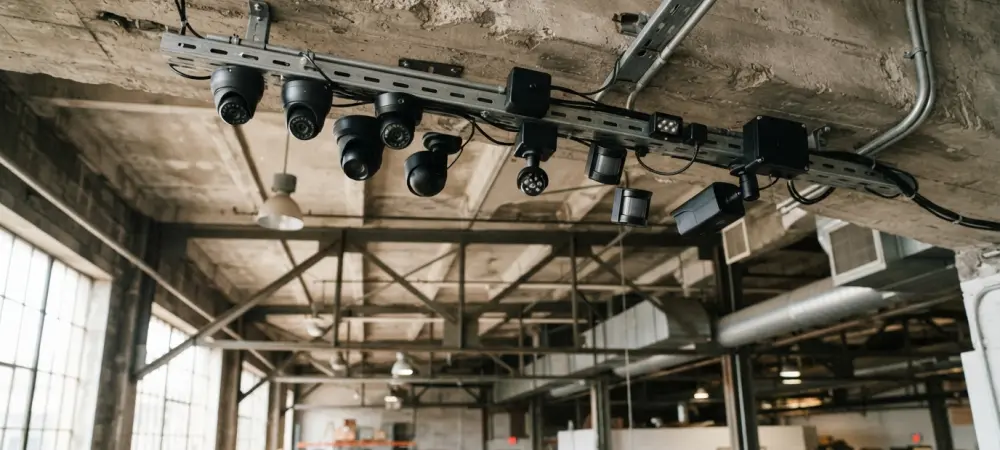
The systematic integration of sophisticated cloud-based management into physical security frameworks has effectively dismantled the traditional barriers that once separated local surveillance from global digital intelligence. This evolution represents a departure from the antiquated model of on-premise, siloed hardware that required manual intervention and localized maintenance. Modern security now relies on a unified ecosystem where software-as-a-service (SaaS) models provide the connective tissue for distributed hardware, enabling remote oversight that was previously impossible. This transition is not merely a technical upgrade; it is a fundamental shift in how organizations prioritize cyber resilience alongside physical protection in an increasingly volatile environment.
The Shift Toward Unified Cloud-Based Security Infrastructure
Centralized management serves as the cornerstone of this technological pivot, allowing security teams to access real-time data from any geographic location through a single interface. By moving away from local servers, organizations eliminate the risk of physical data loss due to hardware failure or localized incidents. The SaaS model ensures that the integration of new devices does not necessitate a complete overhaul of the existing network, fostering a more agile approach to facility management. Moreover, this shift aligns with the broader digital transformation trends of the 2026–2028 period, where accessibility and scalability are prioritized.
The relevance of these platforms is heightened by the convergence of physical and digital threats, making the security of the surveillance network itself a primary concern. Traditional systems often suffered from vulnerabilities in outdated firmware that went unpatched for years. In contrast, cloud-managed systems provide a continuous stream of updates, ensuring that every camera and door controller is equipped with the latest defensive protocols. This proactive stance on cybersecurity transforms physical security from a reactive utility into a robust component of the enterprise’s broader risk management strategy.
Core Components of Modern Cloud-Security Ecosystems
Integrated Hardware Suites and Edge Computing
The efficacy of modern cloud platforms depends largely on the synergy between AI-driven hardware and edge computing. Cameras and sensors now possess enough onboard processing power to analyze video feeds locally, identifying anomalies such as unauthorized movement or environmental changes without saturating network bandwidth. By transmitting only relevant metadata or specific event clips to the cloud, these systems maintain a lightweight footprint. This “all-in-one” philosophy allows for the consolidation of video surveillance, access control, and environmental monitoring into a cohesive, manageable stream of information.
Zero-Trust Architecture and Cybersecurity Frameworks
Data protection within these ecosystems is governed by zero-trust principles, where every access request is rigorously verified regardless of its origin. Technical safeguards such as mandatory end-to-end encryption and multi-factor authentication are no longer optional but are baked into the architectural foundation. Furthermore, localized data storage and sovereign cloud hosting have become critical for meeting international data residency requirements. These technical characteristics ensure that while the management is global, the data remains within the legal and geographical boundaries specified by the client.
Current Industry Trends and Regulatory Milestones
The industry is witnessing a significant move away from closed-circuit systems toward interoperable, cloud-native solutions that favor transparency. A major catalyst for this change is the achievement of high-level regulatory certifications, such as Australia’s Information Security Registered Assessors Program (IRAP). For instance, the successful assessment of platforms like Verkada to handle “PROTECTED” level data has set a new benchmark for trust in the public sector. Such milestones indicate that cloud platforms are now deemed capable of securing the most sensitive government and critical infrastructure environments.
Recent behaviors in the corporate sector suggest that physical and cybersecurity are no longer treated as separate disciplines. The adoption of FedRAMP-authorized and IRAP-assessed platforms reflects a growing demand for documented compliance and standardized security protocols. This trend is driven by the realization that physical security hardware is often the weakest link in a network if not properly managed. By utilizing platforms that meet these rigorous standards, organizations can streamline their procurement processes while ensuring their infrastructure remains compliant with the latest security manuals.
Strategic Deployment Across High-Security Sectors
Government agencies and healthcare facilities have emerged as the primary adopters of these high-security cloud solutions due to their need for both rigor and efficiency. In these sectors, the ability to monitor air quality or manage integrated intercom systems from the same platform used for video surveillance provides a holistic view of facility health. This integration reduces the complexity of managing multiple vendors and disparate systems. For critical infrastructure, where the stakes of a breach are national in scope, the reliability of cloud-managed platforms offers a level of redundancy that on-site servers cannot match. Large-scale commercial enterprises also leverage these systems to improve operational efficiency across multiple sites. The centralized nature of the cloud allows a small security team to oversee dozens of locations, receiving instant alerts for specific triggers. This scalability is particularly useful for organizations undergoing rapid expansion, as new sites can be brought online in a fraction of the time required for traditional systems. The result is a streamlined security posture that scales horizontally without a linear increase in management overhead or complexity.
Navigating Technical and Adoption Hurdles
Despite the clear benefits, the transition to cloud-managed security is not without its challenges, primarily concerning initial migration costs and bandwidth consumption. Organizations with significant investments in legacy hardware often face a steep financial barrier when considering a total system overhaul. Furthermore, while edge computing mitigates network strain, organizations with limited connectivity in remote areas must still plan carefully to avoid latency issues. These technical hurdles require a phased approach to deployment rather than an immediate, wholesale replacement of existing infrastructure.
Psychological barriers also persist, as some stakeholders remain hesitant to store sensitive security data on third-party cloud servers. This reluctance is often rooted in a misunderstanding of how modern encryption and sovereign hosting protect data from unauthorized access. Overcoming this skepticism requires a clear demonstration of the platform’s uptime performance and its ability to maintain functionality during service outages. Mitigating these risks involves selecting vendors with proven track records and robust service-level agreements that guarantee data availability even in worst-case scenarios.
The Future of Cloud-Managed Physical Security
The horizon of physical security is defined by the deeper integration of predictive analytics and autonomous response mechanisms. As artificial intelligence matures, these systems will move beyond simple detection to proactive threat forecasting, identifying patterns that precede a security incident. This capability will eventually allow for deeper integration with smart city infrastructure, where security platforms communicate directly with emergency services and urban management systems. Such connectivity will transform security from a facility-specific concern into a distributed, city-wide network of intelligence.
Long-term, the democratization of high-end security technology will allow smaller organizations to access the same level of protection as major government departments. The obsolescence of traditional on-premise servers appears inevitable as the cost of maintaining local hardware becomes unsustainable compared to the efficiency of the cloud. We are moving toward a future where global security networks are fully decentralized, yet perfectly synchronized. This evolution will likely lead to the creation of new standards for autonomous facility management, where human oversight is augmented by continuous, machine-led vigilance.
Concluding Assessment of the Cloud-Security Landscape
The review of cloud-managed security frameworks demonstrated that the technology successfully bridged the gap between physical safety and digital integrity. It was observed that the adoption of these platforms provided organizations with unprecedented scalability and a more robust defense against cyber threats. The assessment of regulatory milestones like the IRAP certification confirmed that the industry reached a level of maturity where even the most sensitive data could be safely managed in a cloud environment. The transition away from siloed, on-premise hardware proved to be a necessary step in achieving modern operational resilience. To maximize the potential of these advancements, organizations were encouraged to conduct comprehensive audits of their existing network capacities and hardware compatibility. It became clear that prioritizing vendors with localized data residency and zero-trust architectures was essential for long-term compliance. The integration of environmental sensors and smart access controls into a single management pane was identified as a key driver for holistic facility oversight. Ultimately, the evidence suggested that stakeholders who embraced these unified platforms positioned themselves to meet the complex security demands of the late 2020s.