

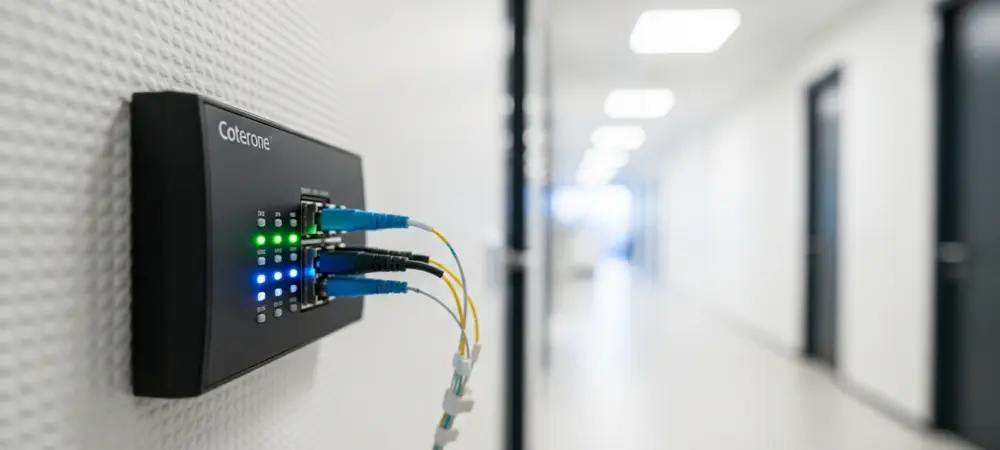
The traditional reliance on bulky localized server racks and complex virtual private networks is rapidly dissolving as the global security sector pivots toward agile, serverless frameworks that redefine how organizations protect physical assets. This transformation is not merely a change in hardware but a fundamental shift in the architecture of trust, moving away from closed-circuit silos toward integrated, cloud-native ecosystems. The recent commercial success of platforms like OneLink, which secured top honors at the 2026 Fortress Cybersecurity Awards, underscores a market demand for systems that bridge the gap between digital defense and physical reliability.
Evolution from Legacy Infrastructure to Cloud-Native Security
Historically, the management of physical security across multiple sites was a logistical nightmare characterized by high capital expenditure and heavy on-site footprints. Companies were forced to install dedicated physical servers at every branch, maintaining intricate VPNs to ensure that remote data could reach a central command center. This legacy model created a significant “technical debt,” where the cost of maintaining the infrastructure often outweighed the security benefits it provided. The emergence of serverless management platforms has effectively decoupled security intelligence from physical location, allowing for a centralized oversight model that functions regardless of distance.
The transition toward operational expenditure models allows businesses to scale their security needs dynamically. Instead of purchasing over-provisioned hardware for a new facility, administrators can now activate licenses and connect devices to the cloud in minutes. This shift represents a democratization of enterprise-grade security, as smaller firms can now access the same high-level encryption and management tools that were once reserved for multinational corporations with massive IT departments. By removing the complexity of localized server maintenance, organizations can redirect their focus toward operational integrity and incident response.
Technical Pillars of Cloud-Integrated Platforms
Zero-Trust Architecture and End-to-End Encryption
At the heart of modern cloud-integrated security lies the zero-trust model, which assumes that no device or user on the network is inherently safe. Unlike older systems that relied on a “perimeter” defense, zero-trust requires continuous, multi-factor authentication for every single interaction, whether it is a badge swipe at a turnstile or a remote configuration change by a technician. This technical rigor ensures that even if a network segment is compromised, the physical access points remain locked and unmanaged by unauthorized entities.
The implementation of full digital encryption from the hardware level to the dashboard is what makes this architecture viable. Every packet of data transmitted between a door controller and the management platform is shielded by advanced cryptographic protocols, preventing man-in-the-middle attacks. This end-to-end security is essential for high-risk sectors like finance or critical infrastructure, where the interception of security data could lead to catastrophic breaches.
Direct Hardware-to-Cloud Connectivity
One of the most significant technical breakthroughs in this field is the development of controllers that establish a direct bridge to cloud platforms without the need for an intermediary on-site server. These devices, such as the Controller 7000, function as intelligent gateways that handle local logic—ensuring doors still operate if the internet goes down—while offloading the management burden to the cloud. This dual-layer approach combines the speed of local processing with the global visibility of a centralized web interface.
This direct connectivity facilitates rapid global deployment, reducing the technical footprint required at remote or unmanned locations. By eliminating the need for local database management and software updates, companies can deploy security to a new facility as easily as plugging in a network cable. This streamlined deployment cycle is a primary reason why performance metrics for such platforms show such a drastic reduction in initial configuration time and labor costs.
Industry Milestones and Shifting Market Trends
The recognition of cloud-physical integration by major cybersecurity bodies marks a turning point in how corporations view their defensive strategies. The convergence of physical and cybersecurity into a unified corporate strategy is no longer a luxury but a necessity for modern compliance. Industry awards serve as a validator for these technologies, signaling to stakeholders that the cloud is not a vulnerability, but a tool for enhancing resilience through standardized, automated security protocols.
Market trends from 2026 and beyond suggest a move toward removing infrastructure complexity to prioritize compliance. As regulatory environments become more stringent, the ability to generate unified audit logs across a global footprint from a single cloud source is invaluable. Companies are increasingly abandoning fragmented legacy systems in favor of unified platforms that offer a “single source of truth” for all security-related data.
Practical Implementations in Distributed and Unmanned Facilities
Real-world applications in sectors like telecommunications and renewable energy highlight the necessity of cloud integration. Managing a thousand unmanned cellular towers or remote wind farms is impossible with traditional server-heavy models. Cloud-integrated platforms provide total visibility into these geographically isolated assets, allowing security teams to manage access permissions and monitor intrusions in real-time without ever leaving their primary operations center.
Centralized dashboards offer enterprise-grade access control that can be adjusted on the fly. If a technician requires emergency access to a remote site, the permissions can be granted and revoked instantly through the cloud, with every action logged for compliance. This level of granular control ensures that even the most isolated assets are integrated into the broader corporate security umbrella, reducing the risk of unauthorized entry or internal theft.
Addressing Migration Hurdles and Technical Limitations
Despite the benefits, transitioning from legacy systems to the cloud presents several challenges, particularly regarding the integration of existing older hardware. Many organizations possess significant investments in analog cameras or older card readers that are not natively cloud-compatible. Bridging this gap requires specialized migration tools and “edge” adapters that can translate legacy signals into a format the cloud platform can understand, a process that can add complexity to the initial rollout.
Regulatory hurdles also persist, particularly in highly sensitive sectors where data sovereignty laws may require security data to remain within specific national borders. Cloud providers have responded by establishing localized data centers, but the legal landscape remains a patchwork that organizations must navigate carefully. Additionally, while these platforms are designed to handle low-bandwidth environments, ensuring 100% uptime in areas with poor connectivity requires robust failover strategies and local caching capabilities to prevent security gaps during outages.
The Future of Unified Security Ecosystems
The outlook for cloud-integrated security is increasingly defined by the integration of artificial intelligence and machine learning. In the near term, specifically from 2026 to 2028, we expect to see platforms that not only report incidents but predict them by analyzing patterns of behavior across a global network. This proactive stance would allow security systems to identify a potential breach at a remote site by comparing it to similar anomalies detected elsewhere, creating a self-learning defensive net.
Long-term, breakthroughs in edge computing will likely enhance the reliability of these platforms even further. As more processing power moves directly into the hardware, the reliance on constant cloud communication for every minor decision will decrease, leaving the cloud to handle high-level coordination and data storage. This evolution will further democratize high-end security, making enterprise-grade protection affordable for virtually any business size by reducing the total cost of ownership to its lowest levels in history.
Conclusion and Final Appraisal
The evaluation of cloud-integrated security platforms revealed a definitive shift in how global enterprises approached protection. Performance metrics from the first year of OneLink’s commercial availability demonstrated that the technology succeeded in reducing deployment times by 75% and configuration costs by nearly 97%. These figures suggested that the transition to cloud-native frameworks was not just a trend but a necessary evolution for companies managing distributed assets in an increasingly volatile digital landscape.
Gallagher’s OneLink platform demonstrated that removing the technical footprint at the edge did not necessitate a compromise in safety. Instead, the implementation of zero-trust models and direct hardware connectivity provided a level of visibility and control that was previously unattainable with localized servers. The industry recognized these advancements as the new standard for operational efficiency. Moving forward, organizations must prioritize the modernization of their physical security stacks to remain competitive and compliant, ensuring that their physical defenses are as agile and secure as their digital counterparts.