

For years, the promise of a truly flexible multicloud strategy has remained just out of reach for most enterprises, hindered by the immense friction of moving complex workloads between different public cloud environments. Cloud Infrastructure Cloning represents a significant advancement in the cloud computing sector, aiming to solve the persistent challenge of infrastructure portability and vendor lock-in. This review will explore the evolution of this technology, its key features, performance capabilities, and the impact it has on multicloud strategies. The purpose of this review is to provide a thorough understanding of cloud cloning, its current capabilities, and its potential for future development.
An Introduction to Cloud Cloning Technology
At its core, Cloud Cloning technology introduces a methodology designed to overcome the inherent limitations of traditional cloud portability solutions. The approach is defined by a two-step process: an initial, comprehensive capture of an entire source cloud infrastructure, followed by an automated cross-cloud translation that re-architects it for a target environment. This integrated system directly addresses the shortcomings of using Infrastructure as Code (IaC), native provider migration tools, and standalone governance platforms in isolation, positioning itself as a unified solution to the “global lock-in crisis” that has emerged in the broader technological landscape of multicloud management.
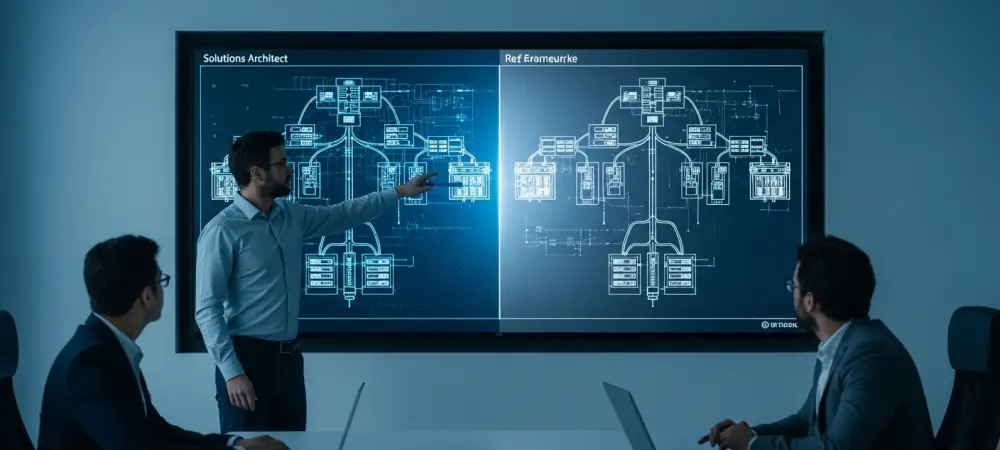
This technology seeks to fundamentally alter the portability paradigm. Instead of relying on generalized code templates or basic lift-and-shift tools, it creates a highly accurate digital twin of a live, complex cloud environment. By understanding the intricate dependencies between resources—from networking and security to identity management and container orchestration—it can intelligently reconstruct the infrastructure on a different provider’s platform. This automated re-platforming and re-architecting process is what distinguishes it from previous efforts, which often left critical configuration and integration tasks as a manual exercise for engineering teams.
Core Features and Technical Breakdown
Comprehensive Infrastructure Discovery and Snapshot
The foundation of Cloud Cloning is its ability to capture a complete and detailed snapshot of a source cloud environment. Unlike traditional tools that primarily focus on virtual machines and storage volumes, this process utilizes cloud provider APIs to perform a deep scan of the entire infrastructure footprint. The discovery phase meticulously documents complex networking configurations, granular Identity and Access Management (IAM) policies, container orchestration platforms like Kubernetes, and the intricate web of dependencies connecting all resources. This deep dive is crucial, as it captures the nuanced, provider-specific settings that define how an application actually functions in a live environment.
This comprehensive capture results in a highly accurate model of the live infrastructure, which serves as the blueprint for both translation and governance. The depth of this snapshot is a key differentiator; while many migration tools might only account for a fraction of a modern cloud setup, this approach aims to capture a much larger percentage of the environment. By including the often-overlooked but critical components of IAM and networking, the system builds a far more complete and actionable representation, moving beyond simple asset inventories to create a truly functional digital twin.
Automated Cross-Cloud Translation and Mapping
Following the discovery phase, the technology’s core engine performs an automated translation of the captured infrastructure into the target cloud’s distinct service model. This patented mapping technology navigates the significant semantic and architectural differences between providers, which present one of the greatest barriers to portability. For example, it intelligently interprets divergent security models, such as the “allow-only” rules of AWS Security Groups versus the prioritized “allow/deny” logic in Azure. It also reconciles differing scaling mechanisms and highly dissimilar IAM structures.
The process intelligently converts the source configuration into an equivalent, functional environment on the target platform, culminating in the automatic generation of deployment-ready IaC scripts, most notably in Terraform. This output is a critical advantage, as it eliminates the need for teams to manually reverse-engineer their existing setup and write new code from scratch. By automating this complex translation, the technology dramatically reduces the time, cost, and risk associated with cross-cloud migration and re-architecting, making workload mobility a practical reality rather than a theoretical goal.
Integrated Governance and Optimization Engine
Cloud Cloning extends its capabilities far beyond migration by integrating a powerful governance engine designed for FinOps and configuration drift management. By leveraging its cross-cloud translation engine, the system can provide precise, apples-to-apples cost comparisons for specific workloads across different providers and regions. This transforms FinOps from a reactive practice based on estimations into a proactive strategy backed by actionable data. Organizations can model the exact cost of their infrastructure on an alternative platform and receive the deployment code needed to realize those savings. Furthermore, by taking regular, automated snapshots of the infrastructure, the technology creates a detailed and continuous changelog that proactively detects configuration drift. This process flags any deviations from an intended baseline, whether related to cost, security, or compliance policies. It moves beyond simple inventory tracking to identify subtle but critical changes in firewall rules, IAM permissions, or resource tags. This provides security and operations teams with a powerful tool for maintaining architectural integrity and ensuring the live environment remains aligned with its intended state.
Emerging Trends and Innovations in Cloud Portability
The emergence of Cloud Cloning technology signals a significant shift in the cloud portability landscape, moving the industry away from fragmented, manual processes and toward a holistic, automated platform. This innovation directly addresses the trend of rising multicloud complexity, a scenario where organizations increasingly struggle to manage disparate environments effectively. The siloed, cloud-specific approaches that have dominated the market often exacerbate this problem, reinforcing lock-in rather than mitigating it. By unifying infrastructure discovery, translation, and governance into a single, seamless workflow, this technology represents a new paradigm that prioritizes true workload mobility and data-driven decision-making. It challenges the long-held assumption that complex, cloud-native applications are permanently tethered to their initial provider. This evolution suggests a future where infrastructure is treated as a more fluid and strategic asset, enabling organizations to optimize for cost, performance, and features with a level of agility that was previously unattainable.
Real-World Applications and Use Cases
Enabling True Multicloud and Vendor Mobility
The primary application of Cloud Cloning is to facilitate the seamless migration and re-architecting of complex, cloud-native infrastructures between major providers like AWS, Azure, and Google Cloud. This capability empowers organizations to finally break free from vendor lock-in, a constraint that has long limited strategic flexibility. It allows them to move workloads to the platform that offers the best performance, features, or cost for a specific application without undergoing a costly and time-consuming manual reverse-engineering and remediation process.
This enables a more dynamic approach to cloud strategy, where platform selection is driven by business needs rather than technical debt. An organization might, for instance, move a data-intensive workload to a provider with superior analytics services or shift a web application to a region with lower latency and egress costs. By removing the technical barriers to such moves, the technology makes genuine multicloud architectures not only possible but also practical to manage at scale.
Transforming FinOps with Actionable Cost Comparison
A key use case for this technology is in the domain of advanced financial operations (FinOps). Traditional FinOps practices are often limited to optimizing costs within a single cloud provider’s ecosystem, overlooking the potentially massive savings of migrating to a different platform altogether. Cloud Cloning allows teams to model the exact cost of running their existing infrastructure on a different cloud or in a different region, providing a level of precision that high-level cost estimators cannot match.
This moves FinOps from a reactive monitoring practice to a proactive optimization strategy. By generating deployment-ready code for the most cost-effective configuration, it empowers organizations to “shop” for the best cloud pricing with confidence. This data-driven approach allows financial and technical teams to collaborate on strategic decisions, such as consolidating on a single provider for better volume discounts or diversifying to take advantage of competitive pricing for specific services.
Proactive Configuration Drift and Security Management
Cloud Cloning is also used as a powerful tool for risk and compliance management. By scheduling regular, automated snapshots of the entire cloud environment, it provides a continuous and detailed audit trail of all infrastructure changes. This allows IT and security teams to instantly detect and remediate configuration drift, ensuring that the live environment remains aligned with its intended state, security policies, and compliance mandates like SOC 2 or HIPAA.
This proactive stance is critical for mitigating security vulnerabilities that can arise from unauthorized or accidental changes to firewall rules, user permissions, or network configurations. The system acts as a persistent watchdog, comparing the current state against a golden image or a previous snapshot and flagging any discrepancies. This automates a significant portion of the security and compliance auditing process, reducing manual effort and enabling a faster response to potential threats.
Challenges and Limitations of Current Approaches
This section addresses the technical hurdles and market obstacles that Cloud Cloning technology is designed to overcome. It examines the fundamental flaws in existing solutions that have hindered the widespread adoption of true multicloud strategies. Development efforts in Cloud Cloning are focused on mitigating the limitations inherent in these traditional tools, which have collectively failed to deliver on the promise of seamless portability.
The core challenge lies in the deep architectural and semantic differences between major cloud platforms. These are not merely superficial variations in API syntax but fundamental divergences in how services like networking, identity, and security are designed and implemented. Current tools often attempt to paper over these differences with a layer of abstraction, which inevitably proves insufficient for complex, real-world applications, leaving a significant gap that this new technology aims to fill.
The Inadequacy of Infrastructure as Code
While tools like Terraform are promoted as being cloud-agnostic, their practical application often falls short of delivering true portability. These platforms excel at defining infrastructure in a common language, but they often struggle to capture the nuanced, provider-specific details of complex cloud-native services. This leads to oversimplified and incomplete infrastructure definitions that require extensive manual customization and provider-specific modules to function correctly in different environments.
In practice, achieving genuine portability with IaC requires significant, expert-level effort to re-architect and rewrite configurations for each target cloud. This manual intervention ultimately defeats the purpose of an agnostic tool, as the resulting code becomes tightly coupled to a specific provider’s implementation details. As a result, IaC in isolation often reinforces vendor-specific configurations rather than enabling seamless mobility between them.
The Limitations of Native Cloud Migration Services
Migration services offered by major cloud providers—such as AWS Migration Services, Azure Migrate, and Google Cloud Migrate—are primarily designed to onboard customers into their ecosystems, not to facilitate movement out. Their capabilities are typically limited to basic components like virtual machines, databases, and storage, leaving behind the complex web of networking, IAM, and other cloud-native services that constitute a modern application architecture.
This one-way focus makes these tools unsuitable for genuine cross-cloud portability or for executing a dynamic multicloud strategy. They are highly effective for their intended purpose of simplifying initial cloud adoption or data center evacuation but lack the sophisticated translation capabilities needed to deconstruct and reconstruct a complex, integrated environment on a competitor’s platform. Their inherent bias toward their own ecosystem makes them a partial solution at best.
The Shortcomings of Traditional Governance Tools
Existing governance and cloud management platforms are often effective at identifying issues such as cost overruns, security vulnerabilities, or configuration drift, but they typically stop at alerting. These tools excel at detection but lack the integrated, automated remediation capabilities needed to resolve the problems they flag. This places the burden of manual intervention squarely on IT and security teams, creating a significant gap between problem identification and resolution.
This reactive model is inefficient and prone to human error, particularly in large and complex environments where the volume of alerts can be overwhelming. Without the ability to automatically generate the code or execute the changes needed to bring a system back into compliance, these tools function more as monitoring systems than as true management platforms. They highlight problems without providing a direct path to a solution, a critical shortcoming that integrated cloning and translation technologies are designed to address.
Future Outlook and Long-Term Impact
The future of Cloud Cloning technology points toward a more dynamic and competitive cloud market, where workloads are no longer tethered to a single provider by technical constraints. Future developments will likely include support for an even wider array of cloud-native services, deeper integrations with CI/CD pipelines for automated infrastructure deployment, and the application of AI-driven recommendations for performance and cost optimization. As the technology matures, it could enable automated, policy-driven workload migration, where applications are dynamically shifted between clouds to meet predefined performance, cost, or compliance objectives.
In the long term, this technology has the potential to fundamentally reshape enterprise cloud strategy. It could make infrastructure a truly fluid asset, empowering organizations to build and manage applications with unprecedented agility and cost-efficiency. By lowering the barrier to switching providers, it will likely intensify competition among cloud vendors, leading to better pricing and more innovative services across the industry. Ultimately, it promises a future where the choice of cloud platform is a strategic business decision, not a permanent technical commitment.
Conclusion and Final Assessment
Cloud Cloning technology has provided a definitive solution to the cloud portability and lock-in crisis by integrating deep infrastructure discovery, automated cross-platform translation, and proactive governance into a single, unified platform. It has successfully addressed the critical gaps left by traditional IaC, native migration services, and standalone management tools, which have long proven inadequate for the demands of complex, multicloud environments. The technology’s ability to move beyond simple asset migration to perform intelligent, automated re-architecting is its most significant contribution.
The overall assessment is that this technology represented a pivotal advancement in cloud management. It has offered a practical and scalable path for organizations to fully realize the strategic benefits of a true multicloud architecture. By empowering businesses to make data-driven decisions about where their workloads should run, it has transformed cloud infrastructure from a static liability into a dynamic, optimized asset, marking a true turning point in the evolution of cloud computing.