

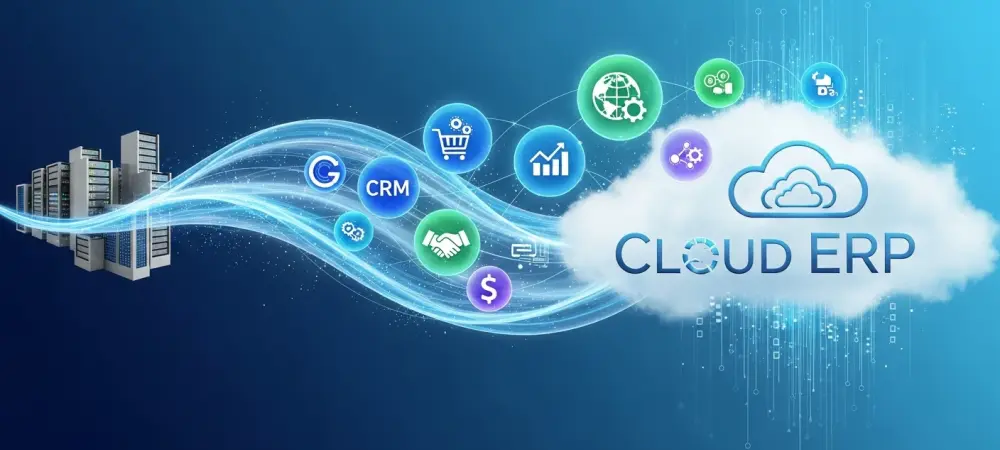
The rapid obsolescence of traditional legacy systems has forced a fundamental recalculation of how modern enterprises manage their most critical data and operational workflows. For decades, the manufacturing and agriculture sectors relied on rigid, on-premises infrastructure that required constant manual intervention and massive capital expenditures just to remain functional. Today, the transition to cloud-native Enterprise Resource Planning (ERP) represents more than a simple software update; it is a total architectural shift that replaces fragile, disconnected silos with a unified, intelligence-driven ecosystem. This evolution is particularly visible in the rise of platforms like Microsoft Dynamics 365 Business Central, which has redefined the relationship between business software and long-term profitability.
The Shift from Legacy Infrastructure to Cloud-Native ERP
The movement toward cloud-native ERP is driven by the realization that physical hardware is no longer an asset, but a liability that drains resources through server refreshes and emergency patches. In the current landscape, legacy systems act as anchors, preventing organizations from scaling or integrating new digital tools because their core code is too brittle to adapt. Cloud-native solutions, by contrast, are built on the principles of elasticity and continuous delivery, allowing the system to grow in tandem with the business without requiring the procurement of new physical assets. This environment ensures that data remains accessible and synchronized across global locations, providing a single source of truth that was previously impossible for mid-sized firms to maintain.
This technological leap is especially critical for industries dealing with high-volume transactions and complex supply chains. By moving the heavy lifting of data processing to the cloud, companies can bypass the limitations of local bandwidth and processing power. This shift is not merely about storage; it is about the fundamental way a system handles logic and communication. While legacy setups often require specialized IT teams to monitor uptime 24/7, cloud-native frameworks delegate these responsibilities to the provider, allowing internal staff to focus on data analysis and strategic growth rather than hardware troubleshooting.
Technical Architecture and Financial Frameworks
Predictable SaaS Licensing and Cost Structures
One of the most disruptive aspects of modern ERP transformation is the move from a capital-heavy expenditure model to a predictable operating expense. Traditional software ownership often involves a “trap” where annual maintenance fees consume nearly a quarter of the initial license cost without adding any new functionality. Modern SaaS models, such as the tiered Essentials and Premium editions of Business Central, eliminate these hidden “tails” by bundling hosting, security, and updates into a flat per-user fee. This transparency allows CFOs to forecast technology spending with precision, ensuring that the software budget scales directly with the number of employees using the system.
Beyond the visible monthly fee, the true value of the SaaS framework lies in the elimination of periodic, high-cost upgrade cycles. In the past, moving to a new version of an ERP could cost as much as the original implementation, often leading businesses to stay on outdated versions for a decade or more. With the current cloud architecture, updates are incremental and automatic. This ensures that every user is always on the latest version, significantly reducing the security risks and integration breakages that typically plague older, “frozen” software environments.
Low-Code Customization and AL Programming
The technical flexibility of modern ERPs is largely due to the departure from proprietary, hard-coded modifications in favor of modular extensions. Utilizing AL programming, developers can now build customizations that sit on top of the core software without altering the base code itself. This distinction is vital because it means that even heavily customized systems can be updated by the vendor without breaking the unique business logic developed for a specific company. It transforms customization from a risky, permanent “surgery” into a series of swappable modules that can be adjusted or replaced as market demands shift.
Furthermore, the rise of low-code environments empowers non-technical users to create their own workflows and data visualizations through integrated tools. By lowering the barrier to entry for system adjustments, organizations can respond to operational bottlenecks in real time rather than waiting weeks for a developer to write a custom script. This democratization of technology ensures that the ERP remains a living tool that reflects the current needs of the warehouse or the field, rather than a static digital archive that employees eventually learn to bypass with external spreadsheets.
Emerging Trends in Enterprise Resource Planning
The current trajectory of ERP technology is moving rapidly toward autonomous operations, where the system does not just record what happened, but actively suggests what should happen next. This is driven by the integration of large language models and generative intelligence directly into the business logic. Instead of running a manual report to identify inventory shortages, users now interact with conversational interfaces that can cross-reference sales trends, weather patterns, and shipping delays to provide a pre-emptive procurement list. This shift from reactive to proactive management is fundamentally changing the expectations of the modern workforce.
Another significant trend is the total convergence of ERP with broader communication and productivity suites. The boundaries between an email client, a spreadsheet, and the core accounting ledger are disappearing. Users can now process invoices directly from their inbox or pull live ERP data into a collaborative document without ever leaving their primary workspace. This “frictionless” data flow reduces the cognitive load on employees and significantly lowers the margin for error that occurs when data is manually copied between different software applications.
Real-World Applications and Sector Impact
Optimization in Manufacturing and Ecommerce
In the manufacturing sector, the impact of cloud ERP transformation is measured in the radical reduction of inventory carrying costs and the stabilization of production schedules. By using AI-powered forecasting, manufacturers can align their raw material orders with actual demand fluctuations, preventing the “bullwhip effect” that often leads to wasted capital. In the ecommerce space, the integration between the web storefront and the back-office ERP ensures that stock levels are updated across all channels in milliseconds. This synchronization is the difference between a satisfied customer and a costly backorder situation that damages brand reputation.
The efficiency gains in these sectors often translate to a margin boost that pays for the implementation within the first year of operation. For ecommerce businesses specifically, the ability to automate the “order-to-cash” cycle means that labor can be shifted from data entry to customer service and product development. When the ERP handles the heavy lifting of tax calculation, shipping logistics, and payment reconciliation, the business becomes infinitely more scalable, capable of handling a 500% spike in holiday traffic without adding a single administrative head.
Precision Agriculture and Traceability Modules
Agriculture has seen a specialized revolution through the adoption of traceability modules that track a product from the seed to the supermarket shelf. These systems allow farmers to record soil conditions, pesticide usage, and harvest timing directly into the cloud. In the event of a quality issue or a recall, the ERP can pinpoint the exact batch and location affected within seconds, a process that used to take days of searching through paper logs. This level of granularity is not just a regulatory requirement; it is a competitive advantage that builds trust with global retailers and consumers.
Moreover, the integration of IoT sensors with the ERP system allows for precision resource management in the field. By feeding real-time data on moisture levels and crop health into the central system, agriculture firms can automate irrigation and fertilization schedules. This technical synergy reduces waste by nearly half in some cases, ensuring that every drop of water and every pound of nutrient is utilized for maximum yield. It represents a transition from “best-guess” farming to a data-driven science where every acre is monitored as an individual profit center.
Addressing Implementation Hurdles and Technical Limitations
Despite the clear advantages, the road to cloud ERP is often obstructed by the “sunk cost fallacy,” where leaders hesitate to abandon legacy systems because of previous investments. Technical hurdles such as data migration also remain a significant challenge; moving twenty years of messy, inconsistent records into a structured cloud environment requires a meticulous cleansing process. If a business attempts to move “garbage data” into a modern system, the resulting insights will be flawed, regardless of how advanced the new software’s AI capabilities are.
Another hurdle is the human element, as the transition to a cloud-native platform requires a significant shift in company culture. Employees who are used to manual workarounds may resist the transparency and automation of a new system. To mitigate this, successful implementations must prioritize user training and a phased rollout strategy. Organizations must also be wary of “scope creep,” where the desire to replicate every legacy feature in the new system leads to bloated budgets and missed deadlines. Selecting a partner that uses agile methodologies is often the only way to navigate these complexities without stalling the project.
The Future of AI-Driven Business Intelligence
The next frontier for ERP lies in the maturation of “cognitive” business intelligence, where the system takes on the role of a strategic advisor. We are moving toward a period where the ERP will autonomously negotiate with supplier bots to secure the best prices or automatically reroute shipments based on real-time geopolitical events. These breakthroughs will likely be powered by decentralized data networks that allow for even greater security and cross-company collaboration without compromising sensitive intellectual property.
Long-term, the impact of these developments will be a complete decoupling of business growth from administrative overhead. As the ERP becomes more autonomous, the size of a company’s back office will no longer be a bottleneck for expansion. This will enable small and mid-sized enterprises to compete on a global scale with the same level of analytical sophistication as multi-billion-dollar conglomerates. The ultimate goal is a “self-driving” business environment where human creativity is the primary driver of value, supported by a digital foundation that manages the mundane complexities of global commerce.
Conclusion: Assessing the Cloud ERP Value Proposition
The transition toward cloud-native ERP systems proved to be a decisive turning point for industries that historically struggled with fragmented data and high operational friction. By moving away from the “trap” of legacy infrastructure, organizations replaced unpredictable capital expenditures with a transparent, scalable financial framework that emphasized long-term return on investment. The analysis of this technological shift revealed that the true power of modern platforms like Business Central resided not just in their cloud hosting, but in their ability to democratize advanced tools like AI forecasting and low-code customization for the mid-market.
This transformation ultimately redefined the role of enterprise software from a mere record-keeping tool to a central engine for strategic growth. While the hurdles of data migration and cultural resistance remained significant, the measurable gains in waste reduction and operational efficiency across the manufacturing and agriculture sectors justified the initial complexity of the move. Businesses that embraced this evolution successfully future-proofed their operations, ensuring they remained agile enough to pivot in an increasingly volatile global economy. The shift was an essential step in moving toward a more automated, intelligent, and transparent industrial future.