

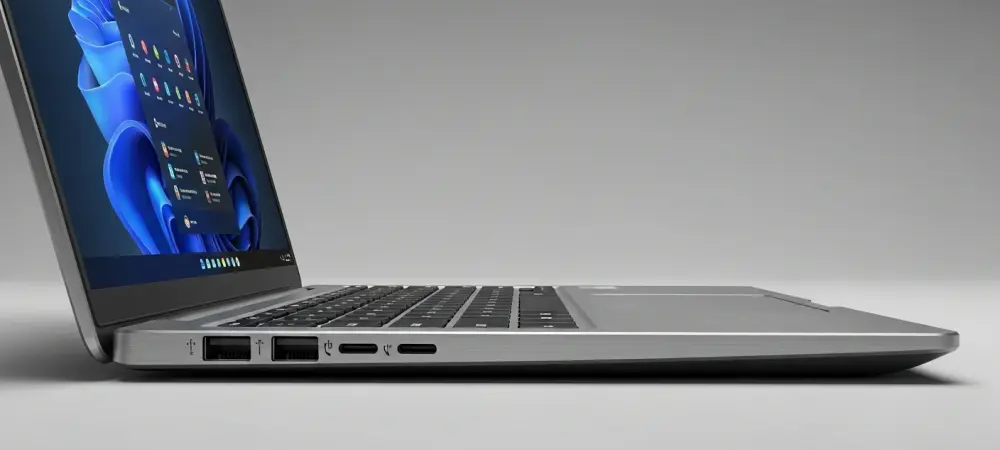
The sleek allure of a brushed aluminum finish and a glowing logo has long convinced consumers that premium prices are the only gateway to reliable portable computing. However, the sudden arrival of the $449 CHUWI UniBook is currently dismantling this long-held industry myth by outclassing the $599 MacBook Neo in nearly every hardware category that affects daily productivity. While Apple commands a significant premium for its brand prestige, this x86-based machine dares to ask why users should pay more for fewer ports, a smaller screen, and a significantly weaker battery.
For those tired of the “Apple Tax,” the UniBook presents a compelling case for choosing raw utility over minimalist aesthetics. It is not merely a budget alternative; it is a calculated strike against the idea that entry-level machines must be inherently compromised. By focusing on the specific pain points of modern professionals—such as connectivity and endurance— CHUWI has created a device that prioritizes the user’s workflow over the manufacturer’s design philosophy.
Can a Budget Laptop Really Outshine Apple’s Latest Entry-Level Offering?
The tech world often assumes that a higher price tag naturally equates to better hardware, yet the reality of the current market suggests otherwise. The UniBook arrives as a disruptive force, challenging the MacBook Neo’s market position by offering a more robust spec sheet for $150 less. This price gap is not just a minor saving; it represents a 25% reduction in cost while simultaneously increasing the physical value of the components provided to the end-user.
This shift indicates that the gap between “budget” and “premium” is closing rapidly, driven by manufacturing efficiencies and a focus on practical features. While the MacBook Neo relies on the ecosystem lock-in to justify its cost, the UniBook relies on tangible advantages like a larger display and superior thermal management. For the average student or remote worker, the choice becomes a matter of whether the Apple logo is worth the loss of significant hardware capabilities.
The Resurgence of High-Value Intel Portables in a Mac-Dominant Market
The entry-level laptop segment is witnessing a significant shift as Intel’s “Wildcat Lake” architecture levels the playing field against Apple’s silicon. This competition matters because budget-conscious professionals are no longer forced to settle for sluggish performance when moving away from the Apple ecosystem. The UniBook leverages the new Core Series 3 SoC to provide a snappy, Windows 11 Pro experience that directly challenges the market share of the $599 MacBook Neo by offering more hardware for less capital.
Furthermore, the availability of a professional operating system like Windows 11 Pro on a device at this price point changes the calculation for small businesses. Unlike the more restricted software environments often found on entry-level competitors, the UniBook provides a full-featured desktop experience without the need for expensive upgrades. This resurgence of Intel-based power ensures that the market remains competitive, preventing a single manufacturer from dictating the price of entry-level mobility.
Technical Breakdown: How the UniBook Wins the Spec War
At the heart of the UniBook is the Intel Core 3 304 SoC, a five-core processor featuring a performance core and four efficiency cores that reach boost speeds of 4.3 GHz. While it matches the MacBook Neo’s 8GB of high-speed LPDDR5X RAM and 256GB PCIe 3.0 SSD, it pulls ahead with a 14-inch IPS display boasting 100% sRGB color accuracy. This color precision is often reserved for much more expensive machines, making the UniBook a surprising contender for light creative work and media consumption. Most notably, the UniBook houses a massive 53.38 Wh battery, which stands in stark contrast to the Neo’s much smaller 36.5 Wh unit. This difference ensures that users can actually get through a full workday without hunting for an outlet, a feat that the MacBook Neo struggles to achieve under heavy workloads. By combining a more efficient battery-to-screen-size ratio with the versatile Wildcat Lake architecture, CHUWI successfully addressed the most common complaint regarding affordable Windows laptops: their longevity.
Beyond the Processor: Connectivity and Practicality as a Competitive Edge
One of the most significant advantages of the UniBook is its rejection of the “dongle life” that has frustrated Apple users for years. CHUWI outfitted this machine with a versatile array of ports, including three USB-A slots, dual USB-C ports, a dedicated HDMI 2.0 output, and even a Gigabit Ethernet jack for stable wired networking. This level of connectivity allows users to transition from a mobile environment to a full desktop setup instantly, without purchasing additional hardware.
Moreover, the inclusion of a microSD slot for easy storage expansion and a backlit keyboard for late-night productivity sessions further widens the gap. The MacBook Neo’s minimalist design often forces users into a cycle of expensive proprietary adapters and cloud storage subscriptions just to regain basic functionality. In contrast, the UniBook provides a level of out-of-the-box utility that recognizes the reality of how people actually use their computers in diverse environments.
Strategies for Evaluating Value in the Modern Laptop Landscape
To determine if the UniBook is the right fit for a specific workflow, users should start by auditing their daily peripheral usage. If a workflow relies on standard USB drives or external monitors, the UniBook’s built-in ports offered immediate cost savings and reduced desk clutter. Buyers had to consider the display size and battery capacity as primary factors for long-term satisfaction, as these were components that could not be upgraded after the initial purchase.
Ultimately, the $150 price difference functioned as more than just a saving; it was a budget that could be reinvested into software, high-end peripherals, or a significant internal storage upgrade. This approach allowed the UniBook to serve as a foundation for a more powerful overall setup than the MacBook Neo could provide for the same total investment. Future consumers would benefit from looking past brand marketing to prioritize the specific hardware specs that guaranteed a seamless and productive daily experience.