

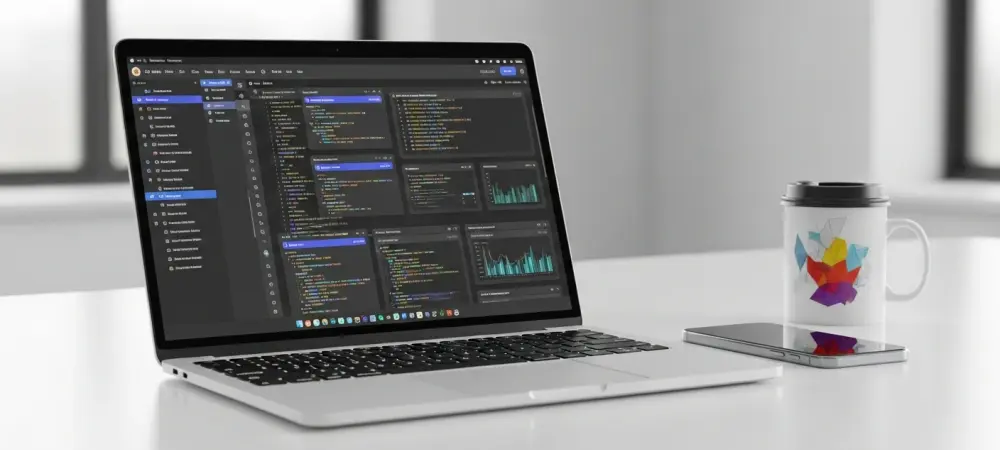
The Dawn of AI-Augmented Software Development
The landscape of software engineering is currently undergoing its most significant transformation since the invention of the integrated development environment (IDE) decades ago. Artificial intelligence is no longer a peripheral novelty; it has become an essential partner in the creative process, offering real-time code generation, instant bug detection, and sophisticated refactoring capabilities. As developers navigate through the current tech climate, the question is no longer whether to use an AI editor, but which specific tool aligns with unique professional requirements and complex project architectures.
This shift explores the diverse ecosystem of AI-driven coding assistants, examining how different platforms cater to specific workflows, security needs, and budgetary constraints. By understanding these nuances, engineers can identify their ideal development partner in an increasingly automated world. The focus remains on maximizing human creativity while offloading the mundane aspects of syntax and boilerplate management to intelligent systems.
From Autocomplete to Autonomous Coding
The journey toward AI-integrated coding began with simple linting and basic autocomplete features that saved developers a few keystrokes during long sessions. However, the foundational shift occurred with the advent of large language models (LLMs) trained on vast repositories of open-source code. This evolution moved the industry from predictive typing to contextual understanding, where the editor perceives the intent behind a function rather than just the syntax.
Early industry shifts saw major players like GitHub and Amazon pivoting their entire developer experience around these models. Understanding this background is vital because it explains the current divergence in the market where some tools prioritize deep integration with existing ecosystems. Meanwhile, newer platforms attempt to reinvent the interface of coding entirely by centering the experience on conversational logic rather than traditional file browsing.
Evaluating the Leading Contenders in the AI Space
Industry Standards: Ecosystem Integration
GitHub Copilot remains the benchmark for reliability and seamless integration, particularly for developers already entrenched in the Microsoft ecosystem. Leveraging the vast data available through its parent platform, it provides highly accurate, context-aware suggestions that feel like a natural extension of the editor. For seasoned professionals, this reduces cognitive load—the mental energy spent on repetitive syntax—allowing them to focus on high-level architecture and system design.
While its subscription model is a consideration, the data suggests that the productivity gains for enterprise teams often far outweigh the monthly overhead. However, some organizations remain cautious about the long-term implications of proprietary code training and potential licensing issues. This tension creates a market where reliability is balanced against the desire for more open or customizable AI solutions.
AI-First Interfaces: Natural Language Command
A compelling alternative to the traditional IDE model is the rise of editors like Cursor, which are built from the ground up to treat AI as the primary interface. Unlike tools that act as a simple plugin, these editors allow developers to manipulate entire file structures and perform complex refactoring through natural language commands. This shift highlights a burgeoning trend toward conversational programming where the keyboard becomes secondary to the prompt.
While this approach offers unparalleled speed for rapid prototyping, it presents a learning curve for those used to traditional shortcuts and manual control. It raises questions about whether newer developers might lose touch with the underlying logic of their code if they rely too heavily on generated blocks. Nevertheless, the efficiency of “prompt-to-code” workflows is proving difficult for the industry to ignore.
Accessibility and Security: Specialized Environments
For developers working within specific niches, the best editor is often defined by its environment rather than just its raw intelligence. Amazon CodeWhisperer, for instance, has carved out a vital space for enterprise users by prioritizing AWS cloud optimization and rigorous security scanning. Simultaneously, the market has expanded to include high-quality free tiers like Codeium, which democratize access to advanced AI for students and independent creators.
Regional differences and infrastructure also play a role in tool selection; browser-based solutions have become the premier choice for collaborative development. These platforms prove that high-performance AI coding can exist outside of a localized desktop environment, provided the collaborative tools are robust enough to handle real-time sync. This accessibility ensures that even developers with modest hardware can participate in the high-speed modern development cycle.
The Future of Conversational Programming
The trajectory of AI coding editors suggests a future where the barrier between human intent and machine execution becomes nearly transparent. We are moving toward agentic workflows where AI editors will not just suggest lines of code but will independently handle debugging, documentation, and even deployment based on high-level verbal instructions. We can expect upcoming shifts regarding data privacy to force these tools toward more on-device processing to reduce cloud reliance. Industry analysts predict that the next five years will see a total shift in computer science education, focusing less on rote syntax and more on system design and AI orchestration. As models become more specialized, we may see the emergence of editors that are specifically tuned for individual programming languages or hardware architectures. This evolution will likely lead to a “post-syntax” era where the logic of the problem solver is the only true constraint.
Strategies for Selecting and Implementing Your AI Editor
To choose the right tool, developers and organizations should first audit their specific technical environment and security requirements. If a workflow is heavily cloud-dependent, an enterprise-focused tool like CodeWhisperer may be the safest bet for maintaining compliance; however, if a frontend developer seeks rapid iteration, the intuitive interface of an AI-first editor may be more beneficial. It is recommended to start with a trial period to test how well an editor handles a specific codebase’s internal logic and legacy constraints.
Best practices include using AI for boilerplate and refactoring while maintaining a strict human-in-the-loop policy for security-critical logic. By treating these editors as interns that require supervision rather than infallible oracles, professionals can maximize output while minimizing technical debt. Organizations should also establish clear guidelines on prompt engineering to ensure that the code generated aligns with internal style guides and performance standards.
Navigating the New Frontier of Software Engineering
The adoption of AI-powered coding editors represented a permanent shift in the global tech landscape that prioritized speed without sacrificing structural integrity. Whether it was the market-leading reliability of GitHub Copilot or the innovative conversational interface of Cursor, specialized tools emerged for every type of developer. As these technologies matured, the core value of a programmer shifted from writing lines of code to solving complex architectural problems and overseeing automated systems.
Embracing these tools became a prerequisite for participating in the modern era of software creation rather than just a way to stay competitive. Professionals who successfully integrated AI into their daily routines reported higher job satisfaction and a significant reduction in burnout associated with repetitive tasks. Ultimately, selecting the right partner allowed for a seamless transition into a world where human creativity and machine efficiency functioned as a single, unified force.