

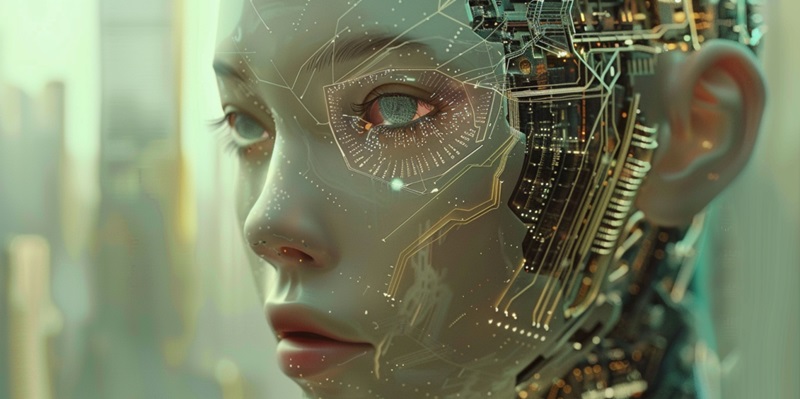
The ancient craft of rhetoric, dedicated to the art of influencing and enchanting audiences, has matured through history, from its classical roots to Renaissance refinement and beyond. Today, we stand at the threshold of a transformative chapter in the history of rhetorical arts, one propelled by the advanced capabilities of artificial intelligence, exemplified by platforms such as ChatGPT. This technological evolution promises to reshape our understanding and practice of persuasive communication, offering tools and insights rooted in the vast analytical prowess of AI. As we harness these new resources, the potential to enhance the effectiveness and reach of rhetorical skills is unparalleled, ushering in a future where the art of persuasion is informed and augmented by the precision and adaptability of artificial intelligence.
Unleashing Potential with AI
The AI-Driven Rhetorical Revolution
The arrival of artificial intelligence in the field of rhetoric heralds a transformative shift in how we approach communication skills. ChatGPT provides an unprecedented level of assistance, enabling individuals to craft messages with precision and flair previously accessible only to those well-versed in the rhetorical arts. With its deep understanding of language patterns and ability to generate a wide array of expressive styles, ChatGPT promises to unlock potential in aspiring rhetoricians.
Harnessing ChatGPT’s capabilities means that users not only refine their own writing and speech but also explore new rhetorical strategies that they may not have encountered otherwise. This AI tool provides a means for experimentation without the fear of critique that often comes with learning a complex skill. As users iterate, they can discover unique voices that resonate with their personal or professional needs, each iteration bringing them closer to the prowess of a skilled orator.
Democratizing Rhetorical Excellence
Accessibility to advanced rhetorical coaching has typically been restricted to those able to invest time and money in the craft. However, ChatGPT’s cost-effective and widely available platform breaks down these barriers. Now, anyone with internet access can receive a level of personalized guidance that rivals one-on-one coaching with a human expert.
Beyond the democratization of training, what sets ChatGPT apart is its tailored approach. Unlike static educational materials, the AI interacts with the user, offering feedback that aligns with their progress and objectives. This individualized coaching is crucial for growth in rhetoric, as it acknowledges the uniqueness of each person’s communicative style and the diverse purposes behind their speech. As such, ChatGPT has the potential to cultivate a new generation of eloquent speakers across different walks of life.
Advancing Human Communication
The Role of ChatGPT in Personal Development
In the sphere of personal development, AI innovations like ChatGPT can be game-changers. Their ability to improve communication is critical, enriching both professional scenarios and intimate facets of life. Individuals can express themselves with newfound clarity, navigating complex social landscapes with ease.
AI-driven speech refinement tools like ChatGPT are also reshaping learning dynamics. They offer a personalized approach—learners can delve into the intricacies of effective communication without time constraints, a luxury rarely afforded in traditional educational settings. With AI’s perpetual availability, feedback that once required scheduling or specific circumstances can now be accessed on demand.
This technological leap is not just about enhancing vocabulary or eloquence; it’s about equipping people with the skills to connect and engage more profoundly with others. ChatGPT embodies a silent revolution in education and personal growth, patiently waiting to unlock each learner’s potential.
Refining Professional Expressiveness
In a professional context, effective communication can be the dividing line between success and obscurity. ChatGPT equips professionals with the nuanced language skills necessary to convey complex ideas, negotiate with finesse, and lead with conviction. The capacity for improving presentation skills, writing persuasive emails, and communicating strategic visions marks ChatGPT as an indispensable tool in the modern professional’s arsenal.
Ultimately, the integration of AI like ChatGPT in speech training posits a future where expressiveness and rhetorical skill are not exclusive privileges but common standards. It signals an exciting period of growth in the way humans connect, persuade, and share ideas. With this digital renaissance in rhetoric, the age-old notion that “the pen is mightier than the sword” may find its newest form: “The algorithm is mightier than the oration.”