

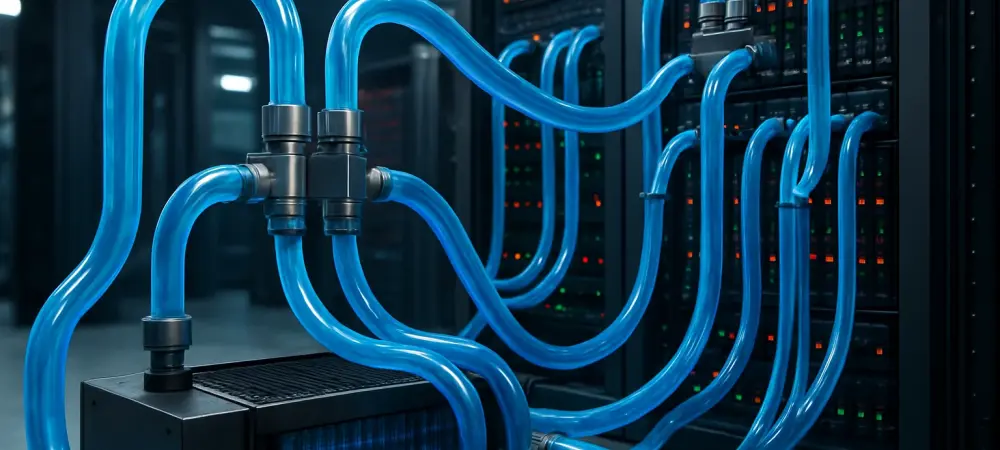
I’m thrilled to sit down with Dominic Jainy, an IT professional whose deep expertise in cutting-edge technologies like artificial intelligence, machine learning, and blockchain extends to a keen understanding of innovative solutions in data center operations. Today, we’re diving into the world of thermal management as we explore Carrier Global Corporation’s latest launch of cooling distribution units (CDUs) for liquid cooling in data centers. Dominic brings a unique perspective on how such advancements can transform efficiency and performance in this critical industry. Our conversation will cover the standout features of these new CDUs, their integration with broader systems, and the impact of Carrier’s century-long legacy in HVAC on modern data center solutions.
How do Carrier’s new cooling distribution units (CDUs) stand out in the data center cooling landscape?
Carrier’s new CDUs under the QuantumLeap brand are a game-changer for liquid cooling in data centers. They’ve designed a range of units with capacities from 1.3 to 5MW, which means they can cater to a wide variety of setups, from smaller edge facilities to massive hyperscale centers. What’s really impressive is their flexibility—available both in-row and in mechanical galleries, they can fit into different spatial configurations. This adaptability, combined with their focus on high-performance cooling, sets them apart from many traditional solutions that often lack such versatility.
What’s the significance of these CDUs achieving approach temperatures as low as 3.6°F compared to the industry standard?
Achieving an approach temperature of 3.6°F—or 2°C—is a big deal because it’s notably lower than the more common industry benchmark of 7.2°F. This tighter temperature differential between the coolant and the equipment means more efficient heat transfer. For data centers, that translates to less energy wasted on cooling and better overall performance, especially for high-density racks running intensive workloads. It’s a step toward optimizing power usage effectiveness (PUE), which is a critical metric in this space.
Can you explain how the range of unit sizes in Carrier’s CDUs addresses different data center needs?
Absolutely. Data centers vary widely in scale and purpose, so having CDUs ranging from 1.3 to 5MW allows Carrier to meet diverse demands. Smaller units are perfect for edge data centers or modular setups where space and power needs are limited, while the larger 5MW units can handle the immense cooling requirements of hyperscale facilities running AI or cloud computing workloads. This scalability ensures that operators aren’t over- or under-provisioning cooling capacity, which can save on both upfront costs and ongoing energy expenses.
How do these CDUs integrate with other offerings in Carrier’s QuantumLeap suite?
The integration is pretty seamless and adds a lot of value. These CDUs work alongside Carrier’s Automated Logic building controls, which help manage and optimize cooling in real time. They also tie into Nlyte’s data center infrastructure management software, providing detailed insights into performance and resource allocation. On top of that, Carrier’s custom air handling systems and chillers complement the liquid cooling setup, creating a cohesive system that covers every aspect of thermal management. It’s a holistic approach that ensures all components are talking to each other effectively.
What does Carrier mean by delivering ‘end-to-end thermal management from chip to chiller,’ and why does it matter?
This concept of ‘chip to chiller’ is about managing heat at every stage—from the individual processors generating heat to the chillers dissipating it outside. For data center operators, it means a unified system that can dynamically adjust to workload changes, ensuring nothing overheats while keeping energy use in check. It’s about real-time optimization through intelligent controls and predictive monitoring, which can foresee issues before they become problems. This kind of adaptability can significantly boost uptime and reduce operational costs.
How has Carrier’s long history in HVAC shaped its approach to data center cooling solutions like these CDUs?
Carrier’s roots in HVAC, dating back to 1915, give them a deep well of expertise in thermal dynamics and system efficiency. They’ve leveraged that knowledge to design CDUs that prioritize energy efficiency and precise temperature control—hallmarks of their HVAC legacy. This background also means they understand how to build durable, scalable systems that can operate under heavy demand, which is exactly what data centers need as they face increasing power densities with modern computing workloads.
What’s your forecast for the future of liquid cooling technologies in data centers?
I see liquid cooling becoming the dominant approach in data centers over the next decade, especially as AI and high-performance computing push hardware to its limits. Technologies like Carrier’s CDUs, with their focus on efficiency and integration, will likely evolve to handle even tighter approach temperatures and higher capacities. We might also see more adoption of two-phase cooling and other innovative methods as the industry strives for sustainability. The drive to lower energy consumption and carbon footprints will keep pushing companies to refine these solutions, making liquid cooling not just a niche but a standard in thermal management.