

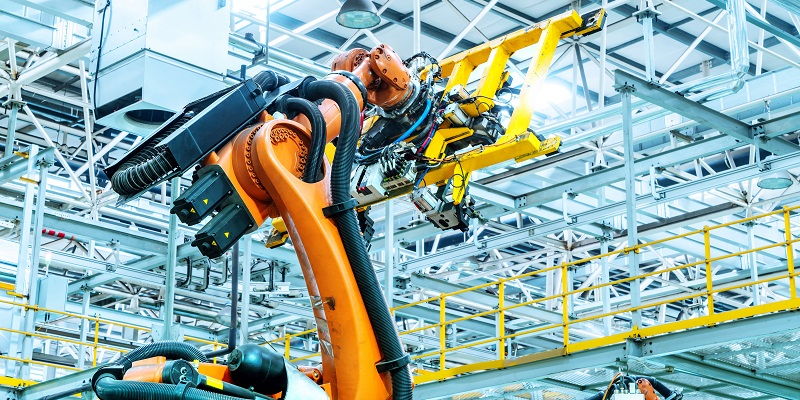
In the world of manufacturing and production, repetitive and physically demanding tasks are still being performed by human workers. However, the development of new technologies, such as robotics, is leading the way toward a more efficient and cost-effective solution. Among these technologies is CapSen PiC. CapSen Robotics has recently launched CapSen PiC, software that turns any industrial robot arm into a bin-picking machine for tough pick-and-place applications.
Combining 3D vision, motion planning, and control algorithms, CapSen PiC enables robots to locate objects in cluttered shelves and bins and manipulate them. The software can pick up 3D objects in various positions and orientations, even when some of the objects are partially occluded or in tight spaces, providing solutions to an age-old problem in the manufacturing industry.
One of the main benefits of using CapSen PiC is that it saves time as robots no longer require custom programming for new parts. The new software allows the robot to make high-speed and accurate picks despite the lumpy, unpredictable nature of the contents of shelves and bins. Furthermore, PiC-powered robot cells can pick and place up to 30 parts per minute, which promises to create a reliable automation option for significant plant floor tasks.
CapSen PiC v1.0 is hardware agnostic, making it simpler for manufacturers to integrate it into their existing operations. Additionally, it offers advanced motion planning algorithms that prevent collisions while enabling fast and precise parts picking.
To demonstrate the capabilities of CapSen PiC, the DENSO VP-6242 small robotic assembly system will showcase the software in May at the Automate show in Detroit. Mark Anderson, regional sales engineering manager at DENSO, shared his views on the benefits of deploying CapSen PiC. He believes that integrating the software will allow robotic systems to manipulate all types of tasks more efficiently, thereby increasing productivity while saving both time and money.
In conclusion, CapSen PiC v1.0 is an innovative software solution that turns any industrial robot arm into a bin-picking machine for tough pick-and-place applications. With advanced 3D vision, motion planning, and control algorithms, the software delivers efficient picking and placing capabilities in cluttered shelves and bins. With its reliable automation option for significant plant floor tasks and hardware-agnostic feature, it’s easier for manufacturers to integrate CapSen PiC into their existing operations. CapSen PiC v1.0 promises faster, accurate, and more efficient automated solutions, revolutionizing the manufacturing and production industry, one robotic arm at a time.