

Today we’re joined by Dominic Jainy, an IT professional whose work at the intersection of AI, machine learning, and blockchain has led him to tackle some of the most persistent challenges in supply chain management. He brings a unique perspective to the world of ERP systems, specifically how integrating intelligent solutions with platforms like Microsoft Dynamics 365 Business Central can transform shipping and logistics. In our conversation, we’ll explore the hidden financial drains caused by common shipping errors, the operational disconnects between the warehouse and the finance department, and how modern integrated technologies are providing the real-time validation and accuracy needed to master the last mile of delivery.
Operations teams frequently struggle with incorrect package weights and dimensions, leading to unexpected carrier chargebacks. Could you share an example of this and explain the downstream financial impact a business might not see until it’s too late? Please elaborate on the reconciliation challenges involved.
Absolutely. It’s a scenario that plays out every single day in warehouses. Imagine a packer is rushing to meet a deadline. They grab a box, but it’s a slightly different size than the standard one they usually use. They either guess the dimensions or input the standard ones out of habit, and the package is out the door. It feels like a success at that moment. But weeks later, the carrier’s invoice arrives with a significant chargeback because their automated scanners detected the discrepancy. The finance team now has this phantom charge that doesn’t match the freight cost recorded in Business Central. They have to spend hours digging through records, trying to tie that specific chargeback to a shipment that was sent long ago. It’s a frustrating, time-consuming process that completely obscures the true profitability of that order.
Manual data entry is a common source of shipping mistakes. Can you describe how these errors often go unnoticed until after a package ships, and what is the typical workflow disconnect between the warehouse floor and the finance department when capturing freight costs?
The disconnect is fundamentally about timing and systems. On the warehouse floor, the primary goal is speed and volume—getting orders picked, packed, and loaded onto the truck. The packer inputs the details, but often into a system that’s separate from the core financial records in Business Central. There’s no immediate red flag if a weight is off or an address has a typo. The package is physically gone, and as far as the warehouse is concerned, the job is done. The financial reality of that shipment doesn’t materialize until the carrier invoice is processed, which can be days or weeks later. This creates a painful gap where the finance team is trying to reconcile costs against an event that has long since passed, armed with data that was captured in a different system and is often flawed.
While Microsoft Dynamics 365 Business Central can track freight expenses, it doesn’t offer integrated carrier rate shopping. How does this limitation affect a company’s ability to select the most cost-effective service, and what manual steps must staff take to reconcile carrier invoices?
This limitation puts a huge operational strain on a business. Without integrated rate shopping, a warehouse employee has to literally stop their workflow, open separate web browser tabs for each carrier, and manually type in the same package details—weight, dimensions, destination—over and over again. It’s not only incredibly inefficient but also a breeding ground for typos. They might choose a service based on habit or a guess, not on real-time cost data. Then, they have to manually key that chosen freight cost back into Business Central. This manual step means the number entered is often just an estimate, creating a guaranteed discrepancy when the carrier’s final invoice arrives. Reconciling becomes a manual, line-by-line comparison of what was estimated versus what was actually billed, which is a significant drain on accounting resources.
Let’s talk about integrated solutions. Can you walk us through how real-time validation at the packing station changes the daily workflow for a warehouse employee? Please provide a step-by-step example of how it prevents a shipment from leaving with the wrong service selected.
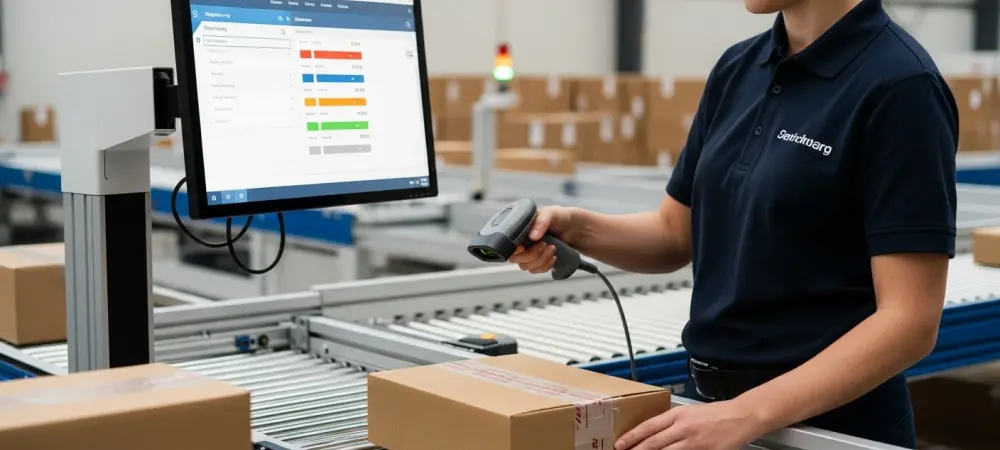
It completely changes the game by moving the point of control to the moment of action. With an integrated solution like Dynamic Ship, the packer scans the sales order barcode right within their Business Central screen. The system automatically pulls the package data. Let’s say they weigh the box, and it’s heavier than expected. The moment they enter the actual weight, the system instantly communicates with all connected carriers and displays a list of valid services and their real-time costs. If they accidentally select an overnight service for an order that should go ground, a business rule can trigger a warning or even block the shipment. This real-time feedback loop ensures that before a label is even printed, the data is correct, the service is appropriate, and the cost is accurate. The error is caught and corrected instantly, not discovered weeks later on an invoice.
Beyond rate shopping, barcode-driven verification and license plating are used to enhance accuracy. Could you explain how these technologies reduce manual entry errors on the warehouse floor and help manage pallet shipments? Please share an anecdote where this prevented a major order mix-up.
These technologies are all about removing the human element of manual data entry, which is where most mistakes happen. With barcode-driven verification, instead of typing in an item number, the worker simply scans the product’s barcode. The system instantly confirms it’s the correct item for that specific order. This eliminates picking the wrong product or the wrong quantity. License Plating extends this logic to entire pallets. A unique barcode—a “license plate”—is assigned to a pallet of mixed goods. From that point on, you just scan that one barcode to move and track the entire pallet as a single unit. I recall a situation where a large B2B order involved three pallets. An employee, in a hurry, almost loaded a pallet destined for another customer onto the truck. But when he scanned the license plate as part of the final verification step, the system threw up a huge red-flag error on his screen, immediately alerting him that this pallet did not belong to the shipment. That single scan prevented a massive, costly error that would have impacted two major customers.
What is your forecast for shipping and freight management technology within ERP systems?
I foresee a future where the line between ERP and logistics execution completely dissolves. We’re moving beyond simple integration and toward true embedded intelligence. The next wave won’t just be about validating data; it will be about predictive optimization. Your ERP will proactively suggest the best packaging to use based on an order’s contents to minimize dimensional weight charges. It will analyze historical shipping data and real-time carrier performance to automatically route shipments, not just based on cost, but on the likelihood of on-time delivery. We’ll see AI-driven tools that can forecast potential delivery delays due to weather or network congestion and suggest alternative carriers before the package even leaves the warehouse. Essentially, the shipping process will transform from a reactive, manual task into a fully automated, intelligent, and self-correcting function of the business.