

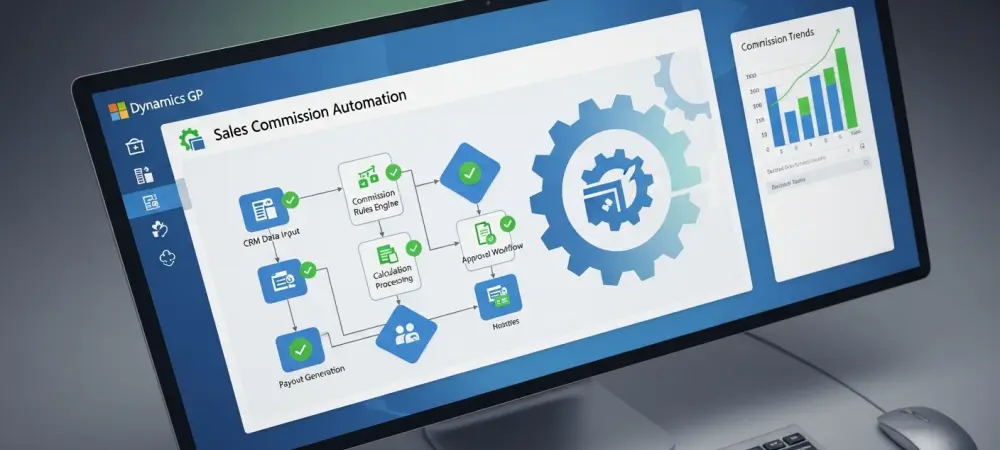
The celebration that follows a record-breaking sales quarter often masks a growing administrative crisis within the accounting department, where staff must untangle the web of complex incentives. While sales representatives focus on closing deals, the burden of calculating their rewards typically falls on professionals who must manually bridge the gap between revenue and remuneration. In the current business landscape, relying on outdated methods for these calculations creates a significant bottleneck that can stifle an organization’s ability to scale. Moving toward a sophisticated, automated framework within Microsoft Dynamics GP is no longer just a luxury; it is a fundamental requirement for maintaining financial integrity and employee trust.
Streamlining Sales Incentive Management in Dynamics GP
Modern sales structures often outpace the native capabilities of legacy ERP systems. This guide explores the transition from manual, spreadsheet-based commission tracking to automated workflows within Microsoft Dynamics GP. We will examine the operational bottlenecks inherent in manual processing, the strategic benefits of automation, and the best practices for implementing a robust commission management system that ensures accuracy and organizational stability.
As organizations grow, the complexity of their compensation plans tends to increase exponentially. What began as a simple percentage of sales often evolves into a sophisticated matrix of gross profit triggers, item-specific bonuses, and territory-based splits. Managing these variables within the standard confines of Dynamics GP requires a level of manual intervention that most accounting teams find unsustainable. By shifting toward automation, businesses can align their back-office efficiency with their front-end growth, ensuring that every dollar of commission paid is verified and justified by real-time data.
Why Manual Commission Tracking Fails Growing Businesses
Relying on manual data entry and “homegrown” systems creates a ceiling for business growth and introduces significant operational risks. These makeshift solutions often lack the security and auditability required for modern financial reporting, leaving the company vulnerable to both internal disputes and external compliance issues.
Eliminating Administrative Burnout and Human Error
Manual commission calculation is a high-stakes task that often falls on accounting personnel who must navigate a maze of complex variables. When staff are forced to spend days cross-referencing invoices against Excel spreadsheets, the likelihood of errors increases, leading to financial discrepancies and employee frustration. This repetitive labor drains the energy of talented professionals who could otherwise be contributing to the strategic financial planning of the company.
Furthermore, the “human element” in manual processing introduces a lack of consistency. An accounting clerk might interpret a contract differently one month to the next, or a typo in a spreadsheet cell could result in a massive overpayment. These mistakes are not just expensive; they damage the credibility of the finance department. When sales teams feel they must perform “shadow accounting” to verify their own checks, the resulting atmosphere of distrust can lead to higher turnover and decreased morale.
Reducing Institutional Knowledge Risk
Many companies rely on a single individual to manage a “black box” of custom scripts or complex formulas. If this key employee leaves, the organization faces a “single point of failure,” where the logic behind every commission payment is lost, potentially causing a total collapse of the compensation cycle. This dependency creates a fragile infrastructure where the most sensitive financial calculations are held hostage by the availability of one person’s memory.
Relying on these “spreadsheet wizards” prevents the organization from standardizing its processes. Without a centralized, documented system, onboarding new administrative staff becomes a months-long ordeal of deciphering cryptic Excel macros. Transitioning to an integrated solution removes this risk by embedding the logic directly into the software, ensuring that the commission process remains functional regardless of personnel changes.
Best Practices for Automating Commissions in Dynamics GP
To successfully move away from manual processing, organizations should follow these actionable steps to ensure their automation strategy is comprehensive and scalable. A well-executed transition focuses on data integrity, clear rule definition, and the elimination of redundant touchpoints.
Centralize Commission Logic Within the ERP Environment
Instead of pulling data out of Dynamics GP into external spreadsheets, the first best practice is to integrate a specialized commission engine directly into the ERP. This ensures a “single source of truth” where sales data and commission rules live in the same ecosystem. By keeping the calculations within the ERP, the system can automatically pull from live invoices, credit memos, and returns without the risk of data corruption during export.
In a typical scenario, an Accounts Payable professional—often overwhelmed by complex deal structures—can use an integrated tool like EthoTech’s Commission Plan. Instead of spending 40 hours a month on manual audits, the system automatically identifies commissionable items at the point of invoice, reducing the processing time to mere minutes and allowing the staff to focus on higher-value financial analysis. This real-time visibility allows for more accurate accrual reporting and a clearer picture of the company’s true liabilities.
Standardize Granular Eligibility and Valuation Rules
Automation requires clearly defined rules for what constitutes a commissionable event. Organizations must move away from “exception-based” manual overrides and toward a system that can programmatically handle exclusions, tiered rates, and multi-representative splits based on pre-set logic. Defining these parameters upfront allows the system to operate autonomously, even when faced with atypical transactions or seasonal promotions.
Consider the needs of a mid-sized distribution company that implemented automated logic to handle “accelerators”—where a salesperson’s rate increases after hitting a specific revenue milestone. By automating this valuation, the company eliminated disputes between the sales force and the back office, as the system precisely calculated the mid-transaction “kick-up” in commission rates that previously took hours of manual verification to get right. This level of precision ensures that the company honors its contracts to the penny without requiring human intervention.
Automate the End-to-End Disbursement Cycle
The final best practice is to ensure the automation extends beyond the calculation phase. A truly efficient system should automatically generate commission statements, email them to the sales team, and push the final figures directly into the Payroll or Accounts Payable modules for disbursement. This eliminates the “last mile” of manual data entry, where figures are often re-keyed from a spreadsheet into the payment system, creating one last opportunity for error.
A company struggling with a 30-day delay in commission reporting adopted an end-to-end automated solution and saw immediate results. By leveraging software that looks and feels like native Dynamics GP, they were able to deploy the system in less than a week. This allowed them to provide real-time earning statements to their sales reps, which boosted morale and eliminated the monthly “fire drill” in the accounting department. The result was a seamless flow of data from the initial sale to the final bank deposit.
Final Verdict: Is Automation Right for Your Organization?
Automating sales commissions in Dynamics GP proved to be more than a simple software upgrade; it functioned as a vital transition for companies navigating the complexities of modern commerce. Organizations that successfully moved away from “spreadsheet hell” reported a dramatic decrease in administrative overhead and a significant improvement in the accuracy of their financial forecasts. By adopting integrated tools, these firms effectively shielded themselves from the fragility of homegrown systems and the high costs of manual error.
Moving forward, the focus for finance leaders should shift toward refining these automated rules to drive specific sales behaviors, such as prioritizing high-margin products over high-volume ones. As the business environment continues to demand faster response times and absolute transparency, the ability to provide instant, accurate commission data became a competitive advantage. Companies that prioritized this digital transformation positioned themselves to attract top sales talent who value clear and reliable compensation structures. Following these best practices ensured that the accounting department remained a partner in growth rather than a bottleneck to success.