
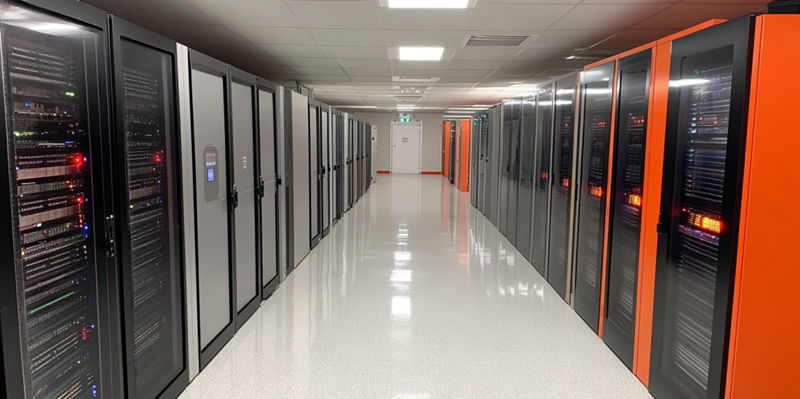
Can Uzbekistan Become a Regional IT Hub with Carbon-Free Data Centers?

Uzbekistan is making significant strides in its quest to become a regional IT hub, with a clear focus on developing ‘carbon-free’ data center facilities. In a recent development, Uzbekistan’s Minister of Digital Technologies, Sherzod Shermatov, emphasized the nation’s commitment to fostering IT businesses and addressing the soaring demand for artificial intelligence. Currently, a remarkable 80 percent of public services in Uzbekistan are accessible online, reflecting the country’s dedication to digital transformation. Collaborating with Saudi partners, Uzbekistan aims to enhance its IT infrastructure, although specific details about the partnerships and project timelines remain undisclosed.

One prominent partner in this endeavor is Saudi Arabia’s DataVolt, which has already begun construction on a new facility in Uzbekistan. The Uzbek Ministry has allocated 10 megawatts and an impressive $150 million for DataVolt’s facility, with plans for future expansion in New Tashkent and Bukhara. This ambitious project is part of Uzbekistan’s broader strategy to promote sustainable infrastructure development. As the world increasingly adopts digital technologies, the demand for efficient and environmentally-friendly data centers has never been higher. Uzbekistan’s initiative to build carbon-free data centers not only aligns with global sustainability trends but also positions the country as a forward-thinking player in the regional IT landscape.

Despite the ambitious plans, several challenges lie ahead. Ensuring adequate power supply, maintaining energy efficiency, and achieving carbon neutrality will require meticulous planning and substantial investment. Additionally, Uzbekistan must create a favorable business environment to attract further investments from global tech giants. By addressing these challenges, Uzbekistan has the potential to transform into a major IT hub, creating economic growth and fostering innovation in the region. As construction progresses and the digital infrastructure develops, the world will keenly watch Uzbekistan’s journey towards becoming a leading center for sustainable IT advancement.

Explore more

How Do You Use Google Gemma 4 AI Locally on Your Phone?

Carrying the computational power of a massive data center within the palm of your hand was once the stuff of science fiction, but today it is a tangible reality for smartphone users everywhere. The transition from cloud-dependent systems to on-device processing marks a new era for smartphone utility, fundamentally changing how we interact with our digital assistants. By using the

Six Micro-Responses to Boost Professional Visibility and Impact

Achieving excellence in silence often feels like a noble pursuit, yet many dedicated professionals discover that their quiet diligence acts as a cloak rather than a ladder in today’s hyper-connected, digital-first corporate ecosystem. There is a persistent belief that the quality of one’s output will inevitably draw the necessary attention for career advancement. However, as the boundaries between physical offices

How Do You Lead an Untethered and Fluid Workforce?

High-performing professionals are no longer choosing between a corner office and a home study; they are instead selecting their next zip code based on the projects they lead and the lifestyles they desire. This kinetic energy defines the current labor market, where the era of the office versus remote debate is officially over, replaced by a reality that is far

Why Does High Performance No Longer Guarantee Job Security?

The unsettling silence that follows a mass layoff notification often leaves the most productive workers staring at their screens in disbelief, wondering how their record-breaking metrics failed to shield them from the corporate scythe. This scenario, once considered a rare anomaly reserved for the underperformers, has transformed into a standard feature of a global labor market where technical excellence is

How Do You Navigate the Shifting Realities of Work?

The traditional guarantee that a prestigious university degree would eventually lead to a corner office has evaporated into a landscape defined by algorithmic gatekeepers and decentralized career paths. This breakdown of the “degree-to-desk” pipeline marks a significant turning point where the old rules of professional advancement no longer seem to apply to the current reality. Modern professionals frequently encounter the