

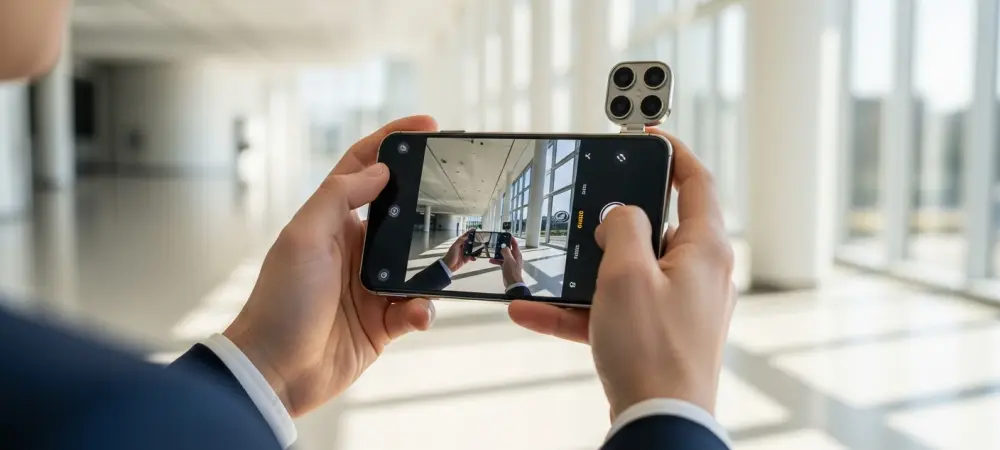
The arrival of the Vivo X300 Ultra marks a definitive turning point where the boundary between professional DSLR equipment and pocket-sized mobile devices has become virtually indistinguishable to the average observer. As manufacturers strive to capture the attention of high-end enthusiasts, the scheduled debut of this flagship on March 30 alongside the X300s signifies a bold expansion of the current mobile ecosystem. This specific model is not merely an incremental update but is instead positioned as a specialized imaging instrument designed for those who require professional-grade results in a daily-carry format. By integrating a sophisticated Zeiss configuration, the manufacturer has effectively addressed the traditional limitations of mobile sensors, such as poor low-light performance and limited zoom clarity. This strategic shift suggests that the era of carrying heavy lenses for casual photography is rapidly ending, as software and hardware synergy finally reaches a level of maturity that challenges industry standards.
Advanced Optics: The Convergence of Zeiss and Sony Technology
The cornerstone of this technological leap is the “3 + 2” Zeiss lens configuration, which utilizes a massive 200-megapixel Sony Lytia 901 primary sensor to capture unprecedented levels of detail. By pairing this with a 200-megapixel Samsung HP0 periscope telephoto lens, the device provides a versatile range that covers almost every conceivable photographic scenario, from wide-angle landscapes to distant wildlife. The inclusion of the Zeiss T coating is crucial here, as it effectively minimizes ghosting and flare that often plague smaller mobile lenses during challenging lighting conditions. Furthermore, the implementation of third-generation VCS bionic spectrum technology allows for color reproduction that mimics human vision more closely than previous iterations. This hardware combination indicates that the focus has shifted toward high-resolution raw data acquisition, allowing users to crop images significantly without losing the sharpness required for large-format printing or digital publishing.
Beyond raw resolution, the stabilization system employed in this device represents a new peak for the industry, featuring CIPA 7.0 gimbal-grade technology to ensure steady shots. This advanced mechanical and digital stabilization allows for longer exposure times without a tripod, which is particularly beneficial for night photography and high-magnification zooming. Reports indicate that these internal advancements facilitate a 300 percent increase in light intake compared to standard sensors, which is a staggering figure that could revolutionize how mobile cameras handle dim environments. The reduction in reflectivity further enhances the clarity of the image, ensuring that high-contrast scenes maintain their dynamic range without blowing out highlights or losing detail in deep shadows. Such improvements are not just about better numbers on a spec sheet; they represent a fundamental change in the reliability of mobile cameras, providing professionals with a dependable tool that performs consistently.
Underneath the impressive glass and metal exterior, the device is powered by the Snapdragon 8 Elite Gen 5 chipset, ensuring that the heavy computational demands of 200-megapixel processing are handled with ease. Recent benchmark leaks for the satellite communication variant, specifically model V2547DA, highlight the inclusion of 16GB of RAM, which is essential for multitasking and high-bitrate video recording. Running on the latest Android 16 platform, the system architecture appears optimized for the massive throughput required by the new sensor arrays, resulting in zero shutter lag even at maximum resolution settings. The integration of satellite communication capabilities further distinguishes this model as a tool for adventurers and field professionals who operate outside the reach of traditional cellular networks. This combination of top-tier silicon and specialized software provides the necessary foundation for advanced artificial intelligence features that enhance image processing in real-time.
Strategic Evolution: Balancing Hardware Innovation and Economic Realities
Despite the impressive array of features, the pursuit of such high-end technology inevitably leads to a higher entry price, reflecting the rising costs of advanced components and high-capacity storage. With an expected retail price of approximately CNY 7,500 for the base configuration of 12GB of RAM and 512GB of storage, the device firmly enters the luxury flagship segment. This pricing strategy places it in direct competition with established professional tools, forcing consumers to weigh the benefits of a versatile mobile device against dedicated camera bodies. However, for many users, the convenience of having a professional-grade imaging suite in their pocket justifies the investment, especially when considering the costs of individual lenses that provide similar focal lengths. The market is shifting toward a model where the smartphone is no longer just a communication device but a central hub for creative production, and this specific release is a clear indicator that premium pricing is becoming the norm.
The emergence of this imaging-focused flagship demonstrated that the integration of massive sensors and sophisticated stabilization was no longer a theoretical exercise but a practical reality. Stakeholders and consumers recognized that the transition to such high-resolution systems required a corresponding investment in secondary hardware, such as high-speed external storage and robust editing software. To maximize the potential of these advancements, users found it necessary to adapt their workflows by embracing high-bitrate formats and exploring the nuances of manual control settings that were previously reserved for professional equipment. Future considerations for the industry pointed toward the miniaturization of even larger sensor arrays and the refinement of teleconverter technologies to offer even greater focal flexibility. This evolution proved that the strategic path for mobile photography lay in the marriage of optics and elite processing.