

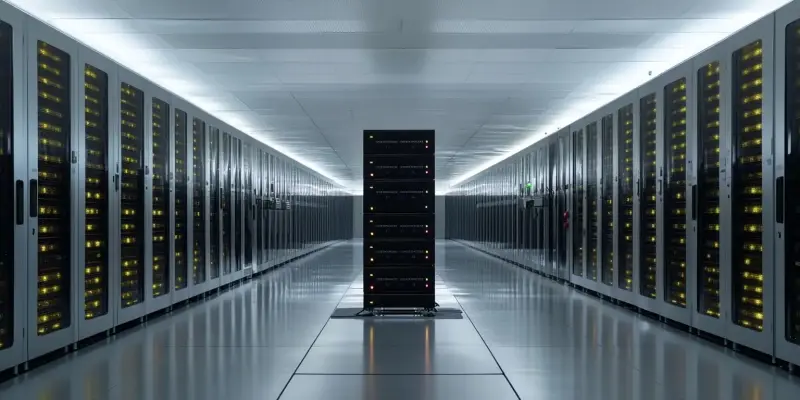
The TB5 Disk is rewriting the narrative around data storage with its groundbreaking design and capacity. Capable of holding up to 5 terabytes of data within a structure no larger than a credit card, this disk signifies a monumental leap from existing storage technologies. Leveraging advanced nanotechnology alongside a novel magnetic storage methodology, the TB5 Disk achieves incredibly high data densities while maintaining impressive speed and reliability. This innovative device incorporates quantum tunneling and machine learning algorithms, which optimize real-time performance based on user behavior, resulting in data transfer rates that are over 100 times faster than current hard drives.
Unparalleled Speed and Energy Efficiency
One of the most remarkable features of the TB5 Disk is its extraordinary read-write speeds. By integrating quantum tunneling and machine learning algorithms, the device ensures seamless and lightning-fast data transfers. These algorithms intelligently adapt to usage patterns, thereby continuously optimizing the performance. This means that whether one is transferring large files or performing routine data backups, the TB5 Disk delivers incomparable efficiency and speed. Beyond its impressive speed, the TB5 Disk comes equipped with a bespoke energy-efficient chip architecture. The importance of minimizing energy consumption cannot be overstated, especially in data centers where large arrays of storage devices are deployed.
A reduction in energy consumption directly impacts operational costs and the overall carbon footprint of data centers. This energy-efficient design means that using the TB5 Disk will not only deliver superior performance but also contribute to a more eco-friendly data ecosystem. As digital storage demands continue to escalate, the TB5 Disk stands as a model for marrying high performance with sustainability. This innovative approach ensures that businesses and individual users can benefit from enhanced storage capacity and speed while also playing a part in preserving the environment.
Transformative Potential for Quantum Computing
In addition to revolutionizing data storage, the TB5 Disk is poised to make significant inroads into the realm of quantum computing. Utilizing quantum tunneling, this disk can pave the way for creating smaller and more powerful quantum computers. Such advancement holds vast implications across various sectors, from healthcare to aviation. Imagine medical research benefiting from the rapid processing capabilities of quantum computers or aviation systems becoming more streamlined and efficient through enhanced computational power. These possibilities are not far-fetched but could become reality with the integration of the TB5 Disk into quantum computing systems.
However, these advancements bring their own set of challenges, particularly around cybersecurity and data privacy. Quantum computing has the capability to crack traditional encryption methods, raising important questions about how to secure data in a quantum-enabled future. As we move forward with these technological strides, protocols and policies will need to be developed to ensure that the security and privacy of data are not compromised. The introduction of the TB5 Disk within the quantum domain could thus accelerate the need for next-generation encryption techniques capable of withstanding quantum decryption attempts.
Shaping Future Technology and Data Security
The TB5 Disk is revolutionizing data storage with its cutting-edge design and immense capacity. It can store up to 5 terabytes of data while remaining compact, no larger than a credit card. This represents a significant advancement from current storage technologies. Utilizing advanced nanotechnology and an innovative magnetic storage method, the TB5 Disk achieves exceptionally high data densities. It ensures impressive speed and reliability, incorporating quantum tunneling and machine learning algorithms. These technologies optimize real-time performance according to user behavior, resulting in data transfer rates that are over 100 times faster than existing hard drives. Furthermore, the TB5 Disk’s small size and high capacity make it highly portable and convenient for various users, from tech professionals to everyday consumers. Whether for extensive multimedia storage or handling large databases, the TB5 Disk sets new standards for what’s possible in data storage, combining efficiency, speed, and reliability in one compact device.