

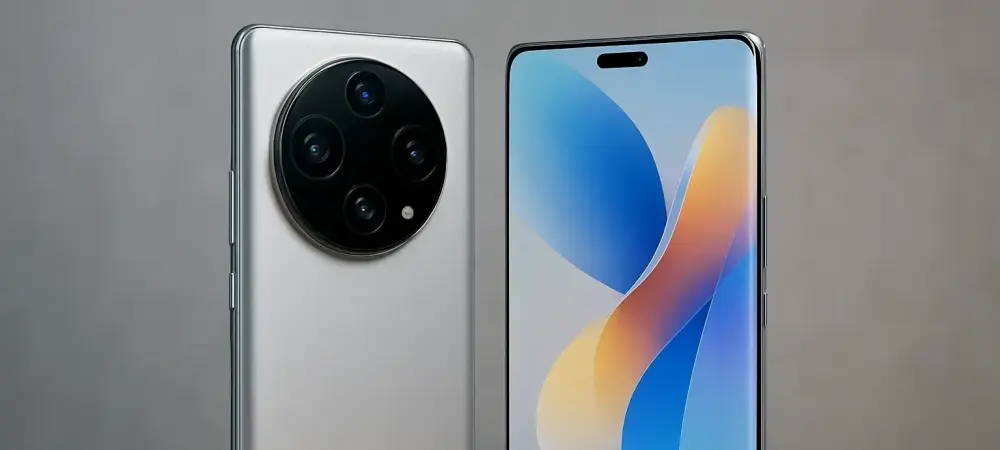
In an era where smartphones have become the primary tool for capturing life’s moments, the race to deliver groundbreaking camera technology has never been more intense, and Honor’s latest offering, the Honor Magic 8 Pro, is poised to make a significant impact with its upcoming launch alongside the Magic 8 and Magic Pad 3 lineup in China on October 16. Anticipation is building around whether this flagship device can set a new standard for mobile photography. The buzz is largely fueled by confirmed details about its advanced camera system, which promises to push the boundaries of what a smartphone can achieve in terms of image quality. Beyond just photography, the device also aims to impress with top-tier performance and design, positioning it as a potential game-changer in a highly competitive market. This raises a compelling question: can this smartphone truly elevate the art of mobile photography to unprecedented heights, or will it simply be another incremental step forward?
Pushing Boundaries with Camera Innovation
The centerpiece of the Honor Magic 8 Pro’s appeal lies in its remarkable 200-megapixel telephoto camera, a feature that stands out as a bold leap forward in smartphone imaging technology. Equipped with a 1/1.4-inch sensor and a wide f/2.6 aperture, this lens is designed to capture stunning detail even in challenging lighting conditions. What truly sets it apart, however, is the integration of the AIMAGE Honor Nox Engine for advanced image processing, paired with an industry-leading 5.5-stop image stabilization based on Camera and Imaging Products Association (CIPA) standards. This stabilization allows for shutter speeds up to 45 times slower than typical settings without the risk of blur from hand movements, making it an ideal choice for handheld shots in low-light or dynamic environments. Such capabilities suggest that the device could cater to photography enthusiasts seeking DSLR-like results in a portable form factor, potentially redefining expectations for what a smartphone camera can accomplish in everyday scenarios.
Performance and Design as Complementary Strengths
Beyond its photographic prowess, the Honor Magic 8 Pro is engineered to excel in performance and aesthetics, ensuring it’s more than just a camera-centric device. Powered by the Snapdragon 8 Elite Gen 5 chipset, complemented by up to 16GB of RAM and 1TB of storage, this smartphone is built to handle intensive tasks with ease, from gaming to multitasking. Running on MagicOS 10 out of the box, it promises a seamless and feature-rich user interface that enhances the overall experience. Design-wise, leaks hint at a sleek quad-curved display and a symmetrical curved rear panel, offering a premium look and feel. The inclusion of a pill-shaped cutout on the screen for the front-facing camera further aligns with modern design trends. These elements collectively position the device as a comprehensive flagship, appealing not only to photography buffs but also to tech-savvy users who demand cutting-edge hardware and elegant craftsmanship in their mobile devices. As the launch nears, it’s evident that Honor aimed to balance innovation with practicality, creating a smartphone that stands out in multiple dimensions.