

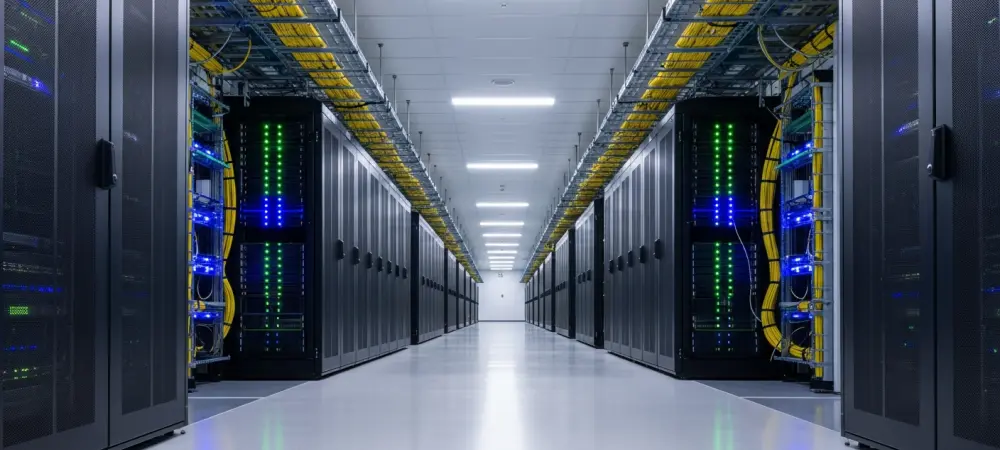
The humming of global data centers and the silent pulse of light through fiber-optic strands have become the true engines of modern wealth, far surpassing the era of the simple smartphone upgrade. As the digital landscape evolves in 2026, the telecommunications sector is moving away from its traditional reliance on consumer mobile cycles and landline services. This transition is not merely a service upgrade but a fundamental redesign of the business model, aiming to capture value from the massive infrastructure needs of hyperscalers. Industry leaders recognize the transformative potential of artificial intelligence as the catalyst for this pivot, repositioning themselves as the essential physical foundation of the intelligence era.
Understanding this shift is vital, as it represents a high-stakes gamble on the long-term necessity of fiber and data centers in a world powered by machine learning. While the previous decade focused on 5G rollout for the average consumer, the current focus has shifted toward the back-end of the internet. This realignment requires a deep understanding of how hyperscalers operate, as their demands for high-density power and ultra-fast connectivity differ significantly from those of individual smartphone users. Consequently, the industry is witnessing a divergence where infrastructure becomes more valuable than the services running on top of it.
Beyond Connectivity: The Telecom Pivot from Consumer Services to AI Infrastructure
The move toward AI infrastructure represents a departure from the historical revenue profiles of the telecommunications sector, which were once largely dependent on volatile consumer cycles. Major industry players are now making significant capital investments in AI-specific hardware, betting that the next decade of growth will be driven by the massive data demands of platforms. By focusing on wholesale connectivity and long-duration contracts, carriers are attempting to create stable revenue streams that can withstand the fluctuations of the retail market. This approach treats connectivity as the essential pick and shovel of the AI gold rush, ensuring that telcos remain indispensable regardless of which software platform eventually dominates the market.
However, the technical demand for data capacity must be met with equal parts innovation and restraint. Analysts suggest that while the volume of data is guaranteed to skyrocket, the challenge lies in maintaining a balance between network expansion and profitability. The shift requires telcos to act more like utility providers for the tech elite, offering the physical floor space and cooling systems necessary for high-performance computing. This fundamental transformation is turning the telecommunications world into the silent partner of the AI revolution, where the value is locked within the physical conduits and the land they occupy.
Navigating the Financial and Technical Realities of the AI Build-Out
Navigating the transition to an AI-centric infrastructure requires telecommunications companies to confront a complex array of financial hurdles and engineering challenges. The sector is currently grappling with a market where headline-grabbing billion-dollar contracts often mask a slower reality of implementation. As carriers commit massive capital to these projects, they must ensure that the technical architecture they deploy can handle the specific, high-intensity workloads required by modern machine learning models.
The Disconnect Between Headlines and Revenue: Unpacking the Ceiling vs. Floor Dilemma
A significant gap currently exists between theoretical contract values and actual cash flow within the infrastructure market. Industry experts, such as Brian Washburn, highlight a recurring pattern where hyperscalers secure long-term agreements based on their maximum potential capacity, known as the ceiling, while their initial operational commitment, the floor, remains small. For instance, a contract might specify hundreds of fiber waves, yet the carrier may only light up a tiny fraction of that capacity in the early years. This structural reality forces carriers to maintain massive amounts of idle capacity, creating a temporal lag that challenges quarterly earnings.
This start-small approach allows hyperscalers to mitigate risk while ensuring they have the room to grow, leaving telcos in a difficult position. The billions mentioned in corporate press releases often represent a theoretical potential over decades, while immediate revenue is a mere fraction of that scale. This discrepancy explains why the industry is seeing high capital expenditure without a corresponding immediate spike in profits. To survive this period, carriers must find ways to monetize the idle capacity they are forced to hold in reserve for their largest clients.
Monetizing the Picks and Shovels: Verizon’s Shift Toward High-Quality Wholesale Streams
Verizon has emerged as a frontrunner in this infrastructure pivot, securing landmark dark-fiber agreements with technology giants like Google. Dan Schulman has described this movement as a growth vector that is expected to materialize fully over the next few years. The strategic objective is to create long-duration, high-quality contracted revenue streams that distance the company from the historical reliance on consumer landline cycles. By positioning itself as a provider for Data Center Interconnect and other wholesale needs, Verizon is capitalizing on the physical necessities of the digital age.
This strategy relies on the assumption that AI demand will translate into stable, long-term infrastructure leases rather than volatile, short-term usage. By acting as the underlying utility for the AI economy, the carrier is betting that the physical network will remain a critical asset. However, the success of this wholesale-first approach depends on whether these high-quality contracts can offset the historical trend of declining prices per bit of data. The goal is to secure a permanent place in the value chain by owning the pipes through which all future intelligence must flow.
Engineering for Autonomy: How Agentic AI and Edge Computing Are Flipping Network Architecture
The rise of agentic AI, which includes autonomous robots and self-driving vehicles, is necessitating a radical redesign of network topology. Traditional networks were built for downstream consumption, such as streaming video to a handheld device; however, AI agents require massive upstream capacity to send real-time sensor data back to the cloud. Companies like AT&T are re-engineering their infrastructure to prioritize this upstream volume and low latency. This is a gamble on a future where the edge of the network is just as data-intensive as the core.
This architectural shift represents a significant technical hurdle and a commitment to the commercial viability of real-time applications. By moving processing power closer to the device, carriers can reduce the time it takes for an AI agent to make a decision, which is critical for safety in autonomous systems. This engineering focus shows that the telecommunications industry is not just adding more fiber, but is fundamentally changing how data flows across the globe. The network is becoming a two-way street, capable of supporting a world of machines that talk back.
Scaling for the Next Decade: Examining SK Telecom’s Massive Data Center Ambitions
In the Asian market, carriers like SK Telecom are moving beyond simple connectivity to become full-scale data center operators. The company has established dedicated subsidiaries, such as SK Hyper, to build gigawatts of AI-specific data center capacity. This project is backed by massive capital through 2030, showing a commitment to a much longer planning horizon than typical technology cycles. This aggressive expansion highlights a regional difference in strategy, where some firms are willing to host the AI operations directly rather than just transporting the data.
Even with such ambitious goals, these players recognize that the boom is a marathon, not a sprint. The first phase of these massive build-out is often scheduled for completion years in the future, with full targets pushed into the next decade. This long-term hedging suggests that the most aggressive players in the market are preparing for a slow and steady climb in demand. By owning both the transport layer and the hosting layer, these firms are attempting to capture multiple points of value within the AI ecosystem.
Bridging the Structural Gap: Strategic Recommendations for Sustainable Growth
To thrive in this new environment, telecommunications companies must balance aggressive infrastructure investment with strict capital discipline. Instead of speculative builds that led to the market crashes of the past, carriers should focus on incremental provisioning. Lighting up capacity only as firm demand materializes will help protect balance sheets from the risks of oversupply. Diversifying revenue beyond simple data transport into managed services and edge computing nodes can also help mitigate the impact of falling margins per unit of data.
Furthermore, telcos should prioritize long-duration assets that can be easily upgraded with new optical technology. History has shown that fiber conduits laid decades ago are still valuable today because they can be filled with newer, higher-capacity strands. Ensuring that the physical conduits laid today remain profitable for decades is essential for surviving the high capital intensity of the current era. Success will come to those who can manage the disconnect between traffic volume and revenue by securing partnerships that guarantee long-term occupancy of their networks.
The Long Game: Why the Physical Backbone Remains the Ultimate Economic Moat
The telecommunications industry successfully positioned itself as the silent beneficiary of the artificial intelligence revolution by prioritizing the physical reality of hardware over software hype. The carriers that navigated the initial volatility of the build-out did so by anchoring their value in the enduring necessity of fiber and floor space. These companies recognized that while the service layer might undergo painful consolidation, the underlying demand for data transport and hosting remained a constant requirement for the global economy. The infrastructure providers prioritized long-term solvency by implementing incremental provisioning strategies, which prevented the catastrophic oversupply seen in previous technological booms. They finalized their role as the indispensable guardians of the digital frontier, proving that the most valuable part of the intelligence economy was always the glass and steel that held it together. Looking ahead, the focus remained on upgrading existing conduits to meet the next wave of unforeseen computational demands, ensuring the network remained a vital asset for the next fifty years.