

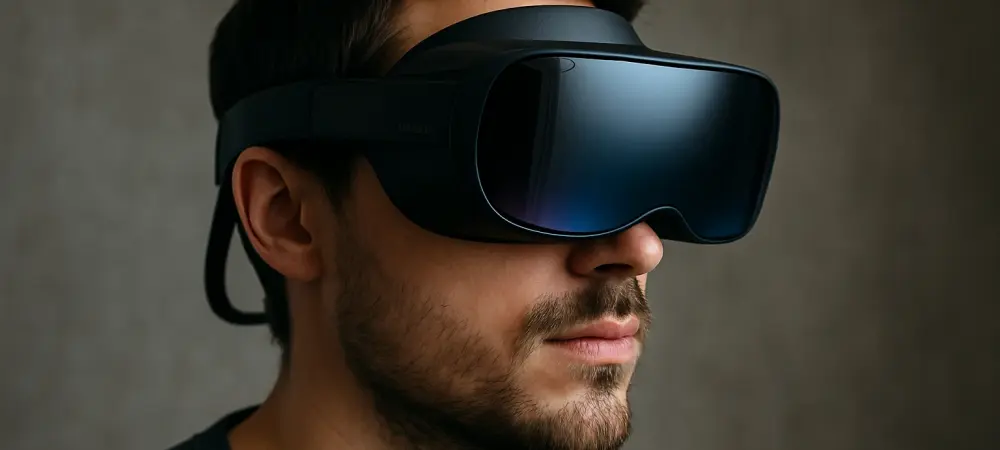
Diving into a New Dimension with Samsung
What happens when technology transcends the screen and immerses users in a seamless blend of digital and physical realms? Samsung has stepped boldly into this space with the Galaxy XR headset, a device that promises to revolutionize how people experience extended reality (XR). Unveiled at a major tech event earlier this year, this mixed-reality marvel combines cutting-edge hardware with strategic partnerships, positioning itself as a serious contender in a rapidly evolving market. With a price point that challenges industry giants, the headset is generating buzz about its potential to make XR accessible to a broader audience.
This development isn’t just about a new gadget; it’s about reshaping interactions in gaming, education, and professional environments. The significance lies in Samsung’s return to XR after a long hiatus, armed with a device that could disrupt the status quo dominated by high-cost competitors. As the industry stands at a crossroads, the Galaxy XR emerges as a potential catalyst for widespread adoption, making this launch a critical moment to watch.
The XR Market: A Field Ready for Transformation
The XR landscape, spanning virtual, augmented, and mixed realities, has evolved into a multi-billion-dollar industry with projections estimating exponential growth over the next few years. Despite its promise, barriers like steep prices and incompatible ecosystems have limited mainstream appeal. Samsung’s reentry, backed by a collaboration with Google and Qualcomm, arrives at a time when consumer demand for immersive experiences and enterprise needs for innovative solutions are at an all-time high.
Unlike past efforts that struggled to gain traction, the current market dynamics favor disruption. Competitors have set benchmarks with premium offerings, but their cost often alienates average users. Samsung’s strategic timing aims to bridge this gap, leveraging a growing appetite for XR applications in diverse sectors, from entertainment to industrial training, to position itself as a key player.
Inside the Galaxy XR: What Sets It Apart
At the heart of the Galaxy XR lies a powerhouse of technology designed to compete with the best. Equipped with Qualcomm’s Snapdragon XR2+ Gen 2 processor, 4K Micro-OLED displays boasting a 90-hertz refresh rate, and a 109-degree field of view, the headset delivers stunning visuals and performance. Its 16GB RAM and 256GB storage align with top-tier devices, though limited storage options for spatial content hint at room for improvement.
Design-wise, the device weighs 545 grams, paired with an external battery to manage heat and enhance comfort, setting it apart from heavier rivals. Early testers have noted its ergonomic fit, though it’s not the lightest option available. High-resolution passthrough cameras and eye-tracking technology for foveated rendering further elevate the user experience, offering clarity and efficiency that stand out in mixed-reality applications. Priced at $1,799, the Galaxy XR undercuts major competitors by a significant margin while maintaining premium features. Optional controllers, available at a discounted rate with purchase, add versatility for gaming and professional use. However, a lower refresh rate compared to some newer models and a lack of deep integration with Samsung’s broader ecosystem remain points of critique in an otherwise impressive package.
Expert Takes and User Feedback
Insights from industry leaders at the launch event underscore the collaborative strength behind the Galaxy XR. Executives from Samsung, Google, and Qualcomm highlighted the headset as a flagship for Android XR, a platform designed to foster an open ecosystem. Tech analysts have praised this approach, suggesting it could challenge the closed systems of other major players by encouraging developer innovation and hardware diversity.
Hands-on testing in controlled settings revealed passthrough quality that may surpass even the most renowned devices in the market. Users have shared enthusiasm for features like Google Maps’ immersive Street View, which brings real-world navigation to life through advanced rendering techniques. Such feedback paints a promising picture of the headset’s ability to deliver practical, engaging experiences that resonate with early adopters.
A notable perspective comes from a software developer who tested the device, stating, “The integration of Gemini AI with eye-tracking opens up new possibilities for app design—it’s like the headset anticipates your needs.” This sentiment reflects a broader excitement about how Android XR could become a sandbox for creative and functional applications, potentially transforming user interaction in profound ways.
Implications for Users and Developers Alike
For everyday consumers, the Galaxy XR offers a more affordable entry into premium XR at $1,799, complete with preloaded Google apps like Circle to Search for intuitive real-world queries. Additional perks, such as a $1,000 Explorer Pack with AI enhancements and specialized content, sweeten the deal for those eager to dive into this technology. This pricing and feature set make it a viable option for enthusiasts and casual users seeking immersive entertainment or productivity tools. Developers stand to gain from the headset being the first Android XR device, providing a platform to experiment with Gemini AI’s intent recognition and Google’s OpenXR standards. This setup allows for the creation of scalable, cross-device experiences, potentially lowering the barriers to entry for building innovative applications. The open nature of the ecosystem could spark a wave of creativity, leading to diverse XR solutions.
Enterprises, meanwhile, can explore tailored applications, as seen in partnerships like Samsung Heavy Industries using XR for virtual shipbuilding. With features supporting PC connectivity and optional controllers, businesses have the flexibility to integrate the technology into workflows. Pilot programs could reveal how XR enhances training, design, and remote collaboration, marking the Galaxy XR as a tool with far-reaching potential across industries.
Reflecting on a Bold Step Forward
Looking back, Samsung’s launch of the Galaxy XR marked a pivotal moment in the XR industry, blending high-end hardware with strategic software alliances to challenge existing norms. The headset’s competitive pricing and standout features like superior passthrough quality positioned it as a formidable rival to established names. Its role as the first Android XR device laid the groundwork for a broader ecosystem that prioritized accessibility and innovation.
As the dust settled, the focus shifted to actionable next steps for stakeholders. Consumers could explore trial programs or early adopter offers to experience this technology firsthand, while developers were encouraged to leverage the open platform for groundbreaking apps. Enterprises had the opportunity to integrate XR into operations, testing its value in real-world scenarios. The journey ahead promises further advancements, with Samsung and its partners poised to refine and expand upon this initial triumph, potentially reshaping the digital landscape for years to come.