

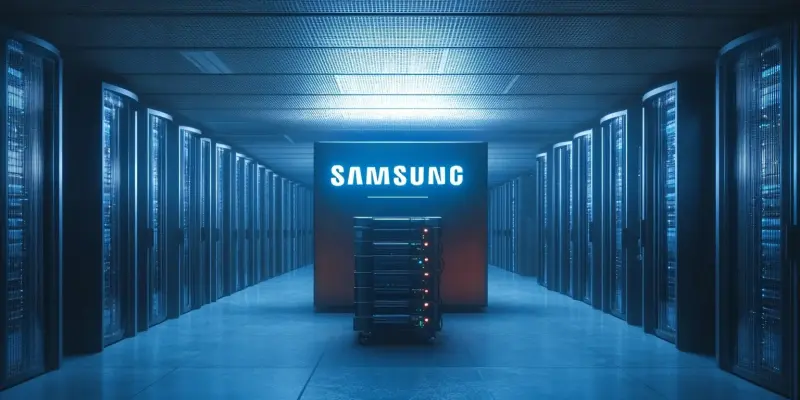
Samsung has made a significant strategic decision to establish its first AI-focused data center in Gumi, South Korea. This move is part of Samsung’s ambition to penetrate deeper into the rapidly expanding AI market. Backing this initiative is the substantial 35% increase in revenue from Samsung’s cloud services division in the third quarter of 2024, compared to the previous year. This impressive growth underscores the increasing demand for AI and cloud services, echoing the global trend of extensive AI adoption.
Global Surge in AI Adoption
Rising Demand for AI Computing
One of the key trends underpinning Samsung’s decision is the global surge in AI adoption, which has prompted companies to ramp up their infrastructure significantly. According to industry predictions from the International Data Corporation (IDC), there is an anticipated dramatic rise in AI workloads over the coming years. Data center capacities are projected to grow at a compound annual growth rate of 40.5% by 2027. This projected growth highlights a sizable market opportunity for companies that can meet these rapidly growing AI computing needs. Samsung’s establishment of the new AI data center in Gumi is a strategic move to capture this opportunity and enhance its infrastructure to support the rising demand.
Major tech giants such as Microsoft, Amazon Web Services, and Google Cloud have already been expanding their infrastructures to stay competitive. These industry leaders have recognized the critical importance of robust AI infrastructure and have made substantial investments to ensure they can meet the increasing demands of AI workloads. Samsung’s similar investments in AI infrastructure demonstrate its commitment to staying competitive in the market and leveraging the expected growth in AI demands. By establishing its AI-focused data center, Samsung is positioning itself to be a key player capable of providing high-capacity, reliable AI computing services that meet the expectations of a growing customer base.
IDC’s Projections for Data Center Capacity Growth
In line with the global AI adoption trend, the IDC’s projections for data center capacities growing at a substantial rate further substantiate the importance of infrastructure readiness. The anticipated increase at a compound annual growth rate of 40.5% by 2027 points to the necessity of significant advancements in data storage, processing power, and overall infrastructure scalability. These advancements are crucial for supporting the expected surge in AI workloads. Samsung’s proactive approach of establishing the AI-focused data center is a calculated measure to meet these future demands effectively.
The move to build this data center in Gumi, a city known for its advanced industrial facilities, places Samsung in an advantageous position with access to cutting-edge technology and skilled labor. This strategic location choice will play a critical role in the efficiency and success of Samsung’s AI operations. With the proliferation of AI technologies showing no signs of slowing down, Samsung’s infrastructure investments are aligned with the market’s trajectory. Such forward-thinking measures ensure that Samsung remains at the forefront of technological advancements, capable of delivering top-tier AI service offerings to a broad spectrum of industries globally.
Strategic Partnerships and Leadership Changes
Collaboration with Microsoft Azure
Samsung’s strategic partnerships are integral to strengthening its position in the AI market. One notable collaboration is with Microsoft Azure to launch the FabriX AI service. This partnership exemplifies Samsung’s commitment to broadening its AI capabilities and integrating advanced AI solutions within its portfolio. The FabriX AI service, a result of this collaboration, aims to provide customers with enhanced AI performance and streamlined integration, ultimately improving operational efficiencies for a multitude of businesses relying on AI technologies.
This collaboration capitalizes on the strengths of both companies, combining Microsoft Azure’s vast cloud infrastructure and AI expertise with Samsung’s robust technological ecosystem and innovation capabilities. The FabriX AI service is poised to attract a wide array of industries seeking reliable and advanced AI solutions. Leveraging Microsoft Azure’s established market presence and Samsung’s cutting-edge technology, the partnership is expected to deliver significant advancements in AI services, setting a benchmark for excellence in the industry.
Appointment of Lee June-Hee as CEO of Samsung SDS
In addition to strategic partnerships, Samsung has made crucial leadership changes to bolster its AI market position. The appointment of Lee June-Hee as the new CEO of Samsung SDS underlines the company’s commitment to driving innovations in AI and cloud computing. Lee June-Hee brings extensive experience from his tenure in Samsung Electronics’ networking business, which is anticipated to be instrumental in steering Samsung SDS towards intensified investments in AI infrastructure and cutting-edge technological solutions.
Under Lee’s leadership, Samsung SDS is expected to prioritize AI and cloud services, focusing on both expanding its offerings and enhancing its technological prowess. His expertise in networking and IT services is likely to foster a culture of innovation within the company, driving forward ambitious projects and collaborations to elevate Samsung’s status in the AI market. Lee’s vision of harnessing AI to transform business processes and deliver superior technological solutions is well-aligned with the current industry trends and future market needs.
Samsung’s Ambition to Dominate the AI Market
Establishing the New AI Data Center
Samsung’s establishment of the new AI-focused data center in Gumi is a pivotal step toward dominating the AI and cloud services market. This strategic initiative signifies Samsung’s dedication to building robust infrastructure to support the growing demands of AI technologies. The new data center is expected to offer unparalleled AI computing capabilities, catering to the needs of various industries that are increasingly relying on AI for their operations.
Equipped with state-of-the-art technology and resources, the AI data center in Gumi is set to become a cornerstone of Samsung’s AI strategy. The facility’s advanced capabilities will enable Samsung to provide high-performance AI services, ensuring the company remains competitive and capable of meeting future market demands. Furthermore, the data center’s location in Gumi leverages the city’s industrial expertise and technological advancements, providing a strategically advantageous position for Samsung’s AI operations.
Leveraging Emerging AI Demands
Samsung has made an important strategic decision to open its first AI-focused data center in Gumi, South Korea. This move signifies Samsung’s ambition to dive deeper into the fast-growing AI market. The decision to establish this data center comes on the heels of a remarkable 35% spike in revenue from Samsung’s cloud services division in the third quarter of 2024 compared to the previous year. This significant growth highlights the increasing global appetite for AI and cloud services.
Additionally, the new AI-focused data center aligns with Samsung’s broader strategy to be a leader in tech innovation. As artificial intelligence continues to shape various industries, Samsung’s investment signals its dedication to staying at the forefront of technological advancements. This center will likely serve as a hub for developing cutting-edge AI applications and solutions, helping Samsung capitalize on the booming demand. Samsung’s initiative also reflects the global trend of extensive AI adoption, further solidifying its presence in the competitive tech industry.