

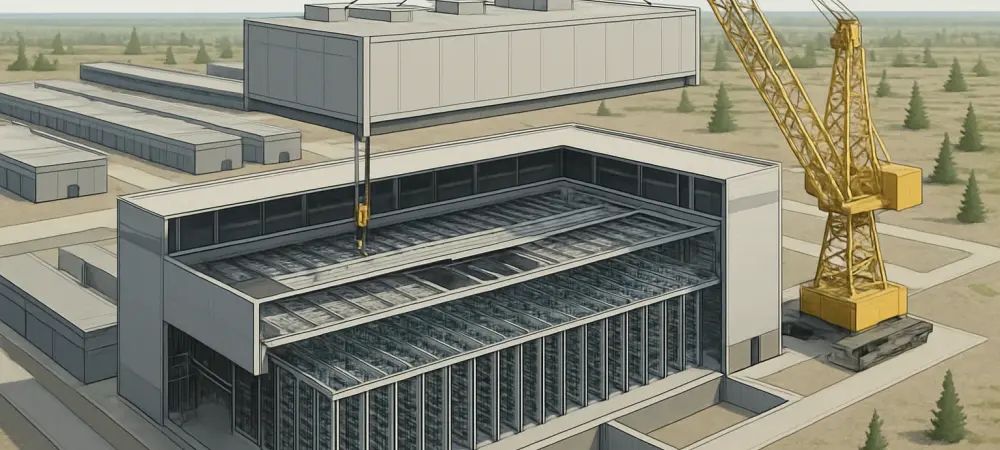
The relentless surge in artificial intelligence and high-density computing is creating an unprecedented demand for advanced digital infrastructure across Europe, pushing existing data center capacity to its limits and demanding a new generation of facilities built for scale, efficiency, and sustainability. In response to this escalating need, data center operator Pure has initiated a significant international expansion, underscored by two major new developments that signal a robust strategy to capture this growing market. With a newly approved campus in the burgeoning tech hub of Madrid, Spain, and a massive, next-generation project underway in Finland, the company is making a clear statement about its ambitions. These strategic investments are not merely about adding capacity; they represent a calculated approach to delivering highly specialized, technologically sophisticated infrastructure in locations that are either facing a critical supply-demand gap or offer strategic advantages for future computing workloads, positioning the firm at the forefront of Europe’s digital transformation.
A Strategic Foothold in Southern Europe
In Madrid, Pure has secured final planning approval for the first phase of its ambitious €400 million MAD01 campus, a project designed to directly address the city’s significant shortage of high-quality digital infrastructure. Construction is scheduled to commence this month on a sprawling 190,000-square-foot site in the Meco area, with the initial phase delivering a 30MW data center and a dedicated private substation. This will be followed by a planned Phase II expansion that will add another 40MW, bringing the campus’s total potential capacity to 70MW. The project’s design incorporates critical innovations aimed at sustainability and versatility. Notably, its private substation will be among the first in Spain to utilize Siemens’ advanced GHG-free Blue Switchgear, minimizing its environmental footprint. Furthermore, the facility will feature a highly adaptable modular design that supports both traditional air and cutting-edge direct liquid cooling systems, ensuring it can accommodate a wide spectrum of client needs, from standard enterprise workloads to the most demanding high-density AI clusters.
Pioneering the Next Generation in the Nordics
Simultaneously, Pure is making a colossal investment in the Nordic region with the development of a 500MW data center campus in Seinäjoki, Finland, a move that directly targets the explosive growth in AI and high-density computing. Codenamed FIN01, this massive project is engineered for the future, designed to be built out in repeatable, 40MW AI-ready modules. Each module will come equipped with advanced direct-to-chip liquid cooling technology, a critical requirement for managing the intense thermal output of next-generation processors essential for complex AI training and inference tasks. This expansion into Finland aligns with a broader industry trend of major data center investment flowing into the Nordic countries. The region has become a magnet for such developments due to its unique combination of abundant and affordable land, access to vast reserves of inexpensive green energy, and a stable political climate, making it an ideal location for building the large-scale, sustainable, and technologically sophisticated facilities required to power the next era of digital innovation.
Forging Europe’s Digital Future
The company’s dual announcements in Spain and Finland marked a pivotal moment in the continent’s race for digital supremacy, revealing a comprehensive and forward-thinking infrastructure strategy. The Madrid project effectively addressed an immediate and acute need for modern digital capacity in a major European capital, deploying advanced, sustainable technology to close a critical market gap. In parallel, the colossal Finnish campus established a long-term foundation engineered specifically for the hyper-scale AI workloads that are set to define the next decade of computing. These complementary projects showcased a sophisticated approach that deftly balanced the resolution of present market demands with a clear-eyed preparation for future technological imperatives. Through these decisive actions, the operator not only expanded its physical footprint but also cemented its role as a crucial enabler of Europe’s ambitious digital and AI aspirations, proving its capability to deliver complex, large-scale solutions tailored to a rapidly evolving technological landscape.