

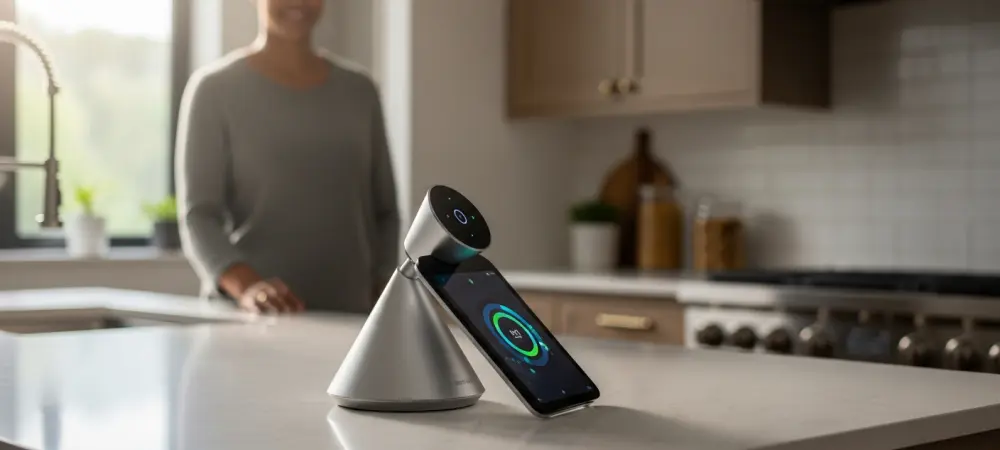
The silent hum of a countertop device that shifts its gaze to follow a user across the kitchen signifies a profound shift in how humans coexist with artificial intelligence. The era of the static smart speaker is fading, replaced by the prospect of a device that does not just listen, but moves and watches with intent. As OpenAI transitions from a software powerhouse to a hardware contender, the industry is buzzing about a collaboration that pairs Sam Altman’s processing might with Jony Ive’s legendary design aesthetic. The question is no longer just about what an AI can say, but whether a physical personality in your living room can provide enough utility to justify its presence over the ubiquitous iPhone. This technological evolution represents a departure from the screen-centric world toward an era of ambient computing. By stripping away the glass interface, OpenAI and the LoveFrom design firm are betting on a future where interaction is dictated by natural motion and vocal nuance. This transition is significant because it challenges the dominance of established ecosystems, suggesting that a dedicated, specialized unit might outperform the general-purpose smartphone in the domestic sphere. The arrival of such a device marks the first serious attempt to commercialize a semi-sentient household companion that operates with a high degree of autonomy.
The Arrival of the Kinetic AI: Why a Screenless Companion Is Chasing Your Countertop Space
The arrival of kinetic AI marks a transition from passive tools to active participants in the domestic environment. While previous iterations of home technology remained stationary, the new collaboration between OpenAI and Jony Ive introduces a device capable of mechanical response. This movement aims to bridge the gap between digital processing and physical presence, creating a form of artificial empathy that relies on more than just vocal tone. By utilizing motorized components to adjust its orientation, the device mimics human behavioral cues, such as nodding or tilting, which fosters a deeper sense of connection during interactions.
Integrating a physical body into an AI system solves the long-standing problem of directional audio and visual clarity. A device that can physically turn toward a speaker ensures that its microphones and cameras are always optimized for the current task, whether it is identifying a face or filtering out background noise. This mechanical agility allows the hardware to transition from a decorative object to an functional assistant that inhabits the space alongside the user. As OpenAI seeks to move beyond the browser, this physical form factor provides the necessary “home” for its increasingly complex algorithms.
Beyond the “Black Box”: Why the Smart Home Status Quo Is Ripe for Disruption
For years, the smart home market has been dominated by “black boxes” like the HomePod and Echo—devices that are functional but largely reactive. Consumers are increasingly experiencing assistant fatigue, where voice commands feel clunky and limited by aging architecture. Most current systems rely on rigid templates and keyword triggers, often failing to understand the nuance of human speech or the context of a specific situation. This frustration has created a vacuum for a more intelligent alternative that does not require a user to memorize specific phrases to turn off a light or set a timer. This creates a strategic opening for a dedicated AI device that utilizes high-speed large language models (LLMs) to anticipate needs rather than just following orders. Understanding this shift is essential because it represents a move away from simple automation toward a truly personalized, context-aware digital expert. While a standard speaker waits for a wake word, a proactive AI identifies patterns in household behavior, such as recognizing when a resident is preparing for a commute or starting a specific chore. This level of anticipation transforms the device from a novelty into a necessary utility, addressing the stagnation that has plagued the smart speaker market for the last half-decade.
Merging GPT-Live with Physical PersonThe Tech and Utility of OpenAI’s Vision
The foundation of OpenAI’s rumored device lies in GPT-Live, a model built for fluid, low-latency conversations that mimic human interaction far better than Siri’s current iterations. Unlike traditional hardware, this device is expected to feature autonomous mechanical components, allowing it to physically shift and respond to its environment. By integrating cameras and spatial sensors, the AI gathers visual context to understand a user’s specific habits and household layout. This visual data allows the system to process non-verbal requests, such as recognizing a gesture toward a malfunctioning appliance or noticing that a grocery item is running low on the counter.
Beyond simple communication, the utility of this “physical personality” manifests in its ability to manage the logistics of a home. A device that can see and move is capable of locating misplaced items or monitoring the progress of a meal without being prompted. The goal is to create a proactive assistant that functions as a knowledgeable member of the household rather than a distant server in a data center. By reducing the time between a thought and an action, the high-speed GPT-Live backbone ensures that the interaction feels instantaneous, removing the “thinking” delays that often break the immersion of current voice assistants.
The Ive Factor and the Legal Shadow: Expert Insights into the Apple-OpenAI Conflict
The involvement of Jony Ive acts as a magic talisman for OpenAI, signaling a level of prestige and design-first thinking that few startups can claim. Ive’s signature minimalist approach is expected to result in a device that blends seamlessly into the home, avoiding the plastic and utilitarian look of many contemporary tech products. However, this partnership has sparked a high-stakes legal battle, with Apple alleging the misappropriation of trade secrets and proprietary technology. This legal friction underscores the intense competition between the former collaborators, as OpenAI moves to capture a market Apple has long considered its own territory.
Experts suggest this conflict arises because OpenAI’s hardware goals may mirror Apple’s internal research into mobile, AI-driven home devices. The aggressive poaching of Apple’s engineering talent suggests that the personality OpenAI is building may be constructed from the very DNA of the company it seeks to outmaneuver. This talent drain has forced Apple to accelerate its own development cycles, leading to a crowded market where intellectual property disputes are as common as product announcements. The outcome of these legal proceedings will likely dictate the pace of innovation for both companies as they vie for control of the private living space.
Navigating the AI Hardware Wave: A Framework for Privacy and Economic Value
Before inviting a camera-equipped, semi-sentient device into a private residence, consumers must evaluate the product through a rigorous framework of trust and necessity. First, consider the privacy trade-off; while contextual awareness makes an AI smarter, it creates a data gold mine for brokers in a company that lacks Apple’s established “privacy-first” brand identity. The risk of persistent visual and auditory monitoring is a significant barrier to entry for many households. Without clear, end-to-end encryption and local processing guarantees, the convenience of a proactive assistant may be outweighed by the potential for surveillance.
Second, the economic reality of such advanced hardware requires careful scrutiny. A $200 to $300 price point for sophisticated mechanical hardware is historically difficult to sustain without aggressive data monetization or high-margin subscription services. Consumers must determine if the physicality of the device offers a unique solution to a household problem or if it is simply a high-priced gimmick designed to distract from the fact that a smartphone can already do most of the heavy lifting. As the market matures, the true value of these devices will be measured by their ability to provide long-term utility without compromising the sanctity of the home.
The evolution of home artificial intelligence necessitated a new understanding of the relationship between design and utility. It became clear that aesthetic elegance could not mask the need for robust security protocols and tangible user benefits. As these devices matured, the focus shifted toward decentralized processing to ensure that private data remained within the walls of the residence. Success in the hardware space was ultimately determined by the ability of a device to solve real-world problems while respecting the autonomy of the user. This transition empowered individuals to reclaim control over their digital environments, turning the home into a space of assisted living rather than constant observation.