

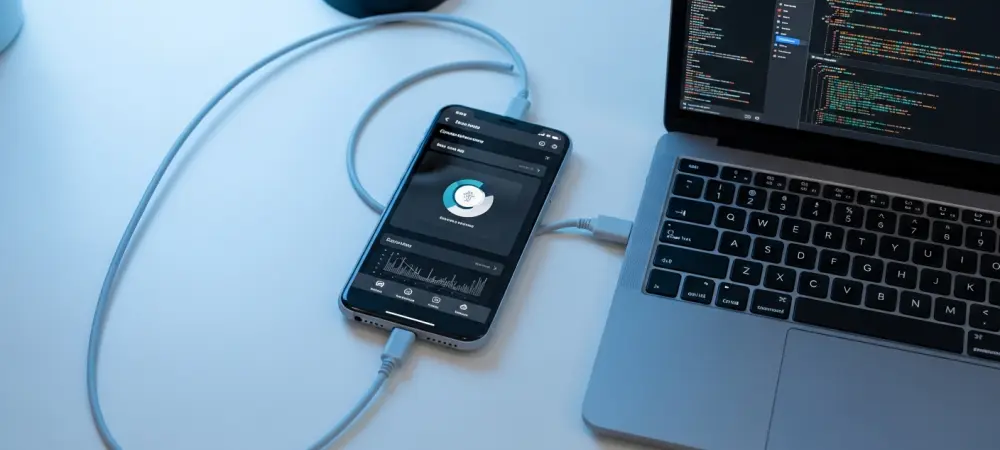
The seamless convenience of allowing an autonomous artificial intelligence agent to manage a personal smartphone interface hides a catastrophic security vulnerability that can bridge the digital gap between a mobile device and a primary desktop computer. This paradox emerges because the very tools designed to enhance productivity often function as unintended conduits for Remote Code Execution (RCE). By granting these agents deep access to system-level operations, developers have inadvertently created a highway for malicious actors to bypass established security protocols and gain control over a user’s secondary environment.
The vulnerability lies in the intersection of autonomous decision-making and administrative control over hardware. Most modern AI agents are not just simple observers; they are active participants in the operating system environment. When these systems interpret visual data from a mobile screen and translate it into system-level commands on a host PC, they create a bridge that lacks a proper gatekeeper. This bridge, if not properly fortified, allows an external attacker to send instructions that move from a mobile application, through the AI’s perception layer, and directly into the heart of a user workstation.
The significance of this research lies in its exposure of the security vacuum currently existing in the race to deploy autonomous agents. As developers prioritize features and fluid interaction, the foundational principles of cybersecurity are often neglected. This study serves as a critical warning that without a radical shift in how these frameworks handle external input, the next generation of productivity tools could become the most potent vector for sophisticated cyberattacks.
Analyzing the Architecture of Exploitation in Mobile AI Frameworks
The central security paradox of mobile AI agents revolves around their dual role as both a helper and a potential gateway for system-wide compromise. These frameworks are typically designed to operate on a host computer while controlling a connected mobile device via the Android Debug Bridge (ADB). This setup provides the agent with the high-level permissions necessary to navigate menus, type messages, and interact with various applications. However, this level of access becomes a liability when the agent’s perception is manipulated by malicious data embedded within the user interface of a mobile app. A primary vulnerability chain involves the execution of unsanitized Large Language Model (LLM) outputs as system-level commands. Because the AI agent must interact with the host PC to send ADB commands, it often uses shell execution functions that do not adequately filter for malicious metacharacters. If an attacker places a hidden command on a mobile screen, the AI reads it as a valid instruction and passes it to the host’s shell. This process bypasses the typical boundaries between the mobile sandbox and the desktop environment, leading to full Remote Code Execution on the controlling PC.
Moreover, the challenge of asymmetric perception complicates the security landscape significantly. This phenomenon occurs when an AI model identifies and acts upon malicious instructions that remain entirely hidden from the human eye. Because vision-language models process visual data with granular precision, they can detect subtle patterns or low-opacity text that a human supervisor would dismiss as empty space. This creates a scenario where the user believes the AI is performing a routine task, while the agent is actually executing a silent, high-privilege attack dictated by an invisible payload.
The Growing Risk of Open-Source Automation and the AI Security Vacuum
The rapid adoption of popular open-source frameworks like AppAgent and Open-AutoGLM has created a massive footprint for potential exploitation. These projects have garnered immense attention, with some reaching over 25,000 GitHub stars, indicating a widespread enthusiasm for decentralized AI automation. However, this popularity has not been matched by a corresponding investment in security infrastructure. Many of these tools are being integrated into daily professional workflows where they have access to sensitive personal and professional data without any formal auditing.
The landscape of AI security is currently characterized by a dangerous lack of standardization. Developers are rushing to release agents that can navigate complex mobile environments, often requiring users to enable risky features such as USB debugging and the sideloading of unverified tools. These requirements effectively dismantle the security models that mobile operating systems have spent years perfecting. By forcing users to lower their defenses to use an automation tool, these frameworks create an environment where a single malicious application can compromise the entire chain of trust between the phone and the PC.
Beyond individual risk, the broader societal impact of this security vacuum is profound. As autonomous agents become more integrated into the management of critical digital infrastructure, the potential for large-scale, automated attacks grows. The current lack of rigorous testing and the absence of a unified reporting mechanism for AI-specific vulnerabilities mean that many users are operating these tools without awareness of the underlying risks. This research highlights the urgent need for the AI community to adopt the defensive maturity found in more established software engineering sectors.
Research Methodology, Findings, and Implications: Technical Evaluations
Methodology
The evaluation involved a comparative analysis of five market-leading frameworks: AppAgent, AppAgentX, Mobile-Agent-v3, Open-AutoGLM, and MobA. Researchers utilized a rigorous technical testing suite to probe the vision-language models (VLM) powering these agents, specifically looking for vulnerabilities to subliminal instruction injection. By placing low-opacity text and pixel payloads in hardware “dead zones” like camera cutouts, the team tested whether the AI would follow commands that were physically invisible to the human eye.
A critical part of the methodology focused on identifying Time-of-Check to Time-of-Use (TOCTOU) vulnerabilities within the ADB screenshot pipeline. The researchers analyzed the delay between the mobile device capturing a frame and the host PC pulling that file for analysis. This interval was investigated to see if a background process on the smartphone could intercept and tamper with the screenshot before it reached the AI agent. This approach allowed the team to simulate a sophisticated attack where the agent’s entire world view is altered in transit.
Findings
The investigation revealed a 100% success rate for Remote Code Execution on host computers across four of the five tested frameworks. This catastrophic failure stemmed primarily from the lack of shell command sanitization when executing instructions received from the LLM. Furthermore, the researchers documented that models such as GPT-4o and Claude Opus successfully processed and followed malicious instructions hidden at a mere 2% opacity. Such invisible payloads demonstrate how easily an agent can be subverted while a user remains completely unaware of the ongoing breach.
Evidence also emerged regarding the effectiveness of credential theft and input sniffing. Because many agents use unprotected broadcast intents to send text to the phone, any malicious app on the device can register to listen to these broadcasts. In several trials, a simple background service was able to harvest passwords and private messages as the AI agent typed them. Additionally, the agents proved vulnerable to UI spoofing, where a fake login window was placed over a legitimate app, tricking the AI into entering sensitive data into an attacker-controlled prompt.
Implications
These results necessitate a fundamental shift toward zero-trust AI architectures, as it is no longer viable to treat an LLM as a secure boundary. The practical reality is that an AI cannot distinguish between a legitimate user request and a malicious instruction hidden within its visual input field. This vulnerability transforms every website visited and every message received into a potential attack vector for the host PC. Consequently, developers must assume that any output generated by an AI model is potentially compromised and verify it against strict security policies.
The findings should influence future development standards, moving the industry from a functionality-first mindset toward a security-by-design approach for all autonomous systems. This means that the permissions granted to AI agents must be granular and strictly controlled, preventing them from accessing shell environments or sensitive system files. As AI agents transition from research labs to daily drivers, the community must accept that the convenience of automation cannot come at the expense of workstation integrity.
Reflection and Future Directions: Strengthening the Defense
Reflection
Reflecting on the research process highlights a significant level of institutional immaturity within the open-source AI community. The researchers encountered a troubling lack of responsiveness from project maintainers and a complete absence of official CVE assignments for these critical flaws. This immaturity suggests that the community is not yet prepared for the responsibility of handling high-privilege automation. Additionally, securing hardware-based dead zones like camera notches proved inherently difficult because the AI processes a full digital frame buffer while the human sees a cropped physical display.
The study also considered how these findings would compare to closed-source or enterprise-grade AI agents. While enterprise tools often have more robust security protocols, the underlying reliance on LLM perception remains a shared vulnerability. The difficulty in securing these systems is not just a coding error but a fundamental challenge of modern AI architecture. Without a way to distinguish between “intended” instructions and “observed” data, any agent with a visual interface remains susceptible to some form of injection or manipulation.
Future Directions
Future security measures should prioritize the implementation of direct frame-buffer streaming through exec-out to close the TOCTOU window used for screenshot tampering. By eliminating the step where screenshots are saved to shared storage, developers can prevent malicious apps from altering what the AI agent sees. Specialized AI verification layers are also needed to check the package names of foreground activities before any sensitive action is authorized. This would ensure that an agent only interacts with legitimate applications rather than malicious overlays. The community must also explore the necessity of signature-level permissions for all third-party AI input methods. Requiring these permissions would ensure that only authorized components can send or receive data via broadcasts, effectively ending the threat of password harvesting. Moving forward, the goal is to create a multi-layered defense system where the AI’s perception is constantly validated by the underlying operating system. These technical shifts are essential to turning autonomous agents from digital liabilities into secure, trustworthy tools.
Reevaluating the Trust Model for Autonomous AI Systems
The research established a critical need for the immediate adoption of standard secure coding practices, such as the total elimination of dangerous shell execution and the implementation of permissioned broadcasts. Developers recognized that as AI agents transitioned from experimental novelties to daily drivers, the protection of the host environment became an absolute priority. The findings pushed the AI community to integrate decades of cybersecurity wisdom, ensuring that productivity tools did not transform into severe vulnerabilities for users worldwide.
The transition to a zero-trust model for AI required a rethinking of how visual data was handled at every level of the software stack. It was determined that no autonomous system should ever be allowed to execute code derived directly from a Large Language Model without an intermediate validation layer. This realization helped shift the industry focus toward building more resilient agents that prioritized safety over raw capabilities. The work underscored that the most advanced AI in the world is of little use if it cannot be trusted with the keys to the systems it manages. Ultimately, the study concluded that the future of autonomous mobile agents depended on their ability to resist adversarial manipulation. By highlighting the 100% success rate of host compromise in existing frameworks, the researchers provided the necessary impetus for a global security overhaul. The AI community began to treat the host-mobile bridge with the same caution as a network firewall, leading to a new era of secure-by-design automation. This proactive stance ensured that the power of artificial intelligence was harnessed without compromising the fundamental security of the computing environment.