

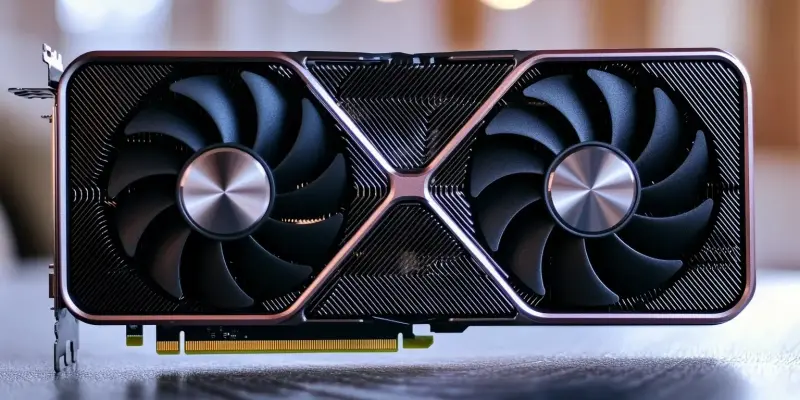
NVIDIA’s impressive growth in the Add-in Board (AIB) GPU market has been nothing short of remarkable, capturing an astonishing 90% market share in Q3 2024. This achievement stands out even more in the context of a broader decline in overall GPU shipments, which have dropped by 14.5%. While this period typically sees strong demand due to the holiday season, GPU shipments fell to 8.1 million units from 9.5 million in Q2 2024. This decline is significant as it breaks a decade-long trend of third-quarter increases, traditionally marked by an average 7.9% rise due to seasonal discounts and purchases of PC hardware.
However, the overall decline in the AIB GPU market was not mirrored by a decrease in PC CPU shipments. Instead, PC CPU shipments saw a notable surge to 20.1 million units, reflecting a 42.2% quarter-over-quarter growth. Despite this robust growth, there was a slight year-over-year decline of 3.4%. This disparity between GPU and CPU shipments impacted the AIB attach rate in desktop PCs, which experienced a significant decrease of 141% and a quarter-over-quarter drop of 26.9%. NVIDIA’s continued rise in market share highlights its dominance in the GPU market, increasing by 2% from Q2 2024 and 8% higher compared to Q3 2023. Consequently, Intel and AMD’s market shares have dwindled to almost 0% and 10%, respectively.
Economic Challenges and Forecasts
Despite NVIDIA’s growing market share, future projections for the GPU market look less optimistic. Dr. Jon Peddie of Jon Peddie Research has offered a rather gloomy long-term forecast, citing a potentially negative Compound Annual Growth Rate (CAGR) of -6.0% for AIBs from 2024 to 2028. This forecast suggests that the total units shipped could dwindle to only 119 million by the end of 2028. Dr. Peddie attributes this slowdown to several factors, including economic pressures, higher end-user prices, and the impact of tariffs. These challenges could lead to reduced consumer spending power and adversely affect market dynamics. Therefore, while NVIDIA’s strategic advantage appears solid for now, the company must navigate these looming economic and market hurdles carefully to maintain its leading position.
The overall market consensus also reflects similar concerns, emphasizing the significant impact of tariffs and economic pressures that might curb consumer spending. This scenario poses a challenge for NVIDIA and the industry as a whole, suggesting that the current market conditions could lead to a reduction in shipment volumes. These factors collectively paint a challenging picture for the GPU market, with potential adverse effects on consumer spending and market mobility.
Strategic Implications for NVIDIA
NVIDIA has achieved a phenomenal milestone in the Add-in Board (AIB) GPU market, seizing an impressive 90% market share in Q3 2024. This is particularly noteworthy given the broader context of declining overall GPU shipments, which have decreased by 14.5%. Although the holiday season typically boosts demand, GPU shipments fell to 8.1 million units from 9.5 million in Q2 2024. This break from the decade-long trend of third-quarter increases—usually averaging a 7.9% rise due to seasonal discounts and PC hardware purchases—is significant.
In contrast, PC CPU shipments have surged, hitting 20.1 million units and showing a notable 42.2% quarter-over-quarter increase, although there was a slight year-over-year decline of 3.4%. This discrepancy between GPU and CPU shipments has affected the AIB attach rate in desktop PCs, resulting in a steep decline of 141% and a 26.9% quarter-over-quarter drop. NVIDIA’s continued ascent in market dominance is evident, increasing by 2% from Q2 2024 and 8% compared to Q3 2023. Consequently, Intel and AMD have seen their market shares shrink to nearly 0% and 10%, respectively.