

The technological landscape has shifted from a race to deploy third-party models to a strategic scramble for total vertical integration within the corporate artificial intelligence stack. While the industry previously viewed the software giant as a distributor for external research breakthroughs, the current organizational pivot reveals a massive investment in self-sufficiency that spans from raw silicon to reasoning logic. This transformation seeks to eliminate the inherent risks associated with high-stakes partnerships while providing a level of control over product roadmaps that was previously unattainable. By internalizing the entire development pipeline, the company is positioning itself to dictate the pace of innovation rather than reacting to the breakthroughs of external labs. This strategy marks a significant departure from the collaborative models of the past two years and signals the beginning of a new chapter where every component of the intelligence engine is owned and optimized under a single roof.
Internal Intelligence: The MAI Development Cycle
The introduction of the MAI brand represents a definitive break from the era of adapting external technology, as the company has unveiled a suite of models built entirely on its proprietary pipeline. Rather than fine-tuning existing architectures developed by partners, these models were generated through a process described as a sophisticated hill-climbing machine designed to optimize performance from the ground up. The flagship offering in this new lineup, known as MAI-Thinking-1, utilizes a specialized architecture that excels at complex logic and multi-step reasoning tasks that were once the exclusive domain of high-end research laboratories. By moving development in-house, the firm has gained the ability to tailor its foundational models to the specific requirements of its existing software ecosystem. This ensures that the reasoning capabilities are not just powerful in a vacuum but are specifically tuned to solve the actual business challenges encountered by enterprise users today.
To complement its heavy-duty reasoning models, the organization has pivoted toward a philosophy of efficiency-at-scale by developing specialized tools for specific technical workflows. New models optimized for high-speed code generation are currently being integrated into platforms like GitHub Copilot, allowing developers to automate complex software engineering tasks with unprecedented precision. These smaller, task-specific models provide a level of performance that rivals larger general-purpose systems while operating at a fraction of the computational cost and energy consumption. This focus on optimization allows the company to offer high-level intelligence as a sustainable utility for standard business operations rather than an expensive luxury. By managing the full spectrum of model sizes, from lean coding assistants to massive reasoning engines, the company ensures that it can provide the right level of intelligence for every possible use case across its vast enterprise customer base.
Custom Hardware: The Optimization of Cloud Infrastructure
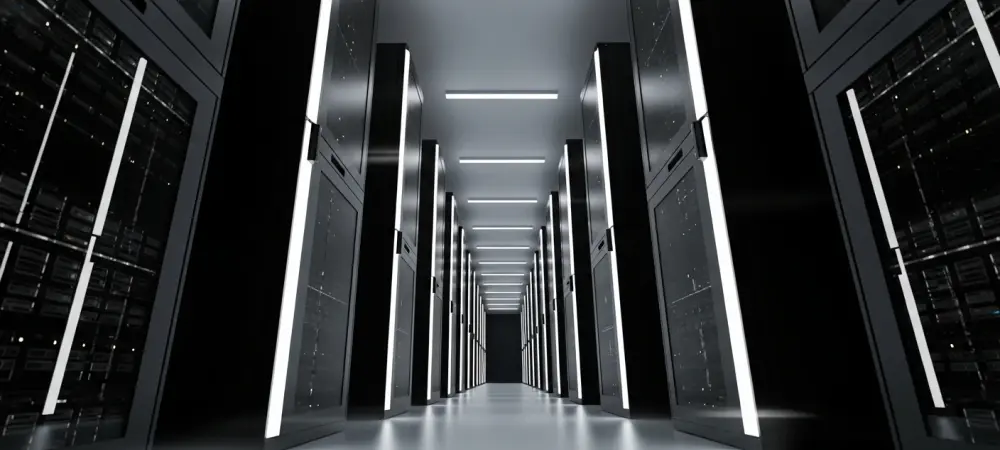
Strategic independence in the artificial intelligence sector requires more than just software innovation; it demands a fundamental redesign of the physical hardware that powers these systems. The company has responded to this challenge by developing its own custom inference accelerators and virtual machine architectures, which allow for a tighter coupling between hardware and software. By co-designing the silicon alongside the algorithms it runs, the firm can achieve significant performance gains that are impossible when using generic, off-the-shelf components from third-party vendors. This approach effectively eliminates the so-called AI tax that typically accumulates when relying on external hardware providers for large-scale production workloads. Controlling the underlying infrastructure ensures that the company can maintain high service availability and predictable pricing models even as global demand for compute resources continues to fluctuate. It also provides a robust foundation for future scaling of private cloud environments.
The evolution of generative systems has also necessitated a massive overhaul of the traditional data layer, leading to the introduction of advanced database services tailored for vector-heavy workloads. New GPU-accelerated storage solutions have been deployed to handle the massive requirements of large-scale vector searches, which are essential for retrieving relevant information in modern AI applications. These upgrades allow the back-end infrastructure to process data-intensive requests with significantly lower latency than previous cloud configurations. Internal benchmarks suggest that these proprietary data solutions are currently outperforming major competitors in terms of both speed and retrieval accuracy for complex enterprise datasets. By optimizing the path between the data and the processing unit, the company has removed one of the primary bottlenecks in the deployment of real-time intelligence. This structural improvement ensures that enterprise applications can scale seamlessly while maintaining the high performance required for mission-critical tasks.
Autonomous Agents: The Future of Operating Systems
The focus of development is rapidly shifting from simple conversational interfaces toward autonomous agents that can execute complex tasks independently across diverse software environments. These agents are designed to navigate multiple applications, perform data analysis, and complete multi-step workflows without constant human intervention or manual prompting. To ensure that these autonomous entities operate safely within sensitive corporate networks, the company has introduced new security protocols such as MDASH and dedicated isolation containers. These tools provide a controlled environment where agents can perform their duties without risking a breach of established security policies or compromising sensitive data. This proactive approach to safety is critical for gaining the trust of enterprise leaders who are wary of the risks associated with delegating authority to automated systems. By solving the security puzzle first, the company is paving the way for the widespread adoption of agentic workflows in the modern workplace.
Beyond individual agents, experimental projects are currently exploring a radical future where the operating system itself is reimagined as a collection of coordinated artificial entities. In this vision, the traditional concept of isolated applications is replaced by a fluid environment where intelligence is deeply woven into the fabric of the user interface. This transformation would allow for a more intuitive interaction model, where the system understands the user’s intent and coordinates the necessary tools and data to achieve a specific goal. Such a shift represents a fundamental change in how humans interact with computers, moving from manual operation to high-level orchestration. By building the infrastructure for this transition today, the company is positioning itself as the primary architect of the next generation of computing environments. This evolution suggests that the future of productivity will not be defined by the features of individual programs but by the seamless integration of intelligence across the entire digital workspace.
Strategic Positioning: Market Leadership and the Value Chain
The shift toward a full-stack approach provided the company with the necessary leverage to dominate the value chain while offering highly integrated solutions to its global customer base. While the organization maintained its relationships with key hardware and research partners, its internal developments allowed it to dictate the pricing structures and security standards for the entire industry. This move effectively reduced the long-term financial risks associated with third-party dependencies and ensured that the company could capture the maximum value from its technological investments. The transition from being a mere platform for external intelligence to becoming a complete powerhouse redefined the competitive landscape for the remainder of the decade. By owning every layer of the technology stack, the firm established a new standard for how technology companies must operate to remain relevant. This comprehensive ownership strategy proved to be the most effective method for navigating the complexities of the rapidly evolving intelligence market.
Industry analysts concluded that the successful integration of vertical systems necessitated a complete cultural shift toward cross-disciplinary engineering teams that bridged the gap between silicon and software. It was observed that businesses which adopted these integrated solutions saw a marked improvement in their ability to deploy custom intelligence without the overhead of managing multiple vendor relationships. Moving forward, the strategy emphasized the importance of rigorous security auditing and the continuous refinement of proprietary hardware to maintain a competitive edge. Organizations were encouraged to evaluate their own infrastructure requirements and consider the benefits of consolidating their intelligence stacks to reduce operational complexity and cost. The lesson learned from this transformation was that ownership of the core technology offered the only sustainable path to long-term innovation and market stability. Future considerations revolved around the ethical deployment of autonomous systems and the need for standardized protocols to ensure interoperability between different enterprise environments.