

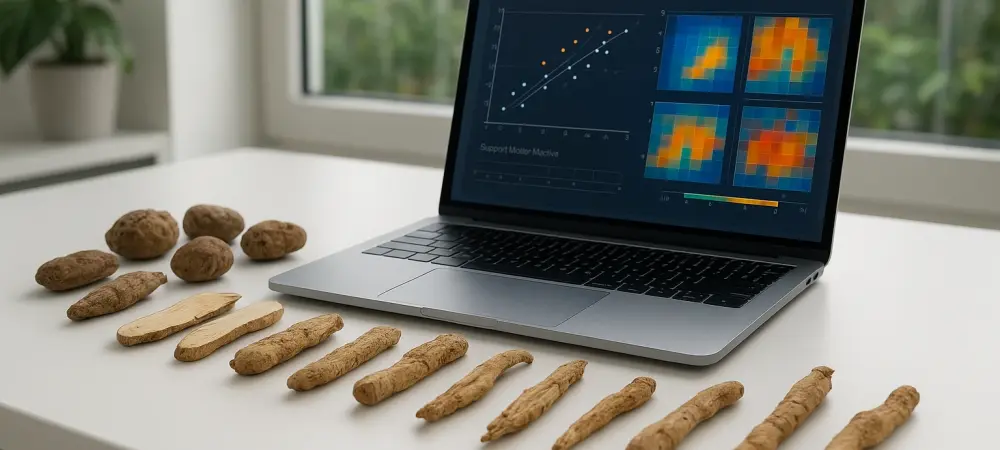
The unique combination of soil composition, mineral availability, and geological history creates an elemental profile in plants that acts as a direct proxy for their specific growth region. In the expansive and often opaque global market for traditional East Asian medicine, Gastrodia elata, a rare tuberous orchid commonly referred to as “Tianma,” has become a symbol of both profound therapeutic potential and significant economic fraud. Recognized as a medicine-food homolog, this plant serves as a critical remedy for neurological conditions while also functioning as a high-demand health food. As its market value continues to escalate in 2026, the temptation for vendors to mislabel lower-quality tubers as premium products from protected geographical regions has created an urgent need for an objective, foolproof authentication system. Relying on visual inspection or the word of a supplier is no longer sufficient in an era where consumers and regulators demand absolute transparency and scientific proof of provenance for high-value biological assets.
Advancing Authentication Through Chemical Fingerprinting
The Methodology: Elemental and Functional Analysis
The scientific community has shifted toward a multi-layered approach to botanical verification, utilizing what researchers describe as elemental-functional fingerprints. This methodology operates on the principle that a plant is a biological ledger, recording the inorganic and organic characteristics of its environment. Inorganic elements such as magnesium, calcium, and various trace minerals are absorbed directly from the soil and remain remarkably stable even after the plant is harvested and processed. These elements serve as the primary markers for “terroir,” mirroring the specific geological signature of the cultivation site. Because the ratio of these minerals is dictated by deep-seated geological processes rather than human intervention or seasonal weather spikes, they provide a nearly unforgeable record of origin that persists throughout the supply chain, from the initial harvest to the final retail shelf.
Complementing the inorganic data is the analysis of bioactive organic compounds, which include secondary metabolites like gastrodin and complex parishins. While inorganic elements provide stability, these organic compounds offer a dynamic look at how the plant interacted with its specific ecological niche. The concentration of these metabolites is highly sensitive to environmental stressors, including altitude variations, average temperature during the growing season, and the presence of specific soil microbes. The integration of these two distinct data sets allows for the creation of a comprehensive “biological passport” that captures both the permanent geological heritage and the unique environmental experiences of each individual medicinal tuber.
Scope of Data Collection: Sampling and Verification
To construct a machine learning model capable of navigating the complexities of the commercial herb trade, an extensive and geographically diverse dataset was essential. The research initiative involved the collection of 270 distinct batches of fresh Hongtianma tubers, sourced from 23 different counties and cities across China. These locations were strategically selected to represent four primary production zones: Central, Northeast, East-Central, and Southwest regions. Each sample underwent a rigorous verification process where botanical experts confirmed the species identity to prevent any taxonomic errors from contaminating the data. This large-scale sampling strategy ensured that the resulting models would not just recognize specific farms but would instead understand the broader chemical patterns associated with vast regional landscapes and their respective soil types.
The preparation phase of these samples was conducted with high-precision laboratory standards to eliminate any external variables that might skew the chemical analysis. Every tuber was cleaned, sliced, and dried under strictly controlled conditions, ensuring that any variation detected in the elemental or functional profile was purely a result of the plant’s geographical origin. By standardizing the handling process, the researchers isolated the chemical differences inherent to the cultivation regions themselves. This meticulous attention to detail allowed for a high degree of confidence in the subsequent data processing, as it guaranteed that the “noise” of different processing methods was removed. The resulting data pool provided a robust foundation for training algorithms to distinguish between authentic premium herbs and those originating from less prestigious or less potent environments.
Deciphering Regional Signatures and Algorithmic Performance
Identifying Regional Chemical Profiles: Soil and Climate
The detailed analysis of the gathered samples revealed that each production region possesses a distinct chemical “fingerprint” that correlates directly with local environmental conditions. In Southwest China, for example, the tubers consistently exhibited higher concentrations of manganese, a direct reflection of the specific parent materials found in the regional soil. Conversely, samples from Central China were characterized by elevated levels of sodium and zinc, highlighting a unique geological background that separates this region from its neighbors. These findings provide a scientific explanation for why traditional medicine has historically favored certain regions over others; the very soil that feeds the plant dictates the precise mineral cocktail that contributes to its overall health-promoting properties and commercial value.
Beyond mineral content, the study highlighted how regional climates dictate the metabolic pathways of the plants. Tubers from the colder northern latitudes of Northeast China were found to be particularly rich in p-hydroxybenzyl alcohol, a compound that suggests the plants may utilize different metabolic strategies to cope with lower temperatures compared to their southern counterparts. Furthermore, the analysis performed a critical safety function by monitoring the presence of heavy metals such as cadmium, lead, and arsenic. The results were highly encouraging, showing that concentrations of these elements remained well below international safety thresholds across all major production zones. This evidence confirms that current large-scale cultivation practices in these areas are maintaining high safety standards, ensuring that the therapeutic benefits of the herb are not compromised by environmental contamination.
Selecting the Optimal Machine Learning Model: SVM vs. Others
The transition from raw chemical data to a reliable classification tool required a competitive evaluation of various machine learning algorithms. The research team tested nine different models, including popular choices like Random Forest, XGBoost, and Artificial Neural Networks, to determine which could most accurately predict a sample’s origin. While high-complexity models like Random Forest achieved near-perfect scores during the initial training phase, they struggled with a phenomenon known as “overfitting.” This highlighted the necessity of choosing a model that prioritizes generalization over mere pattern matching. Ultimately, the Support Vector Machine (SVM) emerged as the superior choice, delivering a robust 92.53% accuracy rate on the test dataset. The SVM model proved exceptionally capable of drawing clear boundaries between regional data clusters, maintaining its performance even when faced with subtle variations in chemical composition. A fascinating insight from this algorithmic competition was the discovery that inorganic elements carried significantly more weight in the classification process than organic compounds. This suggests that while bioactive metabolites are crucial for medicinal efficacy, soil chemistry is a more reliable and “honest” indicator of a plant’s true birthplace. The success of the SVM model demonstrates that high-tech mathematical frameworks can effectively translate the complex language of geochemistry into a practical tool for market regulation and quality control.
Environmental Drivers and Future Implications
The Influence of Climate: Mapping Chemical Composition
The investigation delved deeper into the “why” behind chemical variations by correlating the plant data with specific bioclimatic factors, such as precipitation patterns and drought indices. The findings clearly indicated that environmental stress, particularly moisture availability, plays a pivotal role in shaping the chemical landscape of medicinal herbs. In regions characterized by higher altitude and increased rainfall, the plants adapted by altering their mineral uptake and secondary metabolite production. This research suggests that the medicinal quality of a plant is not a static trait determined solely by genetics but is instead a dynamic equilibrium maintained between the plant and its environment. Understanding these correlations allows scientists to predict how shifts in local weather patterns might affect the future potency and chemical makeup of these valuable crops.
Furthermore, the data revealed that extreme temperatures could be a double-edged sword for the cultivation of high-quality medicinal herbs. While warmer conditions might promote faster growth and higher biomass, they often do so at the expense of the complex secondary metabolites like parishins, which provide the primary therapeutic benefits. The study showed that specific organic compounds were favored in cooler, drier environments, suggesting that the “struggle” of the plant against its environment is actually what drives the synthesis of its most valuable compounds. This perspective reinforces the importance of preserving traditional growing regions, as the specific environmental pressures found there are irreplaceable components of the herb’s medicinal value. This environmental mapping provides a roadmap for sustainable cultivation that respects the natural limitations and requirements of the species.
Shaping the Future: Botanical Provenance and Integrity
The successful application of machine learning to trace the origin of Gastrodia elata established a new benchmark for the authentication of botanical products. This data-driven framework offered regulators a scientifically defensible method to combat the growing problem of geographical indication fraud, providing a high-tech shield that protected both regional heritage and consumer safety. For farmers and producers in established premium regions, the methodology provided a way to certify the uniqueness of their harvest, thereby justifying premium pricing and securing their position in a competitive global market. As the demand for natural remedies continues to rise through 2026 and beyond, the implementation of these rigorous authentication protocols will be essential to maintaining the integrity of the herbal medicine industry.
The researchers concluded that the chemical identity of a medicinal root was an indelible record written by the very soil and air that nurtured it. Future initiatives were recommended to expand this model to include year-over-year climate variability, ensuring that the system remained accurate despite seasonal shifts. There was also a significant opportunity for “transfer learning,” where the logic and frameworks developed for Tianma could be adapted to protect other high-value medicinal plants facing similar fraud risks. By anchoring the tradition of herbal medicine in the precision of modern data science, the industry moved toward a future where the provenance of a plant was no longer a matter of trust, but a matter of verifiable chemical reality. This shift ensured that the ancient wisdom of herbal medicine was supported by the most advanced tools of the digital age, securing a transparent path forward for global health.