

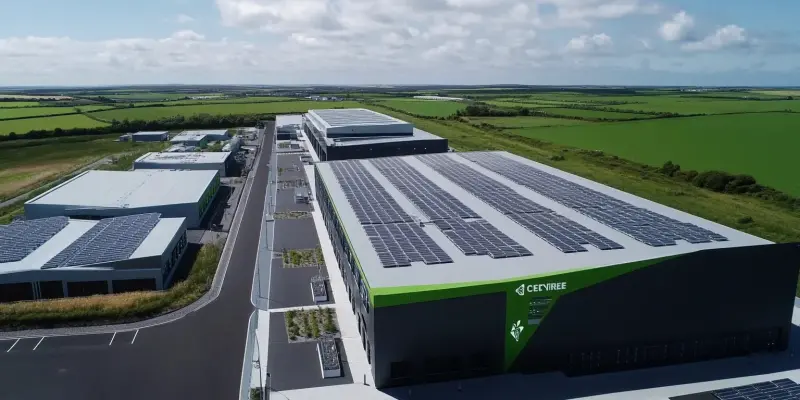
Ireland’s increasing energy consumption attributed to data centers has become a pressing issue. These facilities, built to accommodate the needs and infrastructure demands of global tech giants such as Amazon, Google, Meta, Microsoft, and TikTok, have begun to strain the nation’s energy resources and spark public and governmental concern.
The Rise of Data Centers in Ireland
Ireland’s Transformation into a Data Hub
Ireland’s journey into becoming a significant hub for data centers began during the “Celtic Tiger” economic boom of the late 20th and early 21st centuries. Factors such as tax incentives, a proficient English-speaking labor force, and European Union membership made Ireland an attractive site for tech companies to establish these energy-intensive centers. This transformation has led to substantial power demands, causing a spike in electricity prices and raising concerns about energy sustainability. The rapid influx of tech giants and their infrastructure needs has propelled Ireland into the digital age at a tremendous pace, but not without challenges.
The energy requirements of these data centers are nothing short of colossal. Each facility houses thousands of servers that need constant power not just for operation but also for cooling and maintenance. Consequently, as of last year, data centers utilized 21 percent of Ireland’s electricity, surpassing the total residential electricity usage for urban homes in the country. This level of consumption underscores a unique predicament for Ireland, highlighting the astronomical energy demands driven by these tech havens. The grid’s struggle to keep pace with these demands is a critical issue that has triggered both public worry and legislative scrutiny.
Energy Consumption and Economic Impact
As the nation grapples with this surge in energy use, economic impacts are also coming to the fore. Dublin, which remains the epicenter of the country’s data center boom, faced escalating energy needs that prompted grid operators to impose a halt on new data center projects until 2028. This regulation was driven by projections suggesting that data centers could consume up to one-third of Ireland’s electricity within the current decade, heralding a potential energy crisis if trends continued unmitigated. This preventive measure reflects the severity of the situation, positioning Ireland at a crossroads of technological ambition and sustainable energy strategy.
In tandem with energy consumption, the economic footprint of these data centers cannot be understated. The facilities have brought in significant foreign investment, fostering job creation and bolstering local economies. Yet, this economic boon comes with the trade-off of heightened electricity prices affecting both residential and commercial sectors. The balancing act between reaping economic benefits and managing energy sustainability is a complex endeavor facing Ireland’s policymakers. As they navigate this terrain, innovative solutions and industry cooperation are pivotal in addressing the mounting electricity needs while ensuring long-term energy security and environmental stewardship.
Local Resistance and Political Engagement
Activism and Opposition
Central to the narrative of Ireland’s data center expansion is the crucial story of local resistance and political engagement, particularly exemplified by the activism of Darragh Adelaide. Living in a working-class suburb near one of Ireland’s largest data center clusters, Grange Castle Business Park, Adelaide has taken a prominent role in opposing further data center developments. He ties these expansions to escalating electricity prices and environmental degradation, arguing that unchecked growth risks substantial socio-economic and ecological harm. His activism underscores a broader sentiment of unease and resistance within affected communities.
Adelaide’s efforts transcended mere grassroots activism, propelling him into a political role on the South Dublin County Council. His stance against these developments resonates with many locals who feel the direct impact of rising energy costs and potential environmental consequences. In a significant move, Adelaide successfully opposed Google’s expansion plans, though the tech giant has since appealed this decision. This clash epitomizes the tug-of-war between community interests and corporate ambitions, highlighting the growing importance of local voices in shaping Ireland’s energy and environmental policies.
Decentralized Development Push
As Dublin strains under the weight of its data handling capabilities, there’s a burgeoning push for decentralized development of data centers, particularly in the rural boglands of County Offaly in the Midlands. This region, historically linked to Ireland’s energy independence through peat extraction, symbolizes the broader national shift towards alternative and sustainable energy sources. The movement towards decentralized data center development is seen as a strategy to distribute energy demands more evenly across the country, potentially alleviating some of the pressures faced by the grid in Dublin.
Peatland conservation efforts and the transition to renewable energy technology stand at the forefront of County Offaly’s transformation. The decoupling from traditional peat extraction and embracing renewable energy signifies Ireland’s complex endeavor to balance economic growth with environmental preservation. These new data center projects in Offaly not only aim to meet the rising data demands but also to do so in a manner that aligns with sustainable energy strategies. The shift from an old model of energy independence to a new, greener model encapsulates the broader challenges and aspirations of Ireland’s evolving energy landscape.
Environmental Concerns and Renewable Energy
Skepticism and Environmental Impact
The tension in Offaly also brings to light the skepticism held by many local communities towards new data center projects and their environmental impacts. On one side, there is enthusiastic promotion of green job creation and the renewable energy potential that these projects represent, amplified through collaborative ventures like the Amazon-Bord na Mona data center near Rhode village. Proponents argue that such projects are essential for economic rejuvenation and the adoption of clean energy technologies that promise reduced carbon footprints and environmentally friendly outcomes.
However, longstanding residents, such as local conservationist Brian Sheridan, voice significant reservations, recalling ecological disruptions from past peat extraction activities. These historical experiences frame their concerns about new developments, emphasizing potential environmental degradation and unintended ecological consequences. These residents fear that, despite renewable energy promises, the large-scale industrial nature of data centers might lead to environmental losses echoing those caused by earlier peat extraction activities. Their voices underscore the need for careful planning and genuine commitment to sustainability in new project implementations.
Renewable Energy Initiatives
Amidst mixed local sentiments, the race is on to harness renewable energy, particularly wind power, to mitigate the environmental impact of these data centers. Initiatives such as those led by the Norwegian wind energy firm Statkraft are at the cutting edge of these efforts. In County Offaly, Statkraft’s endeavors are bolstered by agreements with tech companies like Microsoft, positioning renewable energy as a cornerstone of sustainable data center development. Kevin O’Donovan, Statkraft’s managing director for Ireland, posits that the growth of data centers is, somewhat counterintuitively, driving the adoption of renewable energy across the nation.
Yet, as proponents of sustainability champion these initiatives, opposing voices raise concerns over the cultural and ecological impacts of renewable energy projects. For example, communities near Lemanaghan Bog, who emphasize heritage preservation, stress the cultural costs associated with large-scale wind farms and other renewable energy endeavors. This ongoing dialogue reflects the need for a balanced approach that not only prioritizes rapid technological and energy advancements but also respects the cultural and ecological heritage of the regions hosting these projects. The outcome of these debates will shape Ireland’s energy and environmental policy landscape in significant ways.
Balancing Technological Advancements and Sustainability
Governmental Regulations and Community Responses
The immense power consumption by data centers has undeniably fostered Ireland’s economic reliance on the tech industry. Still, it has also triggered significant introspection regarding energy strategies and sustainability. Governmental regulations, local activism, and community responses collectively shape the ongoing dialogue on managing and reconciling these powerful forces. The imposition of regulatory measures such as the halt on new data center projects in Dublin reflects a governmental acknowledgment of the need to rethink and recalibrate energy policies to prioritize sustainability without stifling technological advancement.
Community activism remains a cornerstone of this effort, with local leaders and concerned citizens steadfast in advocating for responsible and sustainable growth. Their push for greater transparency, better environmental practices, and equitable economic policies underscores a bottom-up approach to policy-making. This involvement is crucial to ensure that development proceeds with a comprehensive understanding of its potential impacts and benefits. The inclusive nature of these discussions aims to foster a more cohesive and forward-thinking strategy that takes into account the diverse interests and needs of all stakeholders.
Future Prospects and Challenges
Ireland’s mounting energy consumption, driven primarily by data centers, has become a significant concern. These massive facilities have been constructed to meet the demands of global tech giants like Amazon, Google, Meta, Microsoft, and TikTok. While these data centers are essential for the infrastructure needs of these companies, their energy usage is beginning to stretch the nation’s resources. This upsurge in energy demand has incited public worry and drawn the attention of the government.
The proliferation of data centers is due to Ireland’s attractive conditions for tech companies, including favorable corporate tax rates, a skilled workforce, and reliable infrastructure. However, the resulting energy consumption has surged, raising sustainability questions. The Irish government is now tasked with balancing economic benefits against environmental strain. Public discourse has intensified as citizens and advocacy groups call for stricter regulations and more sustainable energy solutions.
Managing this balance is crucial for Ireland’s future, ensuring that energy resources can support economic growth while maintaining ecological integrity and addressing climate change.