

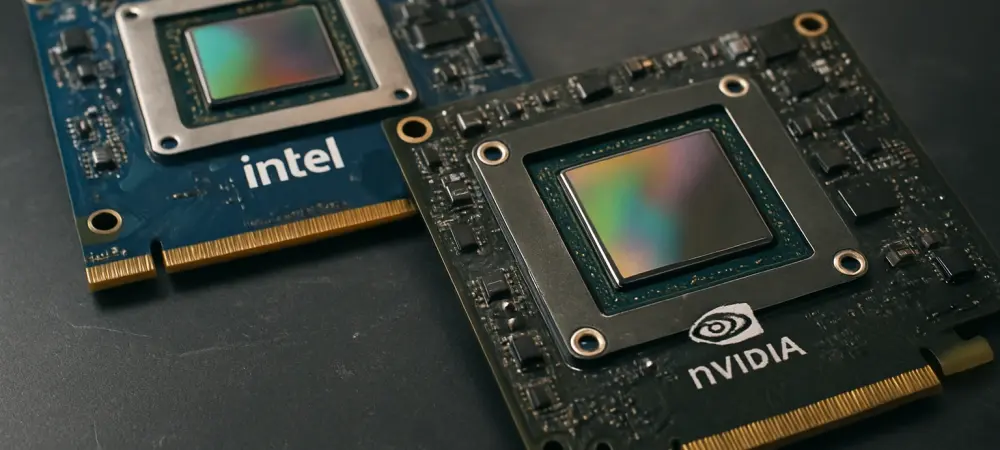
Today, we’re joined by Dominic Jainy, an IT professional whose work at the intersection of artificial intelligence, machine learning, and blockchain gives him a unique perspective on the shifting sands of the tech industry. We’ll be exploring the monumental challenge Intel faces as it re-enters the data center GPU market, a space utterly dominated by Nvidia. Our conversation will touch on the deep-seated power of software ecosystems, the practical needs of enterprise customers beyond raw performance, and the geopolitical currents that could reshape the entire AI hardware landscape.
Intel is now co-defining GPU requirements directly with customers. How does this demand-driven approach change its product roadmap, and what specific enterprise needs, such as cost control or operational simplicity, is it prioritizing to gain traction against established players? Please provide some examples.
This shift to a demand-driven model is absolutely critical for Intel. It’s a move away from simply trying to win a benchmark war and toward solving real-world business problems. Instead of just throwing specs over the wall, they’re sitting down with enterprise and cloud clients to understand their pain points. For many of these customers, especially those in hybrid cloud or regulated on-premise environments, peak performance isn’t the only metric that matters. They’re agonizing over total cost of ownership, operational simplicity, and energy consumption. By co-defining requirements, Intel can build a GPU that’s not just powerful, but perfectly tailored for enterprise inference workloads where a tightly integrated system of CPUs, GPUs, and networking can deliver efficiency that a standalone, top-tier GPU might not. It’s about finding a niche where they can offer a more holistic, cost-effective solution.
The CUDA ecosystem is deeply embedded in AI models and DevOps pipelines. What specific, step-by-step actions must Intel take to lower migration costs and convince developers that adopting its tools and SDKs won’t become a hidden engineering tax? Can you share some success metrics?
This is the billion-dollar question, isn’t it? CUDA isn’t just software; it’s the industry’s operating standard, woven into the very fabric of AI development. To even stand a chance, Intel must launch a multi-pronged assault on this lock-in. First, they need to create conversion tools that are as seamless and automated as possible, proving to developers that migrating their models won’t be a month-long nightmare. Second, their own tools and SDKs have to be incredibly developer-friendly, well-documented, and actively supported. They need to go to where developers are, engaging with the community and getting their hardware certified on all the mainstream machine learning frameworks. Success won’t be measured by a single chip sale; it will be measured by the growth of their developer community, the number of open-source projects that natively support their hardware, and positive testimonials from engineering teams who have made the switch without incurring that dreaded “hidden engineering tax” of constant optimization and troubleshooting.
Intel highlights its ability to tightly integrate CPUs, GPUs, and networking. For buyers in hybrid cloud or on-prem environments, how does this translate into tangible benefits? Please walk us through a specific use case where this system-level efficiency offers a clear advantage.
Let’s consider a medium-sized enterprise running its own data center for a regulated industry like finance or healthcare. They’re not a hyperscaler; they can’t afford a sprawling, complex infrastructure. They need efficiency and control. With a tightly integrated Intel system, their CPUs, GPUs, and networking components communicate with a level of memory coherency that you just don’t get from piecing together components from different vendors. In a real-time fraud detection use case, for example, data flows from the network, gets processed by the CPU, and is then handed off to the GPU for model inference. In a tightly integrated system, those handoffs are incredibly fast and efficient. This system-level efficiency translates directly into lower latency, reduced power consumption, and a simpler management stack, which are tangible benefits that directly impact the bottom line and operational sanity for that enterprise buyer.
Hyperscalers are seeking a credible second source for GPUs to improve supply chain reliability. Beyond a single competitive chip, what does a “stable and predictable” multi-generational roadmap from Intel look like in practice? What specific commitments would give these large-scale buyers confidence?
For a hyperscaler, a “credible second source” means far more than one good chip. They’re making billion-dollar bets on infrastructure that needs to last for years. A “stable and predictable” roadmap from Intel would need to be a public, multi-year commitment. This means clearly articulating the cadence of future product generations—what performance uplift to expect, what process technology will be used, and what new features will be introduced. It means guaranteeing software support and compatibility across those generations, so a hyperscaler knows that code written today will run efficiently on hardware released three years from now. Confidence comes from seeing Intel consistently hit its own deadlines, deliver on its performance promises, and demonstrate an unwavering commitment to the data center market, assuring these massive buyers that they won’t be left high and dry after a single product cycle.
Chinese firms are building their AI hardware ecosystems despite restrictions. How could a strategy of locking in domestic demand and creating closed-loop optimization cycles reshape the global competitive landscape for companies like Intel and Nvidia over the next five to ten years?
The situation with companies like Huawei is less about them beating Nvidia on a global benchmark tomorrow and more about the long-term trajectory. By focusing on and locking in China’s massive domestic data center market, they create a powerful, self-sustaining ecosystem. This becomes a closed loop: they develop hardware for their domestic software giants, who in turn optimize their models for that specific hardware, driving further hardware improvements. While US restrictions on advanced tools are a hurdle, the sheer density of engineering talent is allowing them to find workarounds and build “good-enough” design flows. Over the next decade, this could create a formidable competitor that, having honed its technology in a protected market, is ready to compete globally. For Intel and Nvidia, this means the competitive landscape isn’t just about each other anymore; it’s about a future where a completely parallel and highly optimized AI stack from China could emerge as a serious global player.
What is your forecast for the data center GPU market?
I believe the data center GPU market is headed for a period of diversification and intense competition. For the immediate future, Nvidia’s dominance, particularly because of the CUDA software moat, will remain incredibly strong. However, the sheer demand for AI accelerators and the supply chain anxieties of major buyers have opened the door wider than ever for a credible second source. Intel’s success is not guaranteed, but its strategy of tight integration and focusing on specific enterprise needs is the right one. The most fascinating dynamic to watch will be the rise of sovereign AI ecosystems, especially in China. In five years, I predict we’ll see a market that is still led by Nvidia, but with Intel having carved out a meaningful share in the enterprise, and the early, powerful signs of a technologically independent Chinese competitor beginning to challenge the established order on the global stage.