

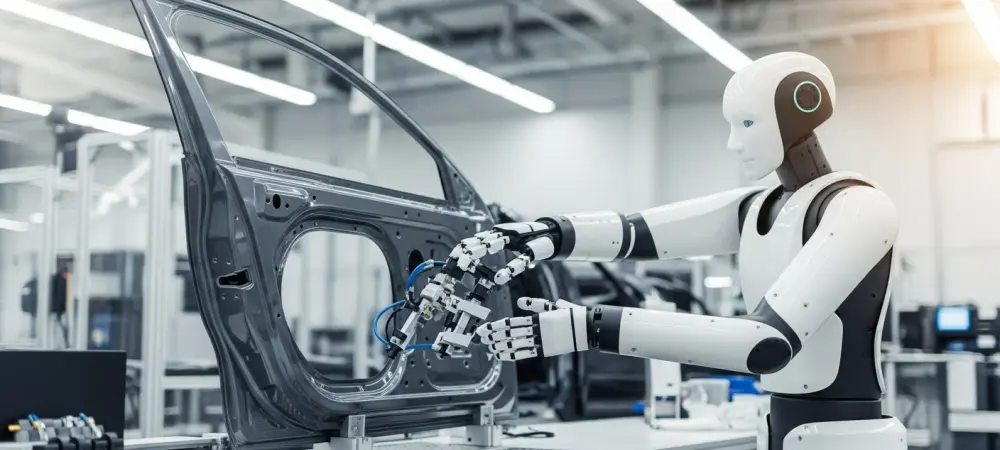
The rhythmic clanking of stationary assembly lines is being replaced by the soft hum of autonomous machines that walk with the purpose and poise of human veterans. For decades, the image of automotive manufacturing was defined by massive, orange robotic arms bolted to the floor, cordoned off by safety cages. However, the factory floor is currently undergoing a radical transformation that replaces these stationary giants with mobile, bipedal machines. Renault Group recently signaled this shift by announcing the deployment of 350 humanoid robots across its production network over the next 18 months. This move marks the end of the experimental pilot phase and the beginning of a new era where humanoid forms are no longer a futuristic curiosity but a practical industrial necessity.
The Shift: From Static Arms to Walking Coworkers
Historically, automation meant rigid, heavy machinery that forced factory layouts to adapt to the machine rather than the other way around. This paradigm created silos of efficiency that were difficult to reconfigure and expensive to maintain when production needs changed. By introducing mobile coworkers, manufacturers are breaking these physical constraints. The transition represents a move toward flexible automation where the robot serves as an adaptable asset capable of navigating the dynamic environment of a modern plant.
Renault’s bold initiative provides a blueprint for how large-scale industrial players can pivot away from static cells. By committing to 350 units, the company is proving that the technology has matured enough to handle the rigors of high-volume vehicle assembly. These robots are not meant to work in isolation; instead, they are designed to operate alongside human staff, utilizing sophisticated sensors to prevent collisions and ensure a harmonious workflow. This evolution signifies that the factory of the present is becoming a fluid space where mobility is as valuable as mechanical power.
Modernization: Why the Humanoid Form Is the Key to Brownfield Sites
The automotive industry faces a persistent challenge: how to automate “brownfield” sites—older factories designed for human proportions and manual workflows. Traditional industrial robots require expensive facility overhauls and rigid safety barriers to operate. Humanoid platforms, such as the Calvin-40 variant, solve this by fitting into the existing physical footprint of a factory. Because these robots utilize self-balancing systems and autonomous navigation, they can walk through the same aisles and work at the same stations as human employees, bypassing the need for a total infrastructure redesign.
This flexibility allows manufacturers to inject high-tech automation into legacy plants without pausing production for months of reconstruction. In a landscape where speed to market is critical, the ability to retrofit existing spaces provides a significant competitive advantage. Rather than building entirely new sites to accommodate modern technology, companies can now upgrade their current assets. This approach preserves existing real estate investments while drastically increasing the technological capabilities of older facilities.
Strategic Deployment: Prioritizing Ergonomics and Utility
Instead of attempting to replicate the entire range of human dexterity, the current industrial strategy focuses on targeted, high-impact tasks that improve both safety and efficiency. Renault is deploying the Calvin platform to handle tire-handling operations at its Douai plant. This task is notoriously repetitive and physically taxing, leading to long-term strain for human workers. By assigning these roles to robots, the company reduces workplace injuries while maintaining a consistent production pace.
Through partnerships with exoskeleton specialists, these robots leverage advanced medical-grade balancing technology. This ensures they remain stable while carrying heavy loads, a critical requirement for navigating the dynamic and often cluttered environment of a busy assembly line. These machines are not just mechanical replacements; they function as mobile data nodes. Each robot is integrated into a digital thread, collecting real-time operational data that contributes to a factory’s digital twin, allowing managers to optimize the production flow on the fly.
Quality Assurance: Integrating Robots into the Control Ecosystem
The introduction of humanoid robots creates a new paradigm for metrology and quality assurance. For these robots to be truly effective, they must be part of a closed-loop system with automated inspection tools. When a measurement system detects a microscopic deviation in a component, it can communicate directly with the humanoid robot handling that part. The robot can then dynamically adjust its grip or divert the component for specialized inspection. This synthesis of motion and measurement ensures that quality control is no longer a static step at the end of the line but a continuous, mobile process that evolves with the production cycle. By integrating sensing technology into the robot’s actuators, manufacturers can monitor environmental factors and component alignment in real-time. This connectivity turns every robot into a guardian of quality, ensuring that errors are caught and corrected long before a vehicle reaches the final inspection stage.
Implementation: A Framework for Integrating Humanoids into Existing Workflows
To successfully transition to a humanoid-augmented workforce, manufacturers followed a structured approach to ensure a high return on investment. The process began by auditing the assembly line for tasks with the highest rates of repetitive motion injuries. These were the primary candidates for humanoid intervention. Leaders then prioritized mobility over complexity, focusing on tasks that required moving between stations or navigating tight spaces where fixed robotic arms could not reach.
The next phase involved establishing a digital backbone to ensure the factory’s IT infrastructure could handle the massive data inflow from mobile robots. Each robot was synchronized with the plant’s digital twin to provide visibility into its performance and health. Finally, organizations fostered human-robot collaboration by training the existing workforce to oversee and maintain the robotic fleet. The goal was to elevate human roles from manual labor to technical management, ensuring that robots and humans worked in a complementary environment. This strategic roadmap ensured that the integration of humanoid technology was both seamless and sustainable.