

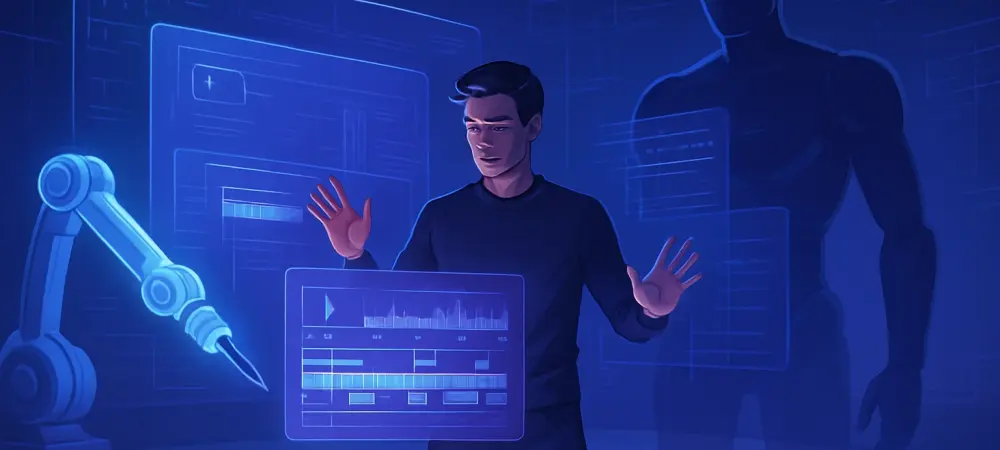
The global creator economy currently presents a fascinating paradox, simultaneously experiencing an unprecedented surge in market valuation while its human pioneers face a growing existential threat from the very technologies fueling its expansion. As digital platforms become increasingly saturated and artificial intelligence evolves from a background tool into a frontline competitor, creators find themselves at a pivotal moment. The strategies that defined success over the past decade are rapidly becoming obsolete, forcing a fundamental reevaluation of what it means to build a sustainable career in a landscape being reshaped by algorithms, economic uncertainty, and a profound shift in consumer expectations. This new era demands more than just creativity; it requires business acumen, strategic foresight, and a deep understanding of the delicate balance between technological augmentation and irreplaceable human connection.
The Creator Economy at a Crossroads Growth vs Existential Threats
This analysis delves into the profound transformation of the global creator economy, a domain now grappling with the central conflict between its explosive market growth and a convergence of disruptive, potentially existential, challenges. The industry is characterized by a stark duality. On one side, it is a booming sector driven by massive brand investment and an unceasing audience demand for content. On the other, it is an ecosystem under immense pressure from the rapid integration of artificial intelligence, severe market oversaturation that dilutes individual impact, and a significant pivot in audience priorities away from aspirational content toward material that offers tangible, real-world value.
This period of unparalleled expansion is therefore counterbalanced by a complex set of forces that threaten its long-term stability. The very accessibility that fueled the economy’s initial democratic promise has led to a glut of content, making it increasingly difficult for individual creators to capture and retain attention. Simultaneously, the rise of sophisticated AI not only offers powerful new tools but also introduces direct competition in the form of virtual influencers and automated content generation. These factors, combined with audience fatigue and a growing demand for authenticity, place the industry at a critical inflection point where the path to sustainable success requires a deliberate and strategic navigation of these opposing forces.
Setting the Stage The Maturation of a Multi Billion Dollar Industry
This analysis is situated within the context of the creator economy’s remarkable evolution from a collection of niche hobbies into a formidable $191 billion economic force. Its significance lies in its examination of a critical juncture where the entire ecosystem—creators, their brand partners, and the platforms that host them—must navigate a seismic shift in technology, consumer behavior, and monetization strategies. What was once a frontier for independent expression has professionalized into a highly competitive industry, complete with its own complex market dynamics and sophisticated business models.
The current landscape is no longer defined by the simple metrics of followers and views. Instead, its maturation is marked by a flight to quality and a deeper emphasis on community, trust, and direct audience relationships. The importance of this analysis is underscored by the high stakes involved; for creators, it is a matter of professional survival and relevance, while for brands, it is about finding effective and authentic ways to connect with discerning consumers. The decisions made now will determine the future structure of the industry, shaping who thrives, who falters, and how value is created and exchanged in this new, more complex chapter of the digital age.
Research Methodology Findings and Implications
Methodology
The analysis synthesizes data from a wide array of sources, including peer-reviewed industry reports, forward-looking market projections, and expert commentary from leaders across the technology and marketing sectors. This qualitative approach was chosen to identify overarching trends, patterns, and consensus viewpoints that quantitative data alone might miss. By weaving together diverse perspectives, the methodology allows for a comprehensive and nuanced overview of the key economic, technological, and behavioral shifts that are collectively shaping the 2025 creator landscape.
Rather than focusing on isolated statistics, this method aims to construct a cohesive narrative of an industry in transition. It prioritizes the “why” behind the numbers, exploring the drivers of change and their interconnected effects on different stakeholders. This holistic lens is essential for understanding a dynamic field where technological innovation, consumer psychology, and economic pressures are deeply intertwined, providing a robust foundation for interpreting the findings and their broader implications.
Findings
A fundamental shift has been identified in audience demand, which is moving decisively from aspirational content toward material that offers tangible value and utility. This pivot appears to be driven by external economic pressures, which have led consumers to prioritize content that provides practical skills, financial literacy, or actionable advice. As a result, credibility and authenticity have supplanted virality as the primary currency for creators. Audiences are increasingly drawn to relatable experts who can deliver substantive knowledge, with educational creators poised to dominate the landscape. This trend signals a maturation in consumer taste, where trust and genuine expertise are valued far more than displays of unattainable luxury or fleeting internet fame.
In parallel, a strategic evolution in monetization is underway, as creators move away from a reliance on platform-dependent income and one-off sponsorships. The intense competition and market oversaturation have compelled a shift toward building diversified, resilient business ecosystems. This involves developing directly owned assets that are insulated from algorithmic whims, such as proprietary online courses, branded merchandise, paid newsletters, and exclusive subscription-based communities. This diversification represents a crucial move toward long-term financial stability, allowing creators to build enterprise value and foster deeper, more direct relationships with their most dedicated supporters. The integration of artificial intelligence has emerged as a powerful, dual-natured force, acting as both an indispensable efficiency tool and a direct competitive threat. For many, AI is a “co-pilot,” automating laborious workflows like content planning, video editing, and caption generation, thereby boosting productivity. Simultaneously, the rise of AI-generated virtual influencers, who can operate 24/7 and be tailored to precise brand specifications, presents a significant challenge to the market stability of human creators. The virtual influencer market’s projected growth highlights a looming disruption, raising complex ethical questions about transparency and authenticity while threatening to commoditize the very work of human influencers.
Implications
For creators, the implications of these findings are clear: survival necessitates a professional pivot toward strategic specialization and audience ownership. The era of the generalist is fading, replaced by a demand for deep expertise in a specific niche. Success will depend on the ability to cultivate direct relationships with an audience, moving them off rented platform land and onto owned assets like email lists and private communities. Furthermore, creators must learn to leverage AI as a co-pilot to augment their creative process and enhance efficiency, rather than viewing it as a rival. The core human element of their work—empathy, lived experience, and genuine connection—must be fortified as the ultimate differentiator that technology cannot replicate.
For brands, marketing strategies must evolve from broad-reach celebrity endorsements to more targeted, trust-based collaborations. The most effective partnerships will be with relatable experts and micro-influencers who command dedicated, highly engaged communities. Authenticity will be paramount, requiring brands to cede some creative control to creators who genuinely understand their audience’s needs and values. Concurrently, AI will become a critical tool for enabling hyper-personalized campaigns at scale, allowing brands to analyze data to identify ideal partners and tailor messaging with unprecedented precision. The focus will shift from vanity metrics to measurable impact and return on investment. The creator economy as a whole faces a period of intensifying regulatory scrutiny and a forced “flight to quality.” As issues of transparency with AI influencers, data privacy, and fake engagement become more prominent, governments and regulatory bodies will likely intervene more actively. This will compel platforms and brands to adopt stricter standards and prioritize ethical conduct. Ultimately, the industry is moving toward a model where long-term value creation and genuine community engagement are prioritized over superficial metrics. This maturation process will likely lead to a market consolidation, rewarding those who have built sustainable businesses founded on trust and authenticity.
Reflection and Future Directions
Reflection
The primary challenge encountered during this analysis was capturing the profoundly dual nature of emerging trends, particularly that of artificial intelligence, which simultaneously acts as a powerful enabler and a significant threat. Navigating this complexity required avoiding a simplistic, binary outlook. This challenge was addressed by presenting a nuanced perspective that acknowledged the multifaceted impact of technology. The resulting narrative emphasizes that the path forward for creators is not about rejecting technological advancements but about integrating them strategically.
The core of this approach was to consistently circle back to the irreplaceable value of human connection, authenticity, and lived experience. By framing AI as a “co-pilot” rather than a replacement, the analysis sought to provide a pragmatic and empowering framework. This perspective acknowledges the disruptive potential of automation and virtual influencers while reinforcing the idea that a creator’s most durable asset is the genuine bond they forge with their community—a dynamic that, for the foreseeable future, remains uniquely human.
Future Directions
Future research should focus on exploring the tangible impacts of decentralization and the integration of blockchain-based tools on creator earnings and platform dependency. As frustration with centralized control grows, the potential for Web3 technologies to facilitate a more equitable distribution of value warrants close investigation. Key unanswered questions remain, including the long-term psychological effect of AI-generated influencers on audience perceptions of reality and trust.
Moreover, further study is needed to assess the efficacy of emerging global regulatory frameworks in addressing ethical concerns like AI transparency and data ownership. Finally, a critical area for ongoing observation is the potential for a significant leverage shift from platforms back to individual creators by 2028. Tracking this dynamic will be essential to understanding whether the industry is truly moving toward a more creator-centric ecosystem or if the power will remain concentrated in the hands of a few dominant technology companies.
The Verdict Agility and Authenticity as the Cornerstones of Survival
The research concluded that the creator economy of 2025 is an industry undergoing rapid maturation, a process defined by its decisive flight to quality and authenticity in the face of rampant oversaturation and profound technological disruption. The evidence strongly suggested that human creators can indeed survive the rise of artificial intelligence, but not by attempting to compete with it on its own terms of scale and efficiency. Instead, survival hinges on a strategic embrace of what makes them human.
Thriving in this new landscape depended on two core pillars. The first was agility—the operational flexibility to adapt business models, diversify revenue streams away from platform reliance, and integrate new tools like AI to augment, not replace, the creative process. The second, and most critical, pillar was an unwavering commitment to authenticity. The analysis found that the genuine, empathetic, and relatable connection forged between a human creator and their community is the ultimate defensible asset in an increasingly automated world. It is this unique bond, which technology cannot yet replicate, that will ensure the continued relevance and success of human creators.