

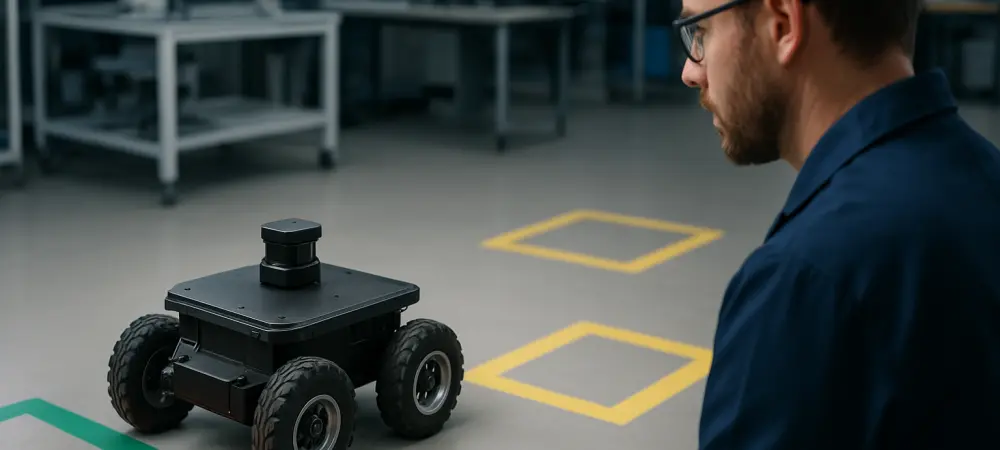
Training a vertical stack of predictors simultaneously ensures that high-level training signals help refine the lower-level encoders for more relevant feature capture. This breakthrough, developed by researchers at Yann LeCun’s AMI Labs, marks a definitive departure from the computationally expensive generative models that dominated early machine learning discussions. For years, the industry struggled with the inefficiency of predicting every pixel in a video frame, an approach that often bogged down autonomous systems with irrelevant visual noise. By focusing on Joint-Embedding Predictive Architecture (JEPA), the research team shifted the focus toward learning abstract representations of the physical world. H-JEPA represents the latest evolution in this journey, introducing a layered hierarchy that allows an AI agent to separate immediate physical reactions from long-term strategic objectives. This move is not merely a technical refinement; it is a fundamental shift in how artificial intelligence interprets environmental dynamics for decision-making.
The Limitations of Flat Predictive Architectures
Standard predictive architectures, while efficient at ignoring superficial visual details like flickering lights or shifting shadows, frequently hit a ceiling when tasked with long-range planning. When an AI operates on a single, flat level of representation, it must account for every tiny action in a sequence to reach a distant goal. This requirement often results in cascading errors, where a single miscalculation in the initial prediction propagates through the entire simulation, leading to a complete failure of the plan. In the fast-paced development cycles of 2026, researchers have identified that these flat models lack the necessary temporal abstraction required to navigate environments that involve multi-minute or multi-hour objectives. Without the ability to compress time and detail, traditional models remain trapped in a cycle of high-frequency adjustments that fail to coalesce into a coherent, overarching strategy for complex tasks.
Another persistent challenge in non-hierarchical world models is the phenomenon of representation clutter. In these systems, a single latent space is forced to store every piece of information, from the precise torque of a robotic joint to the general spatial layout of a warehouse. This lack of specialization makes the learning process inefficient, as the model struggles to determine which features are relevant for immediate motor control versus those needed for global navigation. By forcing diverse data types into one compressed layer, flat architectures become slow to adapt and difficult to scale for sophisticated industrial applications. The inability to distinguish between high-level landmarks and low-level mechanical noise creates a bottleneck that prevents autonomous agents from achieving the fluidity seen in biological intelligence. H-JEPA addresses this specifically by decoupling these layers, ensuring that each level of the hierarchy processes only the information necessary for its assigned timescale.
Architectural Foundations: Scaling Representations Vertically
The architecture of H-JEPA is built upon a vertical stack of modules, where each level functions as a semi-autonomous world model tailored to a specific level of abstraction. Each stage in this hierarchy consists of three primary components: a state encoder, an action encoder, and a predictor. The state encoder is responsible for translating raw sensory data into a condensed representation that fits the temporal resolution of that specific layer. Meanwhile, the action encoder takes a sequence of detailed commands and summarizes them into what researchers call macro-actions. These macro-actions provide a simplified view of movement that the predictor can use to anticipate future states without the need to render every intermediate frame. This structural modularity allows the system to simulate various scenarios across multiple timelines simultaneously, providing a robust framework for anticipating the consequences of complex choices without the massive computational overhead seen in generative AI models.
To ensure that this vertical stack operates as a cohesive unit, the system undergoes an end-to-end training process where predictions are constantly validated against actual environmental outcomes. A critical component of this training is the implementation of a regularization mechanism designed to prevent representation collapse. In the absence of such a safeguard, AI models often fall into a trap where they produce static, generic outputs regardless of the input, rendering the predictive capabilities useless. By maintaining a diverse and informative latent space, H-JEPA ensures that each layer captures unique and functional aspects of the environment. Furthermore, the information flow within the hierarchy is bidirectional in nature; high-level goals provide a top-down signal that helps the lower-level encoders filter out irrelevant details. This refinement ensures that the most granular motor commands are always aligned with the broader mission, creating a synergy that significantly enhances the overall learning efficiency of the autonomous agent.
Top-Down Refinement: Translating Goals into Action
Planning within the H-JEPA framework is executed through a top-down refinement process that prioritizes broad objectives before tackling the specifics of physical execution. When the system is presented with a target—such as a visual representation of a completed assembly task—the high-level planner begins by mapping out a series of strategic milestones. Because this top layer operates at a high level of abstraction, it can effectively ignore environmental noise that would otherwise distract a flat model. For instance, it does not need to calculate the precise angle of a robotic arm to decide that the next step is moving to a different room. By focusing on these macro-states, the AI can plan across long distances and extended timeframes with a degree of accuracy that was previously unattainable. These broad milestones are then transmitted to the intermediate layers, where they serve as subgoals that the lower-level predictors must fulfill through increasingly specific sets of actions.
This hierarchical approach proved its worth in rigorous benchmarks, such as the AntMaze and Push-T environments, where H-JEPA demonstrated a superior ability to handle complex navigation and manipulation. In these tests, the model showcased a unique capability to forget information that was no longer useful at higher levels of reasoning. In navigation tasks, while the lower levels remained focused on the mechanics of walking, the higher levels successfully retained only the general coordinates of the agent. This abstraction created a much smoother signal for the planner, allowing it to navigate through labyrinths and around obstacles without becoming bogged down by the mechanical minutiae of the robot’s physical form. Furthermore, when applied to real-world robotic datasets like DROID, the integration of an inverse dynamics objective allowed the system to predict the exact actions needed to bridge different states. This resulted in a model that is not only conceptually sound in simulation but also highly applicable to actual physical hardware.
Strategic Implementation: Practical Pathways for Industry
The development of H-JEPA marked a significant milestone in the evolution of autonomous systems capable of sophisticated reasoning within the physical world. By successfully organizing world models into a functional hierarchy, the research team demonstrated that AI could indeed balance the conflicting demands of long-term strategy and immediate motor control. The experiments conducted through 2026 revealed that while increasing the number of levels offered diminishing returns in simple environments, the benefits for complex, multi-stage tasks were undeniable. The ability of the architecture to handle diverse data types without suffering from representation clutter provided a clear advantage over previous single-layer attempts. Industries looking to deploy autonomous agents in unpredictable settings, such as construction sites or domestic environments, found that the hierarchical structure offered the resilience needed to adapt to real-time changes without the necessity of recomputing an entire plan from the ground up.
In the period following these breakthroughs, the integration of natural language processing with hierarchical latent spaces offered a promising avenue for human-machine collaboration. Systems based on H-JEPA allowed human operators to provide high-level instructions through simple vocal commands, which the model then decomposed into actionable subgoals across its internal layers. To fully realize this potential, engineers focused on expanding the variety of sensory inputs, such as haptic and auditory data, to enrich the state encoders at the lowest levels of the stack. Additionally, refining the regularization techniques used to prevent collapse proved essential as these models scaled to handle even more intricate real-world variables. By prioritizing these architectural enhancements, organizations bridged the gap between abstract AI reasoning and the tactile demands of physical labor, ultimately creating robots that were as adaptable as they were precise. The shift from generative to predictive hierarchy established a new standard for reliable and efficient artificial intelligence.