

Digital communication platforms have long relied on the assumption that a physical device remains in the possession of its rightful owner, yet recent developments in GhostPairing techniques suggest that this confidence might be misplaced in the current cybersecurity landscape. As users increasingly demand seamless synchronization across multiple devices, the underlying architecture of messaging applications like WhatsApp has evolved to accommodate persistent sessions that do not always require a traditional password for re-authentication. This shift has inadvertently paved the way for a sophisticated form of account takeover that prioritizes session hijacking over credential theft, leaving even tech-savvy individuals vulnerable to surreptitious monitoring. The phenomenon known as GhostPairing represents a critical intersection between user convenience and technical exploitation, where the very features designed to enhance accessibility are turned against the user base. Understanding how these unauthorized connections are established requires a deep dive into the synchronization protocols that maintain state.
Technical Vulnerabilities: How GhostPairing Bypasses Standard Security
Manipulation of the Multi-Device Linking Protocol
The technical execution of GhostPairing often exploits the Link with Phone Number feature, a secondary authentication method designed for users who may have difficulty scanning a QR code with a malfunctioning camera. In this scenario, an attacker initiates a pairing request from their own device by entering the victim’s phone number, which prompts the legitimate account to generate an eight-character alphanumeric code. The challenge for the malicious actor is not in breaking the encryption, but in manipulating the user into revealing this code through highly targeted phishing or social engineering. Once the code is entered into the attacker’s interface, the session is established almost instantly, providing full access to chat histories and real-time messaging capabilities without the need for the account’s master password or two-step verification PIN. This bypass is possible because the system interprets the manual entry of the code as a verified physical handshake between trusted units.
Social Engineering and the Authorization Loophole
Beyond the direct exploitation of manual pairing codes, GhostPairing often utilizes a more passive but equally dangerous method known as session persistence manipulation within the web client framework. Attackers can distribute malicious browser extensions or compromised websites that mirror the official WhatsApp Web interface, capturing the temporary session token during a legitimate login attempt. Unlike traditional phishing that seeks to steal a password, this method harvests the actual authentication state, allowing the attacker to maintain a parallel session that remains active even after the victim closes their browser tab. The subtle nature of this intrusion means that the primary device may not receive an immediate or persistent notification that a new linked device has been added, especially if the attacker performs the operation during hours of low activity. Consequently, the unauthorized session operates in a literal ghost state, where the metadata flows to a hidden endpoint that captures every message.
Mitigation Strategies: Securing Accounts Against Unauthorized Access
Implementation of Enhanced Session Management
The core of the issue lies in the tension between end-to-end encryption and the multi-device architecture that has become standard in 2026. While the Signal Protocol ensures that messages are encrypted from sender to receiver, it treats every linked device as a valid recipient of the unique decryption keys. When a GhostPairing attack succeeds, the attacker’s hardware is essentially whitelisted by the server as a legitimate destination for the encrypted payload, meaning the security protocol itself functions exactly as designed while delivering data to a malicious party. This architectural reality highlights a significant gap in modern cybersecurity: encryption protects the transit of data, but it cannot verify the physical intent of the person holding the device at the end of the chain. Consequently, even the most robust cryptographic standards are rendered moot if the initial session establishment process is subverted through technical session theft or psychological manipulation.
Proactive Defenses and Digital Hygiene Practices
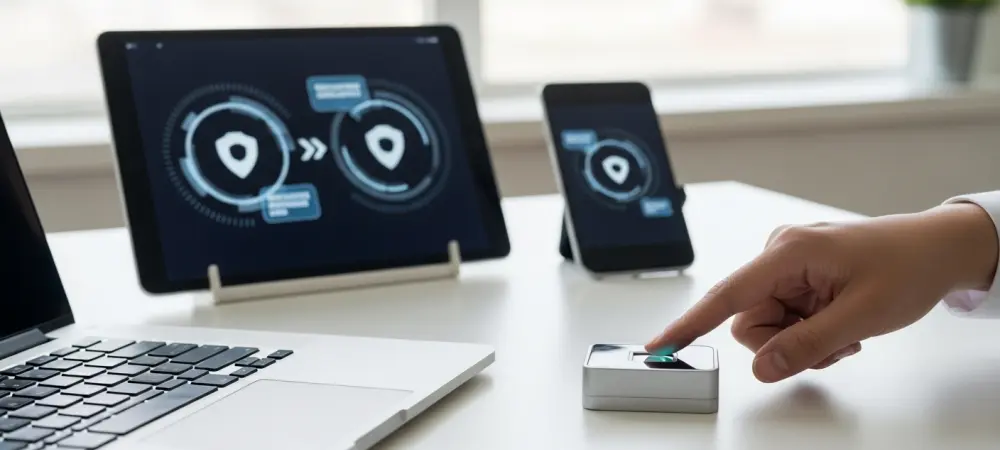
Protecting digital identities in this environment required a shift toward proactive session management and the rigorous auditing of linked hardware lists. Users who successfully mitigated the risks of GhostPairing often made it a habit to regularly inspect the Linked Devices menu within their application settings, manually de-authorizing any session that appeared even slightly unfamiliar. Furthermore, the implementation of biometric locks for web and desktop clients provided an essential secondary layer of defense, ensuring that even if a session was technically active, it remained inaccessible to unauthorized physical users. Industry experts also recommended the adoption of hardware-based security keys for any new device pairing, adding a physical requirement that software-based attacks could not easily bypass. By moving away from a reliance on static passwords and focusing on the dynamic nature of session tokens, individuals were able to close technical loopholes. Ultimately, the most effective defense against such hijacks proved to be a combination of technical safeguards and a heightened state of awareness.