

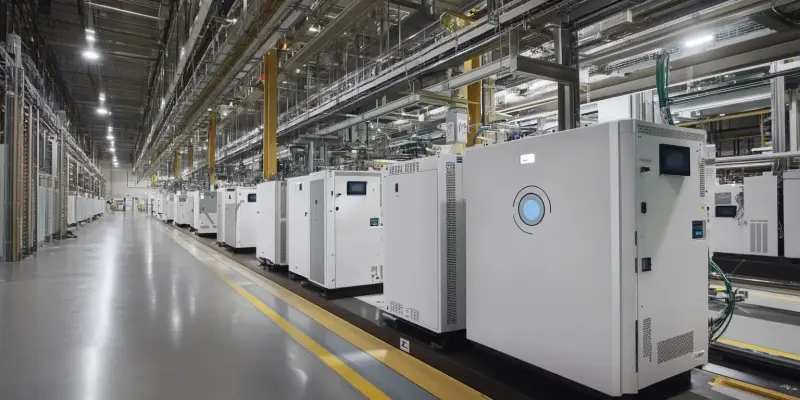
The recent turmoil generated by DeepSeek’s chatbot has led to a reassessment of the previously unchecked enthusiasm for data centers among landlords and financiers. Highlighting concerns over the future, some industry insiders are starting to worry about the potential obsolescence of current investments. Corporate giants have indicated that DeepSeek’s cost-effective models could boost demand for AI technology and the corresponding infrastructure. However, the situation remains complex.
Concerns and Predictions for Data Center Investments
Uncertain Future for Lending and Investments
A senior executive from a leading data center firm anticipates rising borrowing costs as lenders move to protect themselves against potential disruptions akin to DeepSeek’s advancements. This has caused a ripple effect among asset managers expressing uncertainty about future lending. One such asset manager drew parallels to the oversupply issues witnessed during the green investing boom, suggesting that unbridled enthusiasm could lead to similar pitfalls for data centers.
In a recent observation, Timo Buijs of ABN AMRO Bank suggested that the market may undergo a “healthy correction,” resulting in sustained, albeit slightly lower, growth for data centers. This observation follows the surge in AI interest seen after ChatGPT’s 2022 debut, which led to massive investments in data centers. Entities like Apollo Global Management have been identifying the potential of a $2 trillion market over the next five years, signaling the high stakes involved. Despite last month’s concerns, industry leaders are suggesting a positive trajectory for AI integration within the data center industry.
Impact on Borrowing and Investment Trends
Innovations introduced by DeepSeek have cast a shadow of caution over the broader credit markets. Investors have maintained a relatively optimistic outlook, seeing less existential risk to data centers than their counterparts focused on equities. Robert Schiffman of Bloomberg Intelligence observed a stark contrast between the impact on equities, particularly for tech giants like Broadcom and Nvidia, and the limited widening of bond spreads. This diverse perception of risk underscores the complexities facing the financial segment of the data center industry.
Barclays strategists note that, unlike recent struggles experienced in the office sector, data centers are facing low downside risks in the commercial mortgage-backed securities market. This offers a layer of protection for investors wary of volatility. Additionally, while DeepSeek claims to significantly reduce AI model training costs, even the most cost-efficient AI projects will still require substantial investment in data centers and equipment. According to Narry Singh of AlixPartners, the emergence of DeepSeek’s technology may not drastically decrease demand for vital infrastructure in the immediate future.
The Future of AI and Data Center Demand
AI Integration and Long-Term Infrastructure Needs
Despite DeepSeek’s advancements potentially introducing more cost-efficient AI technologies, the demand for data centers is unlikely to diminish. Industry leaders and investors acknowledge that even as AI models become more sophisticated and less expensive to train, the requisite infrastructure to support such advancements remains critical. Therefore, data centers will continue to be pivotal in fostering AI integration and operationalizing various AI applications.
Meta’s CEO, Mark Zuckerberg, has projected a positive trajectory for AI technology, suggesting that the continued growth of AI will sustain the need for advanced data centers. This sentiment is echoed by figures within the industry who foresee that the proliferation of AI will necessitate robust and adaptable infrastructure. The future likely holds a scenario where demand for data centers may be stable and even increase, counteracting concerns of reduced necessity due to cost-effective AI models.
Balancing Optimism and Caution
While enthusiasm remains, the financial outlook requires a balanced approach. Investors need to remain cautious but optimistic, as the integration of AI continues shaping the future of data centers. By preparing for fluctuations in investment patterns and adjusting to technological advancements, industry leaders and financiers can better manage the shifting landscape, ensuring sustained growth and adaptation.
As the industry navigates this period of transformation, maintaining a strategic balance between embracing AI advancements and securing necessary infrastructure investments will be crucial. The overall consensus indicates that while DeepSeek has introduced some level of caution, optimism for the broader outlook of data centers endures. The transition will likely see recalibrated growth rates aligning with industry needs and technological progress, marking an era of refined but resilient development.
Conclusion
The recent turmoil triggered by DeepSeek’s chatbot has prompted a reevaluation of the previous unchecked enthusiasm surrounding data centers among landlords and financiers. Growing apprehension about the future has emerged, with some industry insiders voicing concerns about the potential obsolescence of their current investments. Corporate behemoths have suggested that DeepSeek’s cost-efficient models may drive higher demand for AI technology and the supporting infrastructure.
Despite these optimistic projections, the situation is layered and intricate. Industry experts are grappling with the dual effects; on one hand, there is excitement about the advancement and expanded use of AI technology, but on the other, there’s worry about the rapid pace at which these advancements might render existing infrastructures outdated. This dichotomy highlights the precarious balance between innovation and the risk of sunk costs in an evolving technological landscape. As the industry navigates these complexities, stakeholders are left to ponder the sustainability and future directions of their investments in AI and data center infrastructure.