

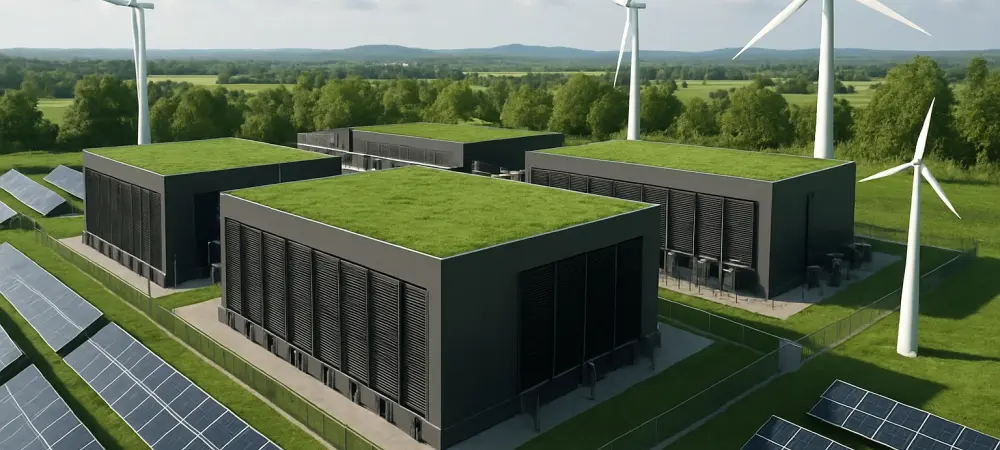
In an era where digital transformation fuels every aspect of modern life, a staggering reality emerges: data centers, the backbone of this revolution, consume between 1-2% of global electricity, according to the International Energy Agency (IEA). This immense energy demand, coupled with significant carbon emissions and water usage, places an urgent spotlight on sustainability as cloud computing, artificial intelligence (AI), and the Internet of Things (IoT) continue to expand. With climate concerns intensifying, the design and operation of data centers must pivot toward greener solutions. This analysis explores the rising trend of sustainable data center innovations, spotlighting real-world applications such as Google’s groundbreaking facility in Hertfordshire, UK, alongside expert perspectives and the future implications of these advancements for a more responsible digital landscape.
The Rise of Sustainable Data Centers
Growing Demand and Environmental Challenges
The surge in data center demand shows no signs of slowing, driven by the relentless growth of cloud services, AI applications, and IoT connectivity. Reports from Synergy Research Group indicate that global data center capacity has doubled in recent years, reflecting an insatiable appetite for digital infrastructure. This expansion, while critical for technological progress, comes at a steep environmental cost, with energy consumption and associated carbon footprints becoming pressing issues for the industry. The need for sustainable practices has never been more evident as stakeholders grapple with the dual challenge of meeting demand and reducing ecological harm.
Beyond energy use, water consumption for cooling systems poses another significant concern, often overlooked in discussions of data center impact. Many facilities rely on vast amounts of water to prevent overheating, straining local resources in water-scarce regions. Industry reports highlight a growing movement toward addressing these challenges, with commitments like the Climate Neutral Data Centre Pact pushing for net-zero targets and renewable energy adoption. Such initiatives signal a shift in mindset, prioritizing environmental stewardship alongside technological advancement.
Case Study: Google’s Hertfordshire Benchmark
A prime example of this trend is Google’s recently opened data center in Waltham Cross, Hertfordshire, UK, representing a $1 billion investment within a larger £5 billion plan for the region. This facility stands as a model of sustainable innovation, integrating advanced technologies to minimize its environmental footprint while supporting cutting-edge digital services. Its opening marks a significant step in redefining how data centers can balance operational needs with ecological responsibility, setting a precedent for others in the sector.
Key sustainability features at the Hertfordshire site include advanced air cooling systems designed to drastically cut water usage, addressing one of the industry’s critical resource challenges. Additionally, Google has prepared the facility for potential off-site heat recovery through district heating, though such systems are not yet implemented. A partnership with Shell aims to achieve 95% clean energy usage by next year, yet this collaboration raises questions due to Shell’s reported 1.2 billion tons of CO2 equivalent emissions in recent data, casting a shadow over the initiative’s green credentials.
Economically, the project delivers substantial benefits, including job creation and a projected £400 billion contribution to the UK economy by 2030 through AI-driven growth. This dual focus on sustainability and economic progress underscores the potential for data centers to serve as engines of both innovation and community development. Google’s investment highlights a broader trend where environmental goals and economic imperatives are increasingly intertwined in strategic planning.
Industry Perspectives on Green Data Center Strategies
Thought leaders in the tech sector emphasize the transformative potential of sustainable data centers in shaping both technology and community landscapes. Ruth Porat, Google’s president and chief investment officer, has noted that such investments position regions like Broxbourne at the forefront of global tech opportunities while addressing environmental responsibilities. Her perspective reflects a growing recognition that sustainability is not just a necessity but a competitive advantage in the digital age.
Government officials also weigh in on the significance of these developments, with UK Chancellor Rachel Reeves describing Google’s initiative as a “powerful vote of confidence” in the UK’s economic partnership with the US. This endorsement highlights the role of sustainable infrastructure in fostering long-term growth and international collaboration. The alignment of corporate and governmental priorities suggests a unified push toward greener digital ecosystems as a cornerstone of national strategy.
Broader industry analysis reveals a mix of optimism and caution regarding partnerships with traditional energy firms like Shell. Environmental analysts point out the tension between ambitious clean energy goals and the reality of collaborating with companies tied to significant fossil fuel emissions. While such alliances enable progress in renewable integration, they also prompt calls for greater transparency and accountability to ensure that sustainability commitments translate into measurable impact.
Future Outlook for Eco-Friendly Data Center Technologies
Looking ahead, the horizon for sustainable data center technology brims with potential, from wider adoption of battery energy storage systems (BESS) to innovative liquid cooling methods that reduce resource dependency. Modular designs, which allow for scalable and efficient infrastructure, are also gaining traction as a means to minimize waste during construction and operation. These advancements promise to lower carbon footprints while enhancing operational resilience in an increasingly data-driven world.
However, challenges persist in realizing this vision, including the high upfront costs of implementing cutting-edge green technologies and the scalability of renewable energy integration. Dependence on partners with ties to fossil fuels remains a sticking point, potentially slowing the transition to fully sustainable models. Addressing these hurdles will require coordinated efforts across industries to prioritize investment in clean energy solutions and innovative design practices.
The broader implications of these trends extend far beyond data centers themselves, with the potential to reshape industries through AI and digital transformation. Speculation around Google’s possible expansion into Teesside, UK, hints at continued growth in sustainable infrastructure, though it also raises concerns about environmental pushback from local communities. Navigating these dynamics will be crucial in ensuring that the benefits of technological progress do not come at the expense of ecological balance.
Embracing a Greener Digital Legacy
Reflecting on the journey of sustainable data center innovations, it becomes clear that the urgent need for greener solutions has driven remarkable strides, exemplified by Google’s Hertfordshire facility. The blend of economic ambition and environmental goals has reshaped industry standards, setting a benchmark for others to follow. Each step taken underscores the possibility of aligning technological advancement with climate responsibility.
Looking back, the path forward demands actionable strategies, such as increased investment in renewable energy research and stricter accountability for partnerships with traditional energy firms. Industry stakeholders are poised to champion transparency, ensuring that sustainability claims are backed by tangible results. By fostering collaboration between tech giants, governments, and environmental advocates, a foundation is laid for a digital future that prioritizes the planet alongside progress.