

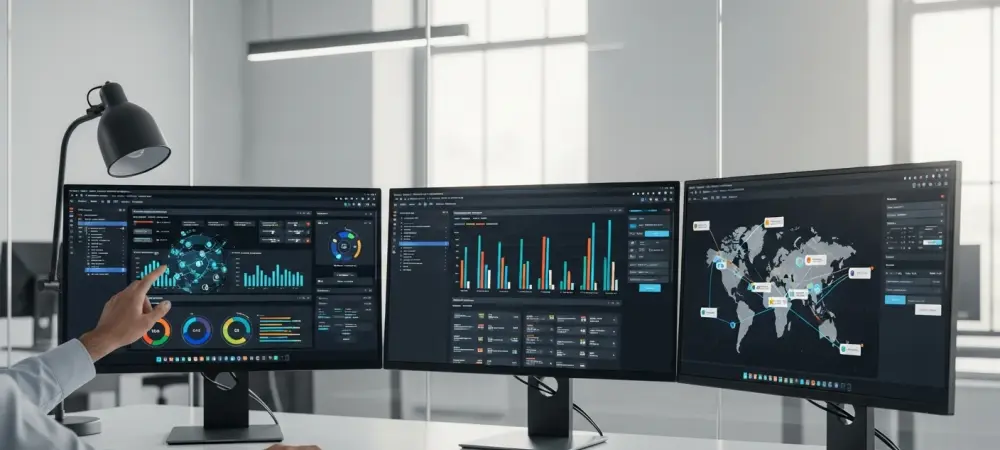
A single security analyst sits before a glowing monitor in the quiet hours of a night shift, knowing that the next “dismiss” click could either clear a harmless false positive or accidentally invite a devastating ransomware strain into the corporate backbone. This high-pressure environment defines the modern Security Operations Center, where the volume of incoming alerts often exceeds the human capacity to process them with precision. The tension of the first line of defense is not merely a technical challenge but a psychological one, as every decision carries the weight of potential enterprise-wide failure. When the queue is perpetually full and the stakes are existential, the search for a force multiplier becomes a necessity rather than a luxury. The concept of tripling triage speed through contextual intelligence is gaining traction, promising to resolve the long-standing conflict between the need for rapid response and the requirement for thorough investigative depth.
Beyond the Dismiss Button: The High-Stakes Reality of Tier 1 Triage
The operational reality for Tier 1 analysts is often a relentless cycle of repetitive tasks that can dull the sharpest analytical minds. The “dismiss” button is frequently the most used tool in the arsenal, yet it represents a critical judgment call that must be made hundreds of times per shift. Moving past hypothetical scenarios of streamlined efficiency requires an honest assessment of the current state of alert management. Analysts are not just looking for threats; they are navigating a sea of noise generated by automated systems that prioritize sensitivity over specificity. In this landscape, the 3x factor is not about clicking faster, but about reducing the cognitive load required to reach a confident verdict on any given indicator.
Tripling efficiency without sacrificing investigative depth requires a fundamental shift in how information is presented at the moment of discovery. When an analyst identifies a suspicious file hash or a connection to an unknown IP address, the clock begins to tick. Traditionally, this process involved manual pivots across various databases, search engines, and internal logs to piece together a fragmented story. Contextual intelligence aims to eliminate this “empty” time by providing a pre-assembled narrative. By surfacing the intent and history of an indicator immediately, the platform transforms the analyst from a data gatherer into a decision-maker. This transition is essential for maintaining the integrity of the security posture while keeping pace with the velocity of modern digital business.
The psychological burden of the “first line” also impacts the long-term health of the security team. High turnover and burnout are common in SOC environments where analysts feel like they are losing a race against an invisible clock. A workflow that empowers an analyst to handle three times the volume with greater accuracy changes the internal culture from one of reactive survival to one of proactive mastery. It allows the Tier 1 team to act as a genuine filter, ensuring that only the most complex and dangerous threats reach Tier 2 and Tier 3 responders. This clarity of purpose, supported by high-velocity intelligence, turns the triage process into a scalable engine of defense.
The Context Gap: Why Traditional Security Alerts Fail Modern Analysts
Traditional security alerts are often criticized for being “data-rich but information-poor,” providing isolated artifacts that lack the surrounding story of an attack. A file hash or a destination IP address, on its own, is a static data point that tells the responder very little about the risk involved. This context gap creates a speed-accuracy tradeoff where moving too fast invites catastrophic breaches while moving too slowly creates backlogs that attackers can exploit. When an analyst is forced to investigate an alert without context, they are essentially solving a puzzle with missing pieces. This inefficiency is the primary driver of alert fatigue, a condition where the erosion of institutional knowledge and the numbing effect of false positives lead to critical errors.
Analyzing the speed-accuracy tradeoff reveals that the bottleneck is rarely the speed of the analyst’s typing or the speed of the network; it is the speed of comprehension. When isolated data points are delivered to a dashboard, the analyst must spend precious minutes—sometimes hours—determining if a connection to a specific domain represents a routine software update or a beacon to a command-and-control server. This manual correlation is where the narrative of an attack is often lost. Modern adversaries take advantage of this gap by using polymorphic malware and rotating infrastructure that bypasses simple, signature-based detection rules. Without a way to connect these dots in real-time, the defender is always at a disadvantage.
Moreover, the missing narrative of an attack often conceals the lateral movement that occurs after the initial compromise. A traditional alert might flag a suspicious login, but without contextual intelligence, the analyst might fail to see that the login is linked to a series of subtle privilege escalations and data staging activities. The disconnect between disparate security tools further exacerbates this problem, as information remains trapped in silos. To close the context gap, intelligence must be integrated at the point of ingestion, allowing the analyst to see the “why” and “how” of an event as clearly as they see the “what.” This level of visibility is the only way to ensure that speed does not come at the expense of security.
Turning Noise into Signal through Behavioral Narratives and Sandbox Linkage
Turning raw data into actionable signal requires a move away from static indicators and toward behavioral narratives. Enriching indicators with the underlying intent of an attacker allows analysts to prioritize alerts based on actual risk rather than arbitrary severity levels. For instance, identifying a suspicious domain as a known host for the Evilproxy or Sneaky 2FA phishing kits immediately changes the urgency of the response. Instead of seeing a generic “malicious domain” warning, the analyst sees a specific threat aimed at bypassing multi-factor authentication. This granular insight accelerates the path to a verdict by providing the evidence needed to justify an escalation or a remediation action.
The shift from static detection to live sandbox linkage represents a major leap in triage capability. By observing the attack chain as it happens in a controlled environment, analysts can gain a comprehensive view of the malware’s behavior. They can see which processes are spawned, which files are modified, and which network protocols are used for communication. This live observation provides a level of certainty that no static report can match. When an analyst can see a direct link between an alert in their SIEM and a live detonation in a sandbox, the ambiguity of the threat vanishes. This process allows the team to understand the “playbook” of the adversary, enabling a more effective and comprehensive response. Knowing that a particular malware variant is currently being used to target the healthcare or financial sector in a specific geographic region allows a SOC to tune its detection engineering accordingly. If an analyst sees an alert that matches a known campaign targeting their specific industry, they can bypass the usual preliminary checks and move straight to containment. This intelligence-led approach ensures that the defense is not just broad but also deep and relevant. By leveraging high-quality behavioral insights, the SOC can transition from a reactive monitoring post to a proactive detection center that anticipates the moves of the adversary.
The Power of Collective Defense: Scaling Human Expertise with AI and Global Data
Harnessing the power of collective defense allows individual SOC teams to benefit from the experience of a global community. With over 600,000 security professionals contributing to a shared intelligence ecosystem, the data available for triage is both vast and incredibly fresh. This community-sourced data provides a consensus of experts that often outpaces the publication of formal threat reports by days or even weeks. This real-time exchange of intelligence levels the playing field, making it much harder for attackers to reuse their infrastructure across different targets. This collective insight acts as a shield, protecting individual organizations by learning from the encounters of others in the field. Democratizing this intelligence through AI-powered natural language queries is a vital strategy for bridging the experience gap within a SOC. Junior analysts often struggle with the complex query syntax required to hunt for threats across different platforms. By using an AI assistant that understands natural language, these analysts can ask sophisticated questions about an indicator and receive clear, evidence-based answers. This technology acts as a force multiplier for human expertise, allowing less experienced staff to perform at a level that would otherwise require years of specialized training. It reduces the cognitive load and ensures that the quality of the triage process remains high, regardless of the individual analyst’s tenure.
The consensus of a global community also helps to validate findings and reduce the likelihood of false positives. If a specific file has been analyzed by hundreds of other organizations and found to be part of a benign update process, a Tier 1 analyst can dismiss the alert with high confidence. Conversely, if the community data shows a sudden spike in activity related to a particular IP address, the team knows to treat it as a high-priority event. This shift toward live, community-sourced attack data ensures that the SOC is always operating with the most current information available, moving away from the limitations of retrospective analysis and toward a model of real-time awareness.
Engineering a High-Velocity SOC: Strategies for Seamless Intelligence Integration
Developing an “intelligence-first” workflow is the final step in engineering a high-velocity SOC. This involves integrating API-driven enrichment directly into the existing SIEM and SOAR pipelines. When an alert is generated, the system should automatically query intelligence platforms to gather context, associate the alert with known campaigns, and attach sandbox results before the analyst even opens the ticket. This automation ensures that the analyst begins their investigation with a full set of evidence, rather than having to spend the first fifteen minutes of the triage process performing manual lookups. The goal is to make intelligence a seamless part of the toolset, rather than a separate destination.
Tactical frameworks for escalation must also be refined to provide Tier 2 responders with actionable, evidence-based reports. A high-quality escalation report should not just state that an event is suspicious; it should provide the behavioral evidence, the associated malware family, and the specific indicators of compromise that were observed. By providing this level of detail at the Tier 1 stage, the entire incident response lifecycle is accelerated. Tier 2 analysts can move immediately to forensic analysis and containment, knowing that the initial triage was performed with a high degree of accuracy and supported by robust contextual data. This efficiency ripple effect improves the overall resilience of the organization. Shifting from reactive monitoring to proactive detection engineering is the ultimate maturity goal for a modern security team. High-quality behavioral insights gained during the triage process can be used to create new detection rules that catch similar threats in the future. Instead of just cleaning up after an attack, the SOC uses every alert as an opportunity to strengthen the defensive perimeter. This proactive stance is supported by the ability to pivot between different types of intelligence—from file hashes to network traffic to global campaign data—within a single, integrated workflow. By building a SOC that is powered by context, organizations can finally move ahead of the threat curve and maintain a decisive advantage over their adversaries.
The shift toward contextual intelligence fundamentally altered how security teams approached the triage process. Analysts moved away from manual, repetitive searches and toward a model of instant validation. This transformation ensured that limited human resources were focused on the most critical threats, ultimately reducing the window of opportunity for sophisticated adversaries. The integration of real-time sandbox data proved to be the missing link in the defensive chain. Organizations that adopted these workflows discovered that the “3x” speed increase was not just a theoretical target but an operational baseline. Future success relied on maintaining this momentum by expanding API-driven automation and fostering global intelligence sharing. Tactical decisions became more accurate as behavioral narratives replaced isolated data points. The transition to an intelligence-led defense established a new standard for operational excellence in the digital age. Success was no longer measured only by the number of alerts cleared, but by the depth of the insight applied to every decision made within the security operations center.