

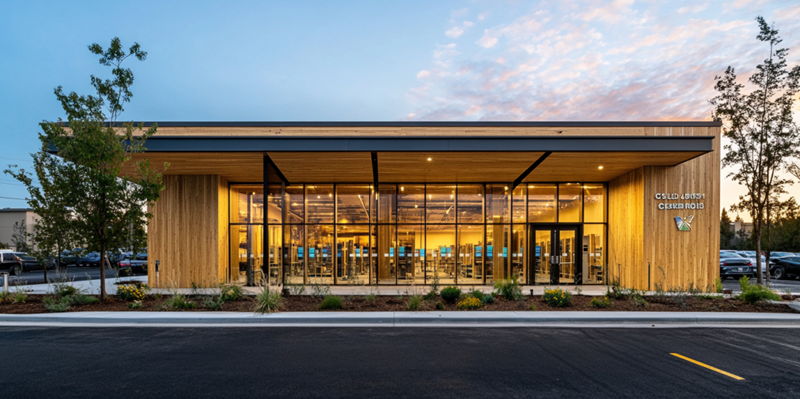
As part of its ambitious goal of becoming carbon-negative by 2030, Microsoft has embarked on an innovative pilot project to construct a data center using cross-laminated timber (CLT) in northern Virginia. This project aims to significantly reduce the carbon footprint associated with traditional data center construction. CLT presents a promising alternative, capable of cutting the carbon footprint by 35% compared to steel structures and by 65% compared to concrete versions. The incorporation of CLT predominantly in the floors, supplemented by a thin layer of concrete for reinforcement and waterproofing, is a testament to Microsoft’s dedication to sustainable construction practices.
The push for environmentally friendly building materials does not stop at CLT. Microsoft is also investing in a range of low-carbon alternatives. This includes carbon dioxide-trapping concrete and hydrogen-powered “green steel.” Such investments are part of the company’s broader strategy, exemplified by its $1 billion Climate Innovation Fund. To date, Microsoft has already funneled $761 million into various environmental projects. Each of these initiatives showcases the company’s commitment to mitigating the environmental impact of its operations and advancing sustainable technologies.
Strategic Collaborations for Sustainability
To further its sustainability goals, Microsoft has formed strategic collaborations with international entities like Sweden’s Stegra and Boston Metal. Stegra specializes in hydrogen-fueled steel, an innovation that dramatically reduces the carbon emissions associated with steel production. Meanwhile, Boston Metal focuses on using renewable electricity to produce steel, representing another leap toward eco-friendly materials. David Swanson, a structural engineer at Microsoft, highlighted the necessity of rigorously assessing the performance, safety, and durability of these materials in a data center environment. The challenge remains to integrate as much CLT as possible without compromising the structural integrity of the facility.
Microsoft’s commitment to sustainability is mirrored by a broader trend in the tech industry, where many companies are increasingly prioritizing eco-friendly construction practices. This shift underscores an emerging consensus on the importance of reducing the carbon footprint in both construction and operational processes. Such a movement not only aligns with global carbon reduction goals but also responds to growing consumer and stakeholder demands for sustainable business practices.
Leading the Charge in Carbon Reduction
In its quest to be carbon-negative by 2030, Microsoft has launched an innovative project to build a data center in northern Virginia using cross-laminated timber (CLT). This initiative aims to reduce the carbon emissions typically associated with traditional data center construction. CLT offers a significant advantage, lowering the carbon footprint by 35% compared to steel and by 65% compared to concrete. Microsoft’s use of CLT mainly in the floors, reinforced with a thin layer of concrete for added strength and waterproofing, highlights the company’s commitment to eco-friendly building practices.
Microsoft’s focus on sustainable materials extends beyond CLT. The company is exploring various low-carbon alternatives such as carbon dioxide-trapping concrete and hydrogen-powered green steel. These efforts align with their broader environmental strategy, underscored by a $1 billion Climate Innovation Fund. So far, Microsoft has invested $761 million in diverse environmental projects. Each of these ventures underscores Microsoft’s dedication to reducing its environmental impact and promoting sustainable technologies.