

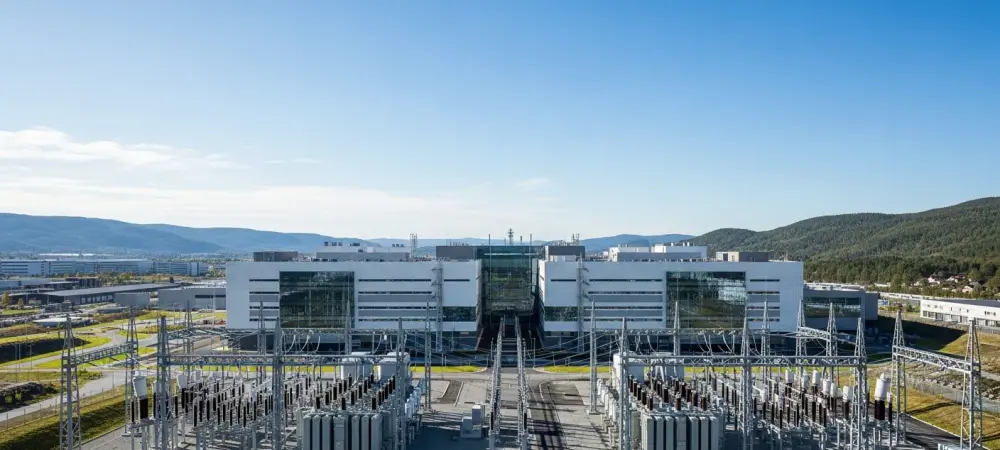
The Dawn of a New Computing Era in Gismarvik
The global landscape for high-performance computing is undergoing a tectonic shift as massive physical infrastructures become the primary battleground for companies striving to maintain a competitive advantage in the rapidly evolving field of artificial intelligence. atNorth’s NOR01 campus in Gismarvik marks a pivotal moment, positioning Norway as a central player in this evolution. By developing a 350MW site, the company is creating a cornerstone for digital innovation.
This massive investment aims to meet surging AI demands while setting high environmental standards. The project serves as a model for how scale and sustainability intersect in the Nordic region. By synthesizing extreme power density with conscious design, the facility addresses the necessity for both performance and ecological responsibility.
The Nordic Journey Toward Digital Sovereignty
The Nordic region has long been recognized for its cool climate and renewable energy. The entry of atNorth into the Norwegian market represents a strategic shift toward regional dominance. Following a multi-billion dollar acquisition, the firm finalized its expansion across all Nordic territories to capitalize on these geographic advantages.
This move is built upon decades of infrastructure maturation. Understanding this background illustrates that NOR01 is not an isolated project, but the result of a trend where energy security is as vital as connectivity. The maturation of industrial parks has paved the way for massive data facilities to function as anchors for regional economic stability.
Deciphering the Impact of Mega-Scale Infrastructure
Engineering for the AI Age: High-Density Power and Performance
Modern AI training requires intense power density that traditional facilities struggle to provide. NOR01 addresses this with designs supporting up to 1MW per rack, specifically for high-performance computing. This enables the training of sophisticated models that require massive GPU clusters working in tight synchronization.
This capability allows tech firms to consolidate demanding workloads, reducing complexity. Such engineering is necessary for future breakthroughs in large-scale model development. By providing the required thermal management and power throughput, the campus ensures that computational limits do not hinder software evolution.
Strategic Collaboration and the Power of Utility Partnership
A project of this magnitude requires a robust energy backbone. Collaboration with national grid operators and regional providers ensures the site requirements do not compromise local stability. This partnership involves the construction of dedicated substations to manage the immense electrical flow safely.
Dedicated substations highlight a shift in regional planning. Data centers are now treated as primary industrial anchors that drive the modernization of power grids. This integration provides a more resilient energy network that benefits both the industrial tenants and the surrounding residential communities.
Sustainability as a Competitive Edge: The Circular Economy Model
Sustainability is now a core feature of digital infrastructure. The campus utilizes free-cooling and closed-loop systems to leverage the naturally cold climate. These technologies significantly reduce the energy overhead typically required to keep high-density servers at operational temperatures.
This project explores heat reuse with local stakeholders. Redirecting thermal energy to industrial operations proves that massive scale can coexist with responsible resource management. This approach transforms waste into a valuable resource for the community, reinforcing the long-term viability of the data center.
The Trajectory of the Nordic Data Center Market
There is a clear trend toward consolidating infrastructure in energy-rich industrial parks. Migration of AI workloads to the Nordics is likely as regulatory pressures demand lower carbon footprints. Companies are seeking environments where they can grow without the constraints of aging urban power grids.
By 2028, heat reuse and renewable energy will likely be global standards. This development will encourage other municipalities to fast-track high-density projects. As the demand for sustainable computing grows, the Nordic model will serve as the primary template for global data center development.
Navigating the High-Performance Computing Landscape
Businesses should prioritize facilities offering high power density and sustainable cooling. This avoids the power ceilings of older sites while achieving a lower cost of ownership. Leaders must evaluate potential sites based on their ability to support future generations of hardware without requiring expensive retrofitting.
Location now dictates performance. Choosing a site with utility support and circular economy goals is essential for long-term resilience and meeting ESG targets. Organizations that align their infrastructure with these sustainable hubs will find themselves better positioned to weather changing energy regulations and rising operational costs.
Norway’s Role in a Sustainable AI Future
The NOR01 campus represented a validation of the potential to lead the AI revolution through innovation. By synthesizing power density with conscious design, it set a new benchmark for the industry. This development demonstrated that large-scale computing could be successfully integrated into a regional ecological and economic framework.
As the world became reliant on artificial intelligence, the success of such projects proved vital. The Gismarvik development stood as a strategic blueprint for technology and ecology working in harmony. This path ensured that the pursuit of digital intelligence remained compatible with the preservation of natural resources and local infrastructure stability.