

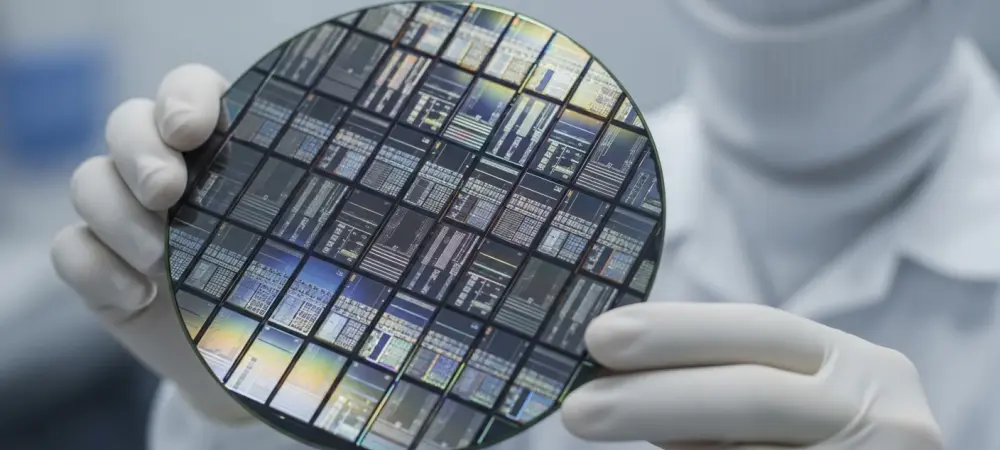
The shift toward autonomous computational systems signifies a departure from traditional software execution, necessitating a fundamental redesign of the silicon foundations that support modern enterprise infrastructure. As businesses transition from static automation to agentic models capable of reasoning and independent decision-making, the demand for raw throughput and energy efficiency has reached an unprecedented peak. AMD’s entry into the 2nm era with its 6th Generation EPYC Venice processors represents more than just a routine hardware refresh; it is a calculated response to a landscape where every nanosecond of latency and every watt of power determines market viability. By being the first to bring high-performance computing products to the 2nm node, the company is attempting to outpace competitors who are still grappling with the complexities of gate-all-around transistor transitions. This leap is essential because the current trajectory of artificial intelligence requires chips that can handle multi-step workflows without thermal throttling or massive energy overheads in the data center.
Advancing Silicon Manufacturing Through Strategic Partnerships
The 2nm Manufacturing Breakthrough: Global Supply Chains
The volume production ramp of the Venice CPUs on the 2nm node represents a historic collaboration between AMD and TSMC, marking the first time such advanced geometry has been applied to server-grade hardware. This transition is not merely a reduction in size but a complete architectural shift from the legacy FinFET structure to Nanosheet or Gate-All-Around (GAA) transistors. These new transistors offer significantly better electrostatic control, which is the primary factor driving the projected 10 to 15 percent speed increase or the 25 to 30 percent reduction in power consumption at equivalent performance levels. To ensure that this technology reaches global markets without the bottlenecks seen in previous cycles, production is being strategically expanded to TSMC’s facilities in Arizona. This geographic diversification is intended to stabilize the supply chain, providing major North American cloud providers with more predictable lead times while reducing the geopolitical risks inherent in concentrated semiconductor fabrication.
Building upon the stability of the 2nm node, AMD is introducing a specialized variant of the Venice architecture known as Verano, which is purpose-built for the rigors of Agentic AI. While the standard Venice lineup focuses on broad enterprise versatility, the Verano chip is optimized for high-bandwidth memory standards like LPDDR, which is critical for moving the massive datasets required for autonomous reasoning. The decision to integrate LPDDR memory directly into the data center platform allows for a drastic reduction in power consumption compared to traditional DDR5 configurations, while simultaneously providing the low-latency communication necessary for real-time AI agents. This specialized approach ensures that the hardware can support the specific memory patterns of agentic workflows, where data is frequently accessed and transformed across hundreds of threads. By aligning silicon design with these emerging software paradigms, the partnership aims to provide a turnkey solution for organizations looking to scale their AI operations effectively.
Advanced Packaging Solutions: Integrating Complex Data Platforms
The complexity of the Zen 6 architecture necessitates more than just a smaller process node; it requires sophisticated integration techniques like TSMC’s SoIC-X and CoWoS-L packaging. These technologies allow for the vertical and horizontal stacking of silicon dies with a level of precision that was previously unattainable in high-volume manufacturing. By utilizing System on Integrated Chips (SoIC-X), engineers can bond different functional blocks—such as cache and logic—directly on top of one another, significantly shortening the physical distance that signals must travel. This reduction in interconnect length is vital for maintaining high performance in 2nm designs, where wire resistance can become a major obstacle. Furthermore, the use of Chip-on-Wafer-on-Substrate with Local Interconnect (CoWoS-L) facilitates the integration of large-scale multi-chip modules, enabling the processors to function as a unified, high-performance unit despite being composed of multiple individual chiplets.
These packaging innovations are particularly relevant when addressing the thermal and density challenges of modern data centers that are already operating at their cooling limits. The ability to stack logic and memory vertically reduces the overall footprint of the processor, allowing for more compute density per rack unit without a linear increase in heat generation. In the context of Agentic AI, where multiple AI agents may be running concurrently on a single server, this density is a major competitive advantage. It allows hyperscalers to pack more reasoning power into their existing floor space, delaying the need for costly physical expansions of their facilities. Moreover, the enhanced interconnect bandwidth provided by CoWoS-L ensures that the high core counts of the Venice series are not hampered by data bottlenecks, allowing the 512 threads of the top-tier models to operate at maximum efficiency. This level of physical integration is what allows the Venice platform to claim a dominant position in the next generation of high-performance computing infrastructure.
Redefining Performance With the Zen 6 Architecture
Core Scalability: Massive Thread Density Gains
The architecture of the 6th Generation EPYC Venice processors is designed to push the boundaries of parallel processing, offering configurations that scale up to a massive 256-core and 512-thread variant. This represents a significant 33.3 percent increase in thread density over the previous Turin lineup, providing a substantial boost for multithreaded workloads such as large-scale simulations and AI inference. The Zen 6 core design focuses on maximizing the throughput of each individual thread while maintaining the overall power envelope of the socket. This scalability is achieved through a combination of the 2nm node’s density improvements and a redesigned cache hierarchy that ensures every core has rapid access to the data it needs. For enterprises running containerized applications or massive virtual machine environments, this increase in core density translates directly into higher consolidation ratios, allowing a single Venice-based server to replace multiple older units while delivering superior performance and lower operational costs.
Beyond the raw core count, the Venice CPUs derive a substantial portion of their 70 percent performance uplift from significant gains in Instructions Per Clock (IPC). These improvements are the result of deep architectural refinements within the Zen 6 core, including wider execution units and improved branch prediction algorithms that are better suited for the unpredictable nature of AI-driven code. When combined with the optimized clock rates afforded by the Nanosheet transistors, the result is a processor that excels in both single-threaded responsiveness and massive parallel execution. This balance is critical for Agentic AI, where a single workflow might involve a serial reasoning task followed by a massive parallel data search. By providing a platform that handles both types of tasks with high efficiency, AMD ensures that its hardware remains the preferred choice for developers building the next wave of autonomous systems. The synergy between core scaling and IPC gains positions the Venice family as a versatile powerhouse for any data-intensive application.
Efficiency Benchmarks: Navigating the Global AI Race
In the highly competitive landscape of 2026, the success of a processor is measured as much by its efficiency as by its peak performance. The Venice lineup is projected to deliver a 70 percent improvement in performance-per-watt compared to its predecessors, a metric that is becoming the gold standard for sustainability-conscious data centers. This massive efficiency gain is essential as AMD faces stiff competition from NVIDIA’s Vera CPU and various ARM-based designs that are also vying for the title of the best AI infrastructure platform. By leveraging the 2nm node’s inherent power advantages, the Venice processors can maintain higher boost clocks for longer periods without hitting thermal limits, which is a common issue in dense AI clusters. This efficiency also contributes to a lower Total Cost of Ownership (TCO) for enterprises, as the reduced power and cooling requirements lead to direct savings on utility bills and infrastructure maintenance over the multi-year lifecycle of the hardware.
The market dynamics of the Agentic AI era demand that hardware providers focus not just on architectural superiority but also on the volume and reliability of their supply. Dr. Lisa Su’s strategic engagements in Taiwan and the shift toward Arizona-based production underscore a commitment to securing the necessary 2nm capacity to meet surging global demand. As AI systems transition from simple chatbots to complex agents capable of managing entire business processes, the infrastructure supporting them must be both powerful and ubiquitous. The Venice CPUs are designed to be the foundational elements of this infrastructure, providing the necessary computational headroom for organizations to experiment with and deploy large-scale AI models. By being the first to ramp 2nm production for the high-performance computing sector, AMD has established a strategic advantage that allows it to set the pace for the industry. This proactive approach ensures that the Venice platform is ready to support the most demanding workloads of the current decade, solidifying its role in the global technological race.
Future Considerations for Autonomous Infrastructure
Strategic investments in 2nm silicon and advanced packaging established a clear path for the next phase of enterprise scaling. Organizations prioritized the deployment of high-density Venice clusters to mitigate the rising costs of energy and floor space in metropolitan data centers. This transition encouraged a shift toward more specialized AI hardware configurations, where the Verano variants played a crucial role in reducing latency for real-time agentic workflows. By integrating these systems, companies moved beyond simple automation, enabling more complex autonomous reasoning across their digital operations. The focus remained on balancing the massive core counts with the necessary memory bandwidth to prevent data starvation in high-thread-count environments.
Looking forward, the focus must shift toward optimizing software stacks to fully utilize the unique characteristics of the Zen 6 architecture and its 2nm foundation. Developers should evaluate their current AI models for compatibility with the expanded instruction sets and cache structures provided by the Venice family to maximize throughput. Data center architects ought to consider liquid cooling solutions or more advanced rack designs to accommodate the high-density configurations enabled by SoIC-X packaging. Furthermore, procurement strategies should emphasize long-term efficiency metrics over initial hardware costs, as the performance-per-watt advantages of the 2nm node will yield significant operational savings. Preparing for the next generation of autonomous agents requires a holistic approach that combines cutting-edge silicon with intelligent software design and sustainable infrastructure planning.