

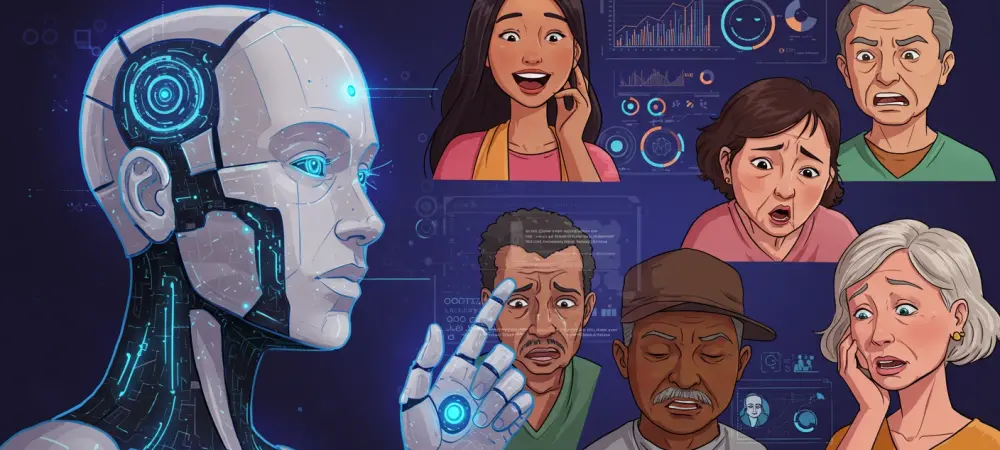
In a world where artificial intelligence is rapidly permeating numerous aspects of daily life, one pressing question arises: Can machines truly understand the complexities of human emotions? Surprisingly, AI is already climbing the ladder, being utilized in sectors like healthcare and customer service, where emotional recognition is increasingly critical. Consider a scenario in a busy hospital where an AI system gauges a patient’s anxiety level to better tailor the care they receive. The integration of emotional AI is no longer a futuristic concept but a reality influencing today’s decisions.
Understanding the Emotional Landscape
The capacity for emotional comprehension represents a significant stride in the technology sector, promising enhanced interactions between humans and machines. Emotional AI, or affective computing, stands at this crossroads, blurring lines between human intuition and machine learning. Currently, AI contributes to our daily lives by augmenting customer service experiences—deploying systems that detect emotional cues in customer communications—and offering potential improvements in mental health care through emotion-based diagnostics. These developments echo society’s growing acceptance and fascination with AI’s evolving role in emotional recognition.
The Science Behind Emotional AI
Artificial intelligence systems detect emotions using sophisticated algorithms that interpret facial expressions, vocal tones, and written text. Such technology enables machines to identify feelings with precision, proving beneficial in applications ranging from retail to mental healthcare. A prime example includes enhancements in customer service, where AI detects strains of anger or frustration, prompting timely human intervention. Unlike human emotion recognition, which may falter due to biases or mood swings, AI provides consistent analysis, though it is not entirely without its limitations.
What Experts Are Saying
Research findings point to AI’s remarkable ability to recognize intricate emotional signals—often with greater accuracy than humans. Experts acknowledge the potential for AI to outperform humans by bypassing common emotional recognition flaws. However, AI remains at a disadvantage in understanding the nuances of context and the deep layers of human empathy. Anecdotes abound where AI systems correctly identified emotional distress, yet misstepped in interpreting cultural expressions—highlighting both the promise and limits of current technology.
Integrating Emotional AI Responsibly
Integrating AI into emotional assessments introduces significant practical implications. Compelling strategies exist for businesses aiming to leverage emotional AI effectively while respecting privacy and ethical guidelines. Proper frameworks need development to protect emotional data, with an emphasis on transparent use and consent. Businesses enthusiastic about integrating AI into their operations find themselves balancing cutting-edge innovation and the need to preserve ethical practices, ensuring that technology enhances rather than erodes trust.
Reflecting on the Future
In light of these considerations, the potential for emotional AI is immense, yet it remains firmly in its developmental stage. The journey involves not just perfecting algorithms, but also ensuring they complement human capabilities without overstepping ethical boundaries. As technology continues to advance, society must remain vigilant, striving for a balanced coexistence where AI serves as an invaluable tool but not a substitute for genuine human empathy and connection. Moving forward, embracing this delicate balance will be pivotal in harnessing AI’s capabilities responsibly.