

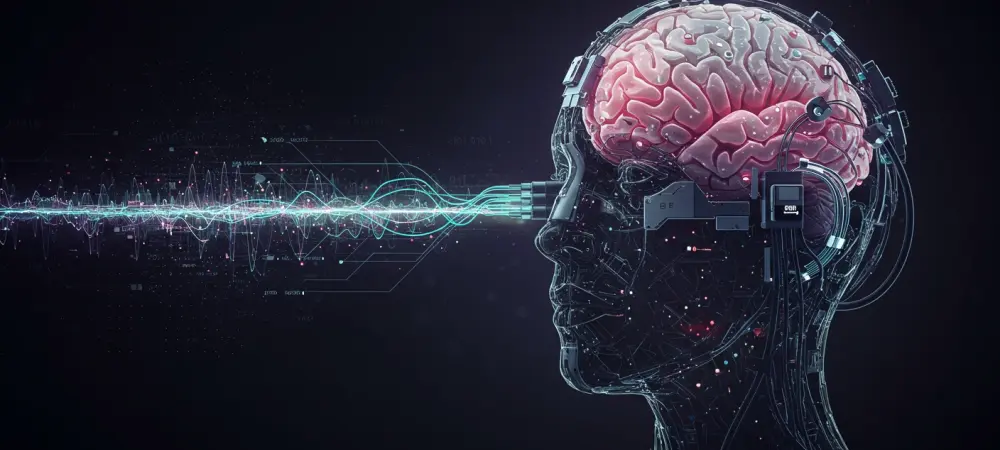
What if the quiet musings of the mind, those private reflections never meant for others, could be captured and displayed as text by a machine? This startling concept is no longer confined to science fiction. Brain-computer interfaces (BCIs), powered by artificial intelligence, have achieved a groundbreaking 74% accuracy in decoding inner speech, transforming silent thoughts into readable words. This technological leap opens a window into the human mind, raising profound questions about communication, privacy, and the very essence of personal identity. The potential to bridge the gap between thought and expression is as awe-inspiring as it is unsettling, drawing attention to a frontier where technology and humanity collide.
The Urgency of Brain Interfaces in Today’s World
The significance of BCIs extends far beyond mere scientific curiosity; it touches on fundamental aspects of human connection and autonomy. For individuals with conditions like ALS or locked-in syndrome, who are trapped in their own bodies without a means to communicate, this technology offers a lifeline to express needs, emotions, and individuality. Moreover, as society grapples with escalating concerns over data privacy and the ethical boundaries of AI, BCIs emerge as a critical issue demanding immediate attention. The ability to access thoughts directly challenges notions of personal space, making it essential to address these developments before they reshape social norms.
The stakes are high, not just for those who might benefit medically, but for everyone navigating a world where technology increasingly permeates daily life. The intersection of brain data with corporate or governmental interests could redefine power dynamics, especially if safeguards lag behind innovation. This is not a distant concern but a pressing reality, as the pace of BCI advancements accelerates, urging a collective focus on how to balance empowerment with protection in this uncharted territory.
Unraveling the Mind: The Mechanics and Power of BCIs
At the heart of BCIs lies a sophisticated interplay of neuroscience and artificial intelligence, designed to interpret the brain’s signals with remarkable precision. These systems target areas like the motor cortex, which is active during speech preparation, even when no words are spoken aloud. By employing AI models such as recurrent neural networks, BCIs can convert imagined speech into text in real time, achieving that notable 74% accuracy rate as documented in a recent study published in Cell. This process essentially turns the mind into a direct input device, bypassing physical barriers to communication.
The practical implications are transformative, particularly for those unable to speak due to severe disabilities. Families have witnessed emotional reunions as loved ones, silenced by illness, convey messages through these interfaces, rekindling bonds that seemed lost. Beyond individual impact, the technology hints at broader applications, from enhancing workplace productivity tools to creating new forms of entertainment, though each step forward amplifies the need to scrutinize its reach into private mental spaces.
Such rapid progress, while promising, also serves as a reminder of how close society stands to a tipping point. The leap from experimental labs to real-world use cases demonstrates that BCIs are not a theoretical concept but a tangible force, ready to influence lives while simultaneously challenging the boundaries of what should remain personal and inaccessible.
Voices from the Field: Perspectives on Brain Interface Technology
To fully grasp the implications of BCIs, it’s vital to consider the insights of those at the forefront of this revolution. AI safety researcher Dr. Roman Yampolskiy has voiced concerns about the dangers of systems that might outpace human oversight, cautioning that unchecked access to thoughts could lead to unprecedented control mechanisms. His perspective underscores a growing unease among experts about the potential for misuse, especially in environments where power imbalances already exist.
On the other side, industry leaders like Brodie Flanders emphasize the importance of trust as a foundation for BCI adoption. According to Flanders, without public confidence in how neural data is handled, even the most innovative systems will falter. This viewpoint highlights a business imperative to prioritize ethical frameworks alongside technological development, ensuring users feel secure in embracing these tools.
Perhaps most poignant are the stories from those directly affected, such as R. Sterling Snead, whose nonverbal son used a BCI to express “I love you” for the first time. This heartfelt moment captures the profound personal impact of the technology, reminding all stakeholders that at its core, the mission of BCIs is to restore human connection. Together, these diverse voices weave a narrative of hope tempered by caution, reflecting the complex landscape surrounding brain interfaces.
Charting a Path: Ethical Development and Use of BCIs
As BCIs transition from research to reality, establishing guidelines for their responsible integration becomes paramount. One actionable approach is embedding consent directly into the design of these systems, such as using mental keyword triggers to activate decoding only when intended by the user. This ensures that individuals retain control over when their thoughts are accessed, safeguarding against unintended intrusions.
For businesses and policymakers, the focus should be on transparency and accountability in handling neural data. Companies are encouraged to audit their data practices rigorously and invest in signal literacy—understanding brain signals as a unique and sensitive form of information. Meanwhile, legislative efforts should prioritize the concept of neurorights, advocating for legal protections against thought surveillance to prevent exploitation by any entity, whether corporate or governmental.
Public engagement also plays a crucial role in shaping the trajectory of this technology. Encouraging dialogue about the ethical limits of BCIs can empower communities to demand safeguards, ensuring that the benefits of enhanced communication do not come at the cost of personal autonomy. These steps collectively aim to foster an environment where innovation serves humanity without compromising the sanctity of the mind.
Reflecting on a Mind-Machine Legacy
Looking back, the journey of brain-computer interfaces has unfolded as a testament to human ingenuity, achieving a remarkable 74% accuracy in decoding inner thoughts and offering new voices to those once silenced by disability. The stories of connection, like a child’s first expressed words of love through a BCI, have left an indelible mark on families and communities alike. Yet, the shadow of privacy risks has loomed large, prompting intense debates over how to protect the inner sanctum of thought.
As society has moved forward, the emphasis shifted toward actionable solutions to ensure that BCIs remain tools of empowerment rather than instruments of control. Strengthening consent mechanisms, advocating for neurorights, and fostering trust through transparent practices have emerged as critical priorities. Beyond these measures, a deeper commitment to equity has taken root, ensuring that access to this life-changing technology is not reserved for a privileged few but extended to all who need it, paving the way for a future where the mind’s potential is unlocked responsibly.