

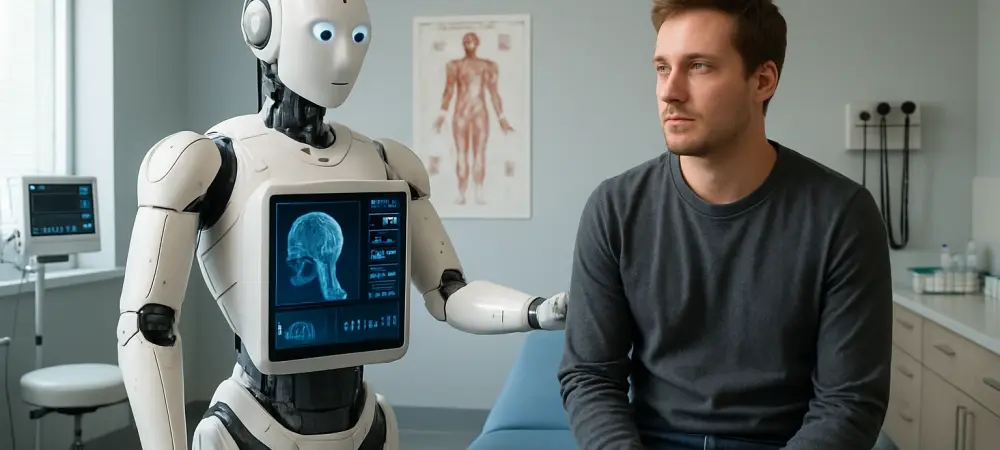
Imagine a scenario where astronauts on a mission to the Moon face a sudden medical emergency, miles away from Earth, with no immediate access to a doctor or hospital, and communication delays making real-time guidance impossible. This daunting challenge underscores a critical need for autonomous healthcare solutions in space exploration. A groundbreaking partnership between NASA and Google is tackling this very issue by harnessing artificial intelligence to transform medical care not only for astronauts but potentially for remote communities on Earth as well. This collaboration is paving the way for innovative tools that could redefine how health crises are managed in extreme environments. By integrating cutting-edge technology with medical expertise, the initiative addresses the unique constraints of space missions while offering a glimpse into broader applications. The implications of such advancements spark curiosity about how AI can bridge the gap between isolated settings and quality healthcare, setting a new standard for emergency response in uncharted territories.
Pioneering AI for Astronaut Health
The cornerstone of this NASA-Google collaboration is the development of the Crew Medical Officer Digital Assistant (CMO-DA), a sophisticated Clinical Decision Support System designed to empower astronauts with independent medical capabilities. This AI-driven tool employs multi-modal technology, including natural language processing and machine learning, while drawing from a vast repository of spaceflight medical literature. It offers real-time health assessments and suggests treatment options, enabling crew members to handle emergencies without direct Earth support. Initial testing, conducted through simulated medical scenarios and evaluated using standardized clinical examination methods, has shown encouraging results. These early successes highlight the system’s potential to ensure astronaut safety during long-duration missions like the Artemis program, which aims to return humans to the Moon. As testing continues, the focus remains on refining accuracy and expanding the tool’s diagnostic scope through input from medical experts, ensuring reliability in the harshest of environments.
Broader Impacts on Terrestrial Healthcare
Beyond the realm of space, the implications of the CMO-DA extend to improving healthcare access on Earth, particularly in remote or underserved regions where medical resources are scarce. This technology, originally crafted for the isolation of deep-space missions, holds promise for delivering quality care to areas lacking infrastructure or trained professionals. The ability of AI to provide actionable health insights without real-time human oversight could transform emergency response in rural communities or disaster-stricken zones. NASA and Google envision adapting this system to address terrestrial disparities, showcasing how innovations born from space exploration can yield dual-purpose benefits. This forward-thinking approach reflects a growing trend of leveraging AI to solve complex challenges in high-stakes settings, whether millions of miles away or in isolated corners of the globe. The optimism surrounding this development points to a future where technology not only supports astronauts but also uplifts vulnerable populations, narrowing the gap in global health equity.