

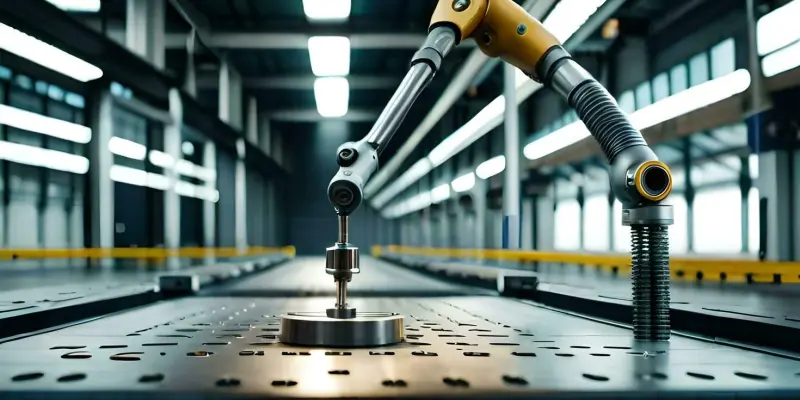
The realm of manufacturing is witnessing a transformative shift as AI-powered robotic systems are increasingly deployed on moving assembly lines. Traditionally, the complexity of synchronizing a robot’s actions with fast-moving parts has limited automation in this area. However, recent technological advances in robotics and AI are beginning to tackle these longstanding challenges. By integrating FANUC’s precision robotics with Inbolt’s cutting-edge AI-driven 3D vision systems, manufacturing is embracing a new era of efficiency and precision. This innovative collaboration was showcased at Automate, underscoring the potential to redefine productivity on assembly lines and spark a wider adoption of advanced robotics in varied manufacturing environments.
Precision and Adaptability in Automation
FANUC and Inbolt’s Collaboration
The significant technological leap comes from pairing FANUC’s CRX robots with Inbolt’s sophisticated 3D cameras, designed to facilitate automated tasks on moving assembly lines. This collaboration effectively melds precision robotics with advanced 3D-vision technology, enabling robots to adeptly track and manipulate moving parts. This precision is essential for tasks like inserting screws or installing filters where accuracy can significantly impact overall productivity. By integrating AI-driven systems, these robots can perform complex operations without the need for custom lighting setups or cumbersome jigs, enhancing both speed and efficiency. The benefit of this integration extends beyond mere functionality. The system is engineered to reduce downtime, which is typically incurred when an assembly line has to stop for adjustments. By adapting to movements in real-time, the robots maintain continuous operation, dramatically improving production throughput. At General Motors, these systems have already demonstrated their practical value, performing seamlessly in real-world settings. This development marks the beginning of a broader trend towards automation, setting a new standard for what is possible on moving assembly lines.
Overcoming Traditional Constraints
Traditionally, one of the greatest hurdles in automating moving assembly lines was ensuring robots could quickly adapt to dynamic changes. The need for rapid adaptability often led to cumbersome modifications and slow production adjustments. However, the new AI-driven systems are designed to handle these complexities with remarkable ease. By utilizing real-time data and sophisticated algorithms, these robots anticipate and respond to changes as they occur. This ensures that the production process is not only consistent but also flexible enough to accommodate sudden shifts in the assembly line’s pace or configuration.
The implications of these advancements are profound. They set a new precedent for efficiency, allowing industries to push the boundaries of what can be achieved through automation. This technology empowers manufacturers to maintain accuracy, speed, and reliability without compromise. Therefore, it’s no surprise that these robots are becoming an attractive option for automating various critical tasks across different sectors. As industries continue to prioritize efficiency and productivity, the adoption of AI-powered robots is poised to become a mainstay in assembly line operations worldwide.
Towards a New Era of Efficiency
Applications and Advantages
The integration of AI-driven robotic systems into moving assembly lines is not just a feat of engineering; it also signifies a pivotal shift toward smarter manufacturing processes. The technology’s ability to perform critical tasks such as screw insertion and filter installation with minimal downtime heralds a new era of operational efficiency. Its applications extend beyond manufacturing basics to encompass complex quality control measures, ensuring that components meet precise specifications even as they are adjusted on the move. This adds another layer of sophistication, enabling manufacturers to achieve unprecedented levels of quality assurance without sacrificing speed.
The versatility of these robotic systems allows them to be adapted to different industrial settings and tasks. This flexibility is key for manufacturers seeking to modernize their operations. As these technologies mature, they offer tailored solutions that cater to various production needs, from automotive to electronics and beyond. This adaptability ensures that companies can integrate automation systems smoothly, maximizing return on investment while minimizing disruption to existing processes. The promise of reduced turnaround times and enhanced production capabilities positions these AI-powered robots as essential tools for the future of manufacturing.
A Shift Towards Automation
As industries worldwide grapple with increasing demand and tight deadlines, the shift towards automation becomes not just preferable but necessary. This shift is underscored by the ability of AI-powered robotic systems to streamline operations, providing a competitive edge in a rapidly evolving market. Manufacturers who embrace these advancements are better equipped to withstand market pressures and capitalize on emerging opportunities. With the ongoing refinement of AI and robotics, the landscape of manufacturing is set for dramatic change. The next few years will likely see a surge in automated assembly lines, redefining how goods are produced, distributed, and consumed. The journey towards fully automated moving assembly lines is a compelling narrative of technological progress and industrial innovation. As these systems continue to evolve, they not only promise enhanced efficiency and productivity but also herald new possibilities for industries looking to revolutionize their production processes. This convergence of robotics and AI marks a turning point, wherein the boundaries of automation are continually expanded, setting the stage for the next generation of industrial evolution.
Navigating a New Industrial Frontier
The manufacturing landscape is undergoing a significant evolution with the rising deployment of AI-enhanced robotic systems on moving assembly lines. In the past, automation faced hurdles due to the challenges of aligning robot actions with rapidly moving components, which restricted advancement in this field. Yet, recent breakthroughs in robotics and artificial intelligence are starting to address these persistent obstacles, paving the way for improvements. The collaboration between FANUC’s highly precise robotics and Inbolt’s advanced AI-based 3D vision systems represents a pivotal moment for manufacturing. Showcased at the Automate event, this partnership highlights the enormous potential to enhance productivity and precision on assembly lines, ushering in a new era of efficient manufacturing processes. Additionally, the success of this integration could encourage the broader adoption of sophisticated robotics, transforming diverse manufacturing settings and expanding the possibilities for automation on a larger scale.